Tag Archives: antioxidants

Could UV-Irradiation Replace Sulfur Dioxide in Wines?


—————————————————————————————————-

Welcome to The Academic Wino! If you are new here, please read the “About Me” page to find out more about myself and the blog. If you would like to receive free updates on articles like this by email, then sign up here or you can subscribe to the RSS feed. Also, check us out on Twitter, Facebook, Google+, and or Pinterest. Thanks for visiting!

—————————————————————————————————-

There are many things that can have an effect on the quality and stability of wine. Specifically, both enzymatic and non-enzymatic oxidative reactions can significantly influence the aromatic and structural quality of a wine, which without appropriate control, can run rampant and cause off-aromas and flavors in the wine, thus spoiling the beverage. Spoilage microorganisms (such as certain yeasts and bacteria), as well as compounds naturally present in wine can cause oxidation reactions or become oxidized themselves, resulting in undesirable sensory characteristics in the finished wine.

In order to control these spoilage microorganisms and undesirable chemical reactions, winemakers have historically (and currently) employed SO2 (sulfur dioxide) during the winemaking process. In recent years, however, there has been a strong push for winemakers to reduce their usage of SO2, stemming

By inspector_81 (originally posted to Flickr as IMG_1381) [CC-BY-SA-2.0 (http://creativecommons.org/licenses/by-sa/2.0)], via Wikimedia Commons

By inspector_81 (originally posted to Flickr as IMG_1381) [CC-BY-SA-2.0 (http://creativecommons.org/licenses/by-sa/2.0)], via Wikimedia Commons

partly from the finding that SO2 exposure could be a health risk for certain individuals. Currently, there isn’t one compound or product that can completely replace SO2 in winemaking, though research is ongoing and has already found that reducing the amount of SO2 used in conjunction with another alternative technology could protect the finished wine just as well as higher levels of SO2 used alone. These alternative technologies include hydrostatic pressure, pulsed electric fields, ultrasound irradiation, and UV (ultraviolet) irradiation.

The study presented today aimed to examine the use of UV irradiation as a protective agent against wine spoilage, while comparing with SO2 and no treatment controls. The measure for determining if any of the treatments protected against wine spoilage or oxidation was polyphenol oxidase activity. Polyphenol oxidase is partially responsible for the browning of white wines after oxidation, so theoretically, if polyphenol oxidase levels are decreased, the wine is not oxidized (or is less oxidized) than a wine with higher polyphenol oxidase levels.

Methods

Two white grapes were used in this study: Xarel-lo and Parellada (from vineyards in Spain). Grapes were processed in a home juicer and then pressed. To remove any solids, juice samples were centrifuged then the liquid removed. The juice was then split, with half remaining as fresh juice and the other half going into a freezer. For both fresh and frozen juice, samples were split into the following treatments: 1) SO2 addition (50 mg/L potassium metabisulphite) prior

By Ben Mills (Own work) [Public domain], via Wikimedia Commons

By Ben Mills (Own work) [Public domain], via Wikimedia Commons

to winemaking; 2) UV irradiation treatment prior to winemaking; and 3) winemaking without SO2 or UV treatments (control).

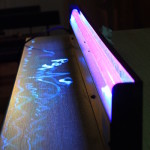
UV irradiation occurred in a dark chamber that housed the juice and a lamp. The irradiation treatment lasted 3 hours and 30 minutes, with samples taken at 0, 60, 120, 180, and 210 minutes.

Winemaking occurred at the Raimat winery in Lleida, Spain. 500mL of each treatment must were placed into a separate glass bottle. Fermentation occurred within these glass bottles using a commercial yeast.

The following analyses were performed on the samples: pH of the must before and after UV irradiation; pH of the wine; soluble solids content; color of musts and wines; tartaric acid content; alcohol content; volatile acidity; and polyphenol oxidase activity.

Results

• In untreated musts, Xarel-lo musts had higher levels of soluble solids than Parellada musts.
• Polyphenol oxidase activity was decreased in all UV irradiation samples.
o The level of polyphenol oxidase activity remained at 18% +/-1 of its original activity in Xarel-lo samples and at 30% +/- 1 in Parellada samples after UV treatment.
• Polyphenol oxidase activity was completely deactivated by SO2 treatment.
• Polyphenol oxidase activity inactivation was the same for both fresh and frozen samples of grape varieties (i.e. no statistical differences in inactivation between fresh and frozen samples).
• Inactivation constants were higher for Xarel-lo samples than Parellada samples, which the authors attributed to an increased denaturation ability of the enzyme in Xarel-lo samples compared with Parellada samples.
o Inactivation constants were statistically similar between fresh and frozen samples of both grape varieties.
• UV irradiation alone did not cause any change in brightness (color) in any sample.
o In Xarel-lo musts, fermentation caused a decrease in brightness in samples that had been previously irradiated, but not for those treated with SO2.
o In Parellada musts, fermentation caused a decrease in brightness in samples that had been previously irradiated and in untreated samples.
o Frozen musts were less bright after thawing than fresh musts.
• In terms of redness, the freezing and thawing process increased the redness of the sample.
o Wines from UV treated musts were redder than wines from SO2 treated musts.
• In terms of yellowness, untreated frozen samples showed an increase in yellowness (the trend was not seen in UV treated samples).
o In Xarel-lo wines, fermentation of frozen and thawed musts resulted in a decrease in yellowness that was not found in any other treatment.
o In Parellada wines, UV treated musts created less yellow wines than wines made from SO2 treated musts.
• There were no significant differences between any of the treatments in regards to absorbance spectra.
• UV irradiation treatment samples fermented at a slower rate than SO2 treatment samples, which the authors attributed to the decrease in natural microflora caused by UV irradiation.
• There were no significant differences found between any of the samples in regards to density evolution through the winemaking process.
• In terms of enological parameters:
o Freezing and thawing resulted in Xarel-lo wines with lower pH, higher tartaric acid, and higher volatile acidity.
o In Parellada wines, pH was higher in wines made from frozen and thawed musts as well as UV treated musts, however, no in wines made from SO2 treated musts.

Conclusions

The authors of this study reported that based on the results, they can conclude that UV irradiation can partially decrease polyphenol oxidase activity in the white wines Xarel-lo and Parellada. It is important to note that UV treatment did not completely eliminate polyphenol oxidase activity as it did with SO2 treatment, but as the authors mentioned, it could potentially be utilized in concert with reduced SO2 levels.

Though the results of this study are interesting, the results only raise more questions for me. First of all, polyphenol oxidase, while a very important contributor to wine spoilage (in terms of oxidation and browning), it’s not the only one. The authors themselves mentioned a couple other enzymes responsible for wine spoilage, including laccase and peroxidase, though we don’t know how UV irradiation would affect the activity of these browning enzymes.

The authors also mention toward the end of the paper that UV light has historically been shown to have negative consequences on wine, but that those papers only looked at UV exposure on finished wine, and not on the musts prior to fermentation. That’s all well and good, but why would you bother saying that and not present us with the comparison? Wine goes bad with UV exposure, so

By Tarvo Metspalu (Own work) [CC-BY-SA-3.0 (http://creativecommons.org/licenses/by-sa/3.0)], via Wikimedia Commons

By Tarvo Metspalu (Own work) [CC-BY-SA-3.0 (http://creativecommons.org/licenses/by-sa/3.0)], via Wikimedia Commons

why wouldn’t the same thing happen with the musts-turned-wine? The authors give no explanation to why they think treating the musts wouldn’t yield the same negative consequences on the wine as it does when exposed to finished wine. Maybe the mechanism and effects are different, but one really shouldn’t make a statement like that unless they are prepared to step up with some results.

After all this talk of wine spoilage, browning, and protection against spoilage and off-aromas or flavors, the study is strongly lacking in any sort of sensory analysis of the finished wines for each treatment. If the primary outcome is strongly tied to aromatic quality, why not have a sensory analysis? I’d be very curious to see how UV irradiation affected the flavor and aroma of the finished wine, particularly after the authors made the statement that UV exposure of finished wines has been shown to have negative sensory effects.

Overall, this study is a good start; however, there are several issues that should be addressed in a follow-up before I am convinced UV irradiation is an appropriate treatment for combating oxidation or spoilage in wines.  Don’t give your wines a tan just yet!

What do you all think of this study? Do you see any other problems with the study? Am I being too harsh? What sorts of follow-up experiments or studies would you like to see?

Source: Falguera, V., Forns, M., and Ibarz, A. 2013. UV-vis irradiation: An alternative to reduce SO2 in white wines? LWT – Food Science and Technology 51: 59-64.

Examining the Phenolic Content and Antioxidant Capacity of Grape Leaves: Possible Implications for Recycling and Sustainability in the Wine Industry


The majority of research papers published focusing on wine industry wastes or wine industry by-products have focused primarily on grape marc or grape pomace.  However, in the spirit of sustainability, should we only be considering the fruits themselves as the only source for recycling in the wine industry?  Of course not!  Not only can the fruits (in the form of skins and seeds, primarily) be recycled into other uses, such as for medicinal purposes or for use in other industries (i.e. leather production, food preservatives, additives to wine, etc), but also the water waste produced from wine making as well as the grape leaves from the vines can be utilized and reused for other purposes.

In regards to grape leaves, research has been more limited compared to research on grape pomace.  Studies have shown that the juices obtained from grape leaves can be used for many medicinal purposes due to several biological activities including antibacterial, antifungal, anti-inflammatory, and antiseptic properties.

By Dianakc (Own work) [CC-BY-SA-3.0 (http://creativecommons.org/licenses/by-sa/3.0)], via Wikimedia Commons

By Dianakc (Own work) [CC-BY-SA-3.0 (http://creativecommons.org/licenses/by-sa/3.0)], via Wikimedia Commons

Grape leaves are also used frequently as food in Greek cuisine, as well as additives in other foods due to the leaves known antioxidant properties.

The ability to recycle the whole plant, and not just from grape skins and seeds, is just another step toward sustainability for the wine industry as a whole.  By reusing and recycling all parts of the plant, the amount of potentially toxic waste entering the environment is dramatically reduced.

The article presented today examined the antioxidant properties of grape leaves in order to confirm if grape leaves are appropriate for use in other industries.

Methods

Leaf samples were collected in July of 2006 from an experimental vineyard in Sendim, Bragança in NE Portugal.  Twenty varieties of Vitis vinifera were studied: 9 white and 11 red.  Each variety was grown in two adjacent rows, all of which underwent the same viticultural treatments (no irrigation or soil treatments).  5 plants in the center of the two rows we selected for each variety, and 4 leaves were harvested from each plant.  Leaves were freeze-dried and then ground into a powder for further analysis.

The following were analyzed for the leaf samples: phenolic content and antioxidant activity (total reducing capacity, reducing power, and scavenging ability).

By user:yelod - wikimedia commons משתמש:ילוד - ויקיפדיה העיברית (Own work) [GFDL (http://www.gnu.org/copyleft/fdl.html) or CC-BY-SA-3.0 (http://creativecommons.org/licenses/by-sa/3.0/)], via Wikimedia Commons

By user:yelod – wikimedia commons משתמש:ילוד – ויקיפדיה העיברית (Own work) [GFDL (http://www.gnu.org/copyleft/fdl.html) or CC-BY-SA-3.0 (http://creativecommons.org/licenses/by-sa/3.0/)], via Wikimedia Commons

Results

  • Extraction yields were greater for red varieties than white varieties.
    • For whites, the highest yields were found in Chardonnay and Samarrinho.
    • For reds, the highest yields were found in Alicante, Bouchet, Bastardo, and Trincadeira.
  • All samples contained the following compounds: trans-caffeoyltartaric acid and trans-coumaroyltartaric acid (both hydroxycinnamic acids) as well as myricetin-3-O-glucoside, quercetin-3-O-glucoside, quercetin-3-O-galactoside, and kaempferol-3-O-glucoside (all flavonoid glycosides).

Why are the leaves be so high in phenolic content?

The authors speculated that the grape leaves were likely rich in polyphenols, specifically flavonoids, since these compounds are known to act as UV filters.  The UV protection characteristic of flavonoids functions to protect the plant cells (particularly chloroplasts) from the damaging effects of UV rays.  In effect, flavonoid function as a part of the plants’ defense mechanisms against harmful UV rays, thus their high levels in the leaves of the plants.

  • Total phenolics were found to be higher in the leaves of red varieties than the leaves of white varieties.
    • For red varieties, Tinto Cão had the highest levels of polyphenols whereas Mourisco had the lowest (3.5 times different).
    • For white varieties, Codega had the highest levels of polyphenols, whereas Gouveio had the lowest.
  • For all leaf samples, quercetin-3-O-glucoside and quercetin-3-O-galactoside made up 64-73% of the total phenolics.
  • Grape leaves appear to have higher polyphenol levels than grapes themselves.

Antioxidant Capacities

  • White varieties had higher antioxidant capacities than red varieties.
    • The white varieties showing the highest reducing capacity were Viosinho, Rabigato, Côdega, and Malvasia Fina.
    • The red varieties showing the highest reducing capacity were Tinto Cão and Alicante Bouchet.
  • In regards to reducing power, for white varieties, Côdega showed the strongest levels, with Chardonnay and Samarrinho following behind it.
    • For red varieties, Tinto Cão, Rufete, and Touriga Francesa showed the strongest levels.
    • Both Côdega (white) and Tinto Cão (red) showed similar levels, thus there was no clear difference between red and white varieties in terms of reducing power.
  • In regards to scavenging activity, there were no clear differences between red and white varieties.
    • For white varieties, Malvasia Rei showed the highest scavenging activity.
    • For red varieties, Tinta Gorda showed the highest scavenging activity.

Why did the varieties with the highest polyphenol content not have the higher antioxidant capacities?

It is typically thought that those items possessing high polyphenol levels will also have high antioxidant capacities.  However, the results of this study found nearly the opposite.  The authors speculated that this result was likely due to the fact that it isn’t all about polyphenols.  There is clearly some other compound or compounds that are interacting with either the polyphenols or other compounds to determine antioxidant capacity.

Conclusions

The results of this study indicate that grape leaves are good sources of polyphenols and antioxidant capacity to be utilized in a multitude of industries.

By Philip Larson (originally posted to Flickr as DSC01975) [CC-BY-SA-2.0 (http://creativecommons.org/licenses/by-sa/2.0)], via Wikimedia Commons

By Philip Larson (originally posted to Flickr as DSC01975) [CC-BY-SA-2.0 (http://creativecommons.org/licenses/by-sa/2.0)], via Wikimedia Commons

It was also clear from the results that there was no relationship found between total polyphenol content and antioxidant capacity.  According to the authors, this is likely due to the involvement of one or more other compounds acting either alone, or more likely in concert, with polyphenols or some other compound to affect the antioxidant capacity of the leaves.  These results suggest more work needs to be done to tease out what is the mechanism behind antioxidant capacity in grape leaves.

Overall, this was a straightforward study that clearly shows that grape leaves are an excellent source of polyphenols that could be utilized for multiple industries.  By recycling not only the grapes themselves but also the grape leaves, the wine industry can move one step closer to a more globally sustainable industry.

Source: Fernandes, F., Ramalhosa, E., Pires, P., Verdial, J., Valentão, P., Andrade, P., Bento, A., and Albert Pereira, J. 2013. Vitis vinifera leaves toward bioactivity. Industrial Products and Crops 43: 434-440.

Increasing the Antioxidant Capacities of Sparkling Wine


In the spirit of the upcoming New Year, we’ll focus the next few blog posts on sparkling wine/Champagne!

There are several different methods for producing sparkling wine, including the traditional method and the Charmat method.  The traditional method, also known as méthode champenoise when referring to Champagne winemaking, incorporates the use of a bottle as the vessel for secondary fermentation, while

By Jon Sullivan/PDPhoto.org [Public domain], via Wikimedia Commons

By Jon Sullivan/PDPhoto.org [Public domain], via Wikimedia Commons

the Charmat method employs a large tank for the secondary fermentation process.

For each method, the process starts with a still base wine which undergoes secondary fermentation.  Typically, sugars and yeasts are added to the base wine in order to jump start the secondary fermentation process.  Secondary fermentation takes place within a sealed vessel (e.g. bottle, tank, etc) in order to keep the carbon dioxide fermentation by-product within the wine for the characteristic sparkling wine bubbles rather than letting it escape into the atmosphere.

After secondary fermentation in complete, the sparkling wines are then aged on their lees (i.e. dead yeasts and other materials in the wine) for a few days to several months, depending upon the method employed and type of wine desired.   During this aging process, many chemical reactions take place, most notably the autolysis of yeasts.  Briefly, the autolysis of yeasts is when the yeasts are broken apart thus exposing the wine to the various components of the yeast cells, including but not limited to cell walls, peptides, amino acids, and proteins.

The autolysis of yeasts is considered to be very important in regards to the final composition and quality of the finished sparkling wine.  The compounds released into the wine can influence the aroma, flavor, and mouthfeel, as well as the “foaminess” of the bubbles.  The length of time the wine ages on the lees and thus the length of time the wine is exposed to yeasts undergoing autolysis affects on the overall quality of the finished wine, though since longer aging time equates to larger monetary investments, it is in the best financial interest of the winery to try and speed up this process without losing the benefits of the long aging process.

One way to speed up the autolysis of yeast process that has been examined in the past is the addition of various yeast components to the wine.  What is less known is how the addition of these components change the quality of the finished wine in regards to antioxidant capacity.  While the information regarding the antioxidant capacity of still wines is well known, it is much less known how changing in the composition of sparkling wine affects antioxidant capacity and overall quality of wine.

Those few studies that have been done on antioxidant capacity and sparkling wine have shown that role of phenolic compounds on antioxidant capacity is

By Manikom (Own work) [CC-BY-SA-3.0 (http://creativecommons.org/licenses/by-sa/3.0)], via Wikimedia Commons

By Manikom (Own work) [CC-BY-SA-3.0 (http://creativecommons.org/licenses/by-sa/3.0)], via Wikimedia Commons

greater in sparkling wines produced in the traditional method compared with sparkling wines produced in the Charmat method.  Other studies have found that other by-products of the autolysis process, including the polysaccharides β-glucanase and yeast cell wall fragments, also influence the antioxidant capacity of sparkling wines.

The purpose of the study today was to investigate the antioxidant capacity of sparkling wines when supplemented with by-products of yeast autolysis, yeast cell wall fragments, mannoproteins, and β-glucanases.  Information gathered from these results may help sparkling wine makers decide if and how they wish to treat their wines in order to optimize the contact time with the lees, potentially saving money and increasing overall sparkling wine quality.

Methods

The experimental wines were created at the experimental wine cellar of the Agricultural Engineering College using Verdejo grapes.  Grapes were grown and harvested from the experimental vineyard of the Agriculture Technology Institute of Castilla y León in Valladolid, Spain in 2008.

The base wine was created using traditional white winemaking processes.  The enological parameters of the base wine were: 11.2% alcohol, 0.23g/L volatile acidity, 9.6g/L total acidity, 3.53 pH, 25mg/L free sulfur dioxide, 53mg/L total sulfur dioxide, and 1.7g/L reducing sugars.

Sparkling wine was created using the traditional method.  Added to the base wine was 22.3g/L of sugar (sucrose), Saccharomyces bayanus yeasts, and a clarificant.  Sparkling wine was aged on the lees for 9 months and was then riddled and disgorged.  Before bottling, wines were topped off with dosage liquor.

The 5 treatments in this study were: 1) addition of B-glucanases; 2) addition of autolysated yeasts; 3) addition of yeast cell walls; 4) addition of purified mannoproteins; and 5) control with nothing added.  Three bottles of each wine were analyzed.  Each assay (test) was run in triplicate.

Antioxidant capacity was analyzed using three methods: DPHH radical-scavenging method; FRAP assay; and Hydroxyl radical scavenging activity.  Also measured were: total proteins, neutral polysaccharides, total polyphenols, total hydroxycinnamates, and total flavonoids.

Results

  • The addition of all the treatments increased the antioxidant capacity of the sparkling wines.
    • According to the DPPH assay, the addition of the mannoproteins elicited the highest increase in antioxidant capacity and the control the lowest.
    • According to the DPPH assay, the addition of β-glucanases, autolysated yeasts, and yeast cell walls increased antioxidant capacity by 24.1%.  The addition to mannoproteins increased antioxidant capacity by 27.5%.
    • According to the FRAP assay, just as with the DPPH assay, the addition of the mannoproteins elicited the highest increase in antioxidant capacity and the control the lowest.
  • Those wines with higher antioxidant capacities also had higher reducing capacities.
  • Those wines with greater levels of neutral polysaccharides and total proteins had higher antioxidant capacities and hydroxyl scavengers.
  • There were no significant correlations between polyphenol families, hydrocinnamic esters, total flavonols and antioxidant capacity.
    • The authors attribute this to some research that suggests not all polyphenols have high antioxidant capacities, and perhaps more of the polyphenols in these experimental sparkling wines were higher in those polyphenols with low antioxidant capacities.
  • There were positive and significant correlations between total polyphenols and hydroxycinnamic esters and flavonols.
  • Mathematical modeling and principle components analysis found that neutral polysaccharides and proteins play an important role in the antioxidant capacity of sparkling wines.

Conclusions

According to the results of this study, the antioxidant capacity of sparkling wines is increased when the wine is treated with β-glucanase, mannoproteins, or other yeast autolysis compounds.  The greatest response was found with the addition of the mannoproteins, with these proteins being responsible for the greatest increase in antioxidant capacity.  The results also showed that neutral

By ori2uru (originally posted to Flickr as champagne tower) [CC-BY-2.0 (http://creativecommons.org/licenses/by/2.0)], via Wikimedia Commons

By ori2uru (originally posted to Flickr as champagne tower) [CC-BY-2.0 (http://creativecommons.org/licenses/by/2.0)], via Wikimedia Commons

polysaccharides and total proteins had the most influence on antioxidant capacity when treated with the aforementioned compounds.  A result the authors did not anticipate was the fact that they did not see any correlation between phenolic families and antioxidant capacity.

The results of this study indicate that by adding mannoproteins, B-glucanase, or other yeast autolysis compounds, the antioxidant capacity of the wine is increased, thus suggesting that the length of time required for wine aging to achieve the same wine quality may be reduced.  I would be curious to know how much time the treatment actually reduces, and if the time saved is significant enough to justify the practice.

I would also be curious to know how the addition of these or similar compounds affect antioxidant capacity in sparkling wines made from other production methods (i.e. Charmat method, etc).  Would we see the same increase in antioxidant capacity?  Or does it depend upon which sparkling wine production method one employs?

Research into individual polyphenols may be of interest as well, to determine which polyphenols in particular have influence on the antioxidant capacity of sparkling wines, and also which do not.

I’d love to hear what you all think about this research.  Is there anything else you would have liked to have seen performed that was not? What other questions (if any) does this raise for you?  Please feel free to leave any comments you may have!

Source: Rodriguez-Nogales, J.M., Fernández-Fernández, E., Gómez, M., Vila-Crespo, J. 2012. Antioxidant properties of sparkling wines produced with β-glucanases and commercial yeast preparations. Journal of Food Science 77(9): C1005-C1010.

Examining the Anthocyanin Content and Antioxidant Capacity of Port Wines

Port wines are created from the Duoro Demarcated Region in northern Portugal, and use several varieties of grapes, including Touriga Nacional, Tinta Barroca, Tinta Roriz, Touriga Francesa, Tinto Cão, and Tinta Amarela.  One important characteristic of Port wines and Port-style wines is that the residual sugar in the finished wine is obtained by stopping the fermentation process early, by way of the addition of brandy (or other wine-based spirit).  The final concentration of alcohol, therefore, in Port wines is around 18% v/v. 

http://www.thecarltonrestaurant.com/
wp-content/uploads/2010/04/port-wine.jpg

The aging process is also a very important factor in the creation of Port wines, which includes aging in oak barrels, steel tanks, or within bottle, depending upon the style of Port wine desired.  With Ruby Port wines, they are stored in stainless steel tanks for two years in order to prevent oxidative aging and retention of color.  Late Bottled Vintage (LBV) Port wines are made from a single years’ harvest, and are kept in barrels for 4 to 6 years, obtaining a ruby color.  Tawny Port wines are made from grapes aged in barrels and blended with other grapes from other barrels (of different vintages), which result in the wine being exposed to gradual oxidation and evaporation to produce a golden-brown colored wine.  Tawny Reserve Port wines are labeled without any indication of the age, and are blends of wines that were aged in barrels for at least two years.  As a result of all these different styles of Port wines, chemical composition and color differs markedly, depending upon the winemaking and storage process for each style.

In regards to color, various phenolic compounds in wine that create the colors that we see.  Specifically, anthocyanins are categorized as contributing to the variability of the colors of wines.  Various natural chemical reactions occur amongst the different anthocyanins present within the wines, resulting in the formation of more stable pigments that create wine color, which ultimately changes it to a brick-red color in more aged wines. Not only are anthocyanins very important in regards to wine color, but they also have several potential health benefits as antioxidant agents.

Some researchers believe that due to decreases in phenolic complexity over a period of aging, wine loses its antioxidant capacity, though this hypothesis has seen mixed results.  As a result of these mixed results, and the fact that data on free radical scavenging activity (i.e. antioxidant capacity) and anthocyanin content of Port wines is limited, the study presented today aimed to examine and understand the anthocyanin content of different styles of Port wine, and also to evaluate the antioxidant capacity of these wines.

Methods

Port wines used were made from blends of Touriga Nacional, Touriga Francesa, Tinta Roriz, and Tinta Barroca, from Douro vineyards.  Grape must samples were collected from four different fermentation vats and were collected at two different times during fermentation (2 days and 3 days. 

Commercial Port wines were purchased from a market and included the Port styles of Ruby, Late Bottled Vintage (LBV), Tawny Reserve, Tawny 10, 20 year old Ports.  6 brands of each style were selected, resulting in a total of 30 wines studied.

Anthocyanins and antioxidant activities were measured for each must and each wine.

Results

  •       The most abundant anthocyanin in the musts was malvidin 3-O-glucoside (60% in weight)
  •       The same anthocyanins were found in Ruby and LBV Port wines as were found in the must.
  •       Ruby and LBV Port wines had similar anthocyanin profiles, though there were quantitative differences.

o   A lower percentage of malvindin 3-O-glucoside was found in LBV Port wines.

o   Only traces of anthocyanins were found in Tawny Port wines.

  •       Higher anthocyanin content was found in musts with 3 days of fermentation than must with 2 days of fermentation.

o   This result indicates that there is an increase in the extraction of anthocyanins during fermentation.

  •        Anthocyanin content of Port wines was much lower than the content in musts.

o   The authors claim this is likely due to the addition of the wine spirit to stop fermentation, as well as the aging process and aging “environment”.

  •       Higher amounts of anthocyanins were found in Ruby Port wines, followed by LBV Port wines.

o   These wines age in stainless steel tanks and/or sealed glass bottles, which are not exposed to air and undergo reductive aging.  This results in a much slower loss of anthocyanins than other aging methods.

  •       Tawny Reserve Port wine had trace amounts of anthocyanins present (if any), with other Tawny Port wines having none at all.

o   Since these styles of Port wines are aged in barrels, the wine undergoes an oxidative aging process due to the permeability of the barrel to the air.  This results in a much faster loss of anthocyanins than other aging methods.

  •        The anthocyanin profile of Reserve Tawny, Tawny 10 years, and Tawny 20 years was very similar, and all exhibited the lowest levels of anthocyanins out of all the Port wines.
  •       Ruby Port showed high levels of newly formed anthocyanins, and LBV Ports differed in anthocyanin content depending upon the year of production.

o   LBV Ports with 4 years of barrel aging and 6 years of bottle aging had lower anthocyanin levels than samples with shorter aging times in the bottle.

  •       Ruby Port wines showed the same anthocyanidins as found in the must, however, the levels of which were significantly lower.
  •       Tawny 10 year and Tawny 20 year had similar anthocyanidin profiles when compared with Tawny Reserve.

Antioxidant Capacity

  •       Antiradical capacity (indicative of antioxidant capacity) was dependent upon the concentration and style of Port wine.
  •       Ruby and LBV Port wines showed higher antiradical activities than Tawny Port wines.

o   This result indicates that reductive aging increases antiradical activity.

  •        LBV Port wines showed higher antiradical activities than Ruby Port wines.

o   During aging within the bottle, LBV Port wine composition changes in the reducing environment, with the oxidation-reduction potential decreasing until it reaches a minimum value that prevents any further oxidation reactions.

  •       Tawny Port wines had lower antiradical activity than all other Port styles.

Conclusions

Overall, the results of this relatively simple study indicated that the aging process is an important factor that influences the antioxidant capacity of Port wines.  All Tawny Ports showed the lowest levels of anthocyanins, while Ruby and Late Bottled Vintage Ports showed the highest levels.  Similarly, Tawny Port wines displayed the lowest antioxidant capacities, while Late Bottled Vintage Port wines displayed the highest.

The authors did not draw any other conclusions besides these facts (as well as listing some specific anthocyanins present), indicating that this paper was merely a simple stepping stone for future research to be launched.  I’d be curious to see comparisons of different blends within each style, and if there is one particular blend that has superior antioxidant capacities to the rest.  Another interesting comparison would be between Port wines and other wines that are unfortified. 

In a nutshell, it appears, however, that if you love Port wines and are looking for the Port wine with the highest antioxidant capacity (and thus theoretically, a “healthier” Port), then a Late Bottle Vintage or a Ruby Port is your best bet. 

I’m interested in hearing what you have to think about this topic.  What types of research would you like to see done in this field, based on the results of this study?  Feel free to leave your comments below!

Source: Pinho, C., Couto, A.I., Valentão, P., Andrade, P., and Ferreira, I.M.P.L.V.O. 2012. Assessing the anthocyanic composition of Port wines and must and their free radical scavenging capacity. Food Chemistry 131: 885-892.

DOI: 10.1016/j.foodchem.2011.09.072
I am not a health professional, nor do I pretend to be. Please consult your doctor before altering your alcohol consumption habits. Do not consume alcohol if you are under the age of 21. Do not drink and drive. Enjoy responsibly!