—————————————————————————————————-
Welcome to The Academic Wino! If you are new here, please read the “About Me” page to find out more about myself and the blog. If you would like to receive free updates on articles like this by email, then sign up here or you can subscribe to the RSS feed. Also, check us out on Twitter, Facebook, Google+, and or Pinterest. Thanks for visiting!
—————————————————————————————————-
The following is a guest post by Laura Collier, whose passion is where wine and law intersect. Please see her complete bio at the end of this post for more information!
Sales of organic foods have skyrocketed in the past decade. In addition to increased sales, organic foods can typically command a price premium over their conventionally farmed counterparts. As a wine industry professional, I see a moderate amount of dedicated organic wine drinkers, but generally speaking, organic wines don’t seem to have the same momentum with a broad spectrum of consumers that organic foods do. This is surprising, given the craze for many other organic products. In a paper titled Eco-Labeling Strategies: The Eco-Premium Puzzle in the Wine Industry, Magali Delmas and Laura Grant of the University of California at Santa Barbara conducted research into the impact of organic certification and organic labeling on wine prices, and provided some insight into the factors that influence consumer perceptions of organic wines.
Delmas and Grant studied information from over 13,000 California wines, including data on price, grape variety, vintage, and winery production volume. They also evaluated whether the wines were certified organic, and if so, whether the wine’s label indicated the eco-certification. The results of their study were surprising: the factors of organic certification and organic labeling had opposite impacts on the price of the wine. They found that wines certified as organic, but without the certification indicated on the label, could command a 13% higher
![Photo By Dick Rochester (originally posted to Flickr as Our Daily Red) [CC-BY-SA-2.0 (http://creativecommons.org/licenses/by-sa/2.0)], via Wikimedia Commons](http://www.academicwino.com/wp-content/uploads/2013/05/organic_label_The_Academic_Wino-300x201.jpg)
Photo By Dick Rochester (originally posted to Flickr as Our Daily Red) [CC-BY-SA-2.0 (http://creativecommons.org/licenses/by-sa/2.0)], via Wikimedia Commons
If organically certified wines can command a price premium, and receive higher score ratings, then why does indicating the certification on the label actually lead to a decrease in price? To answer this question, Delmas and Grant evaluated other studies and surveys of consumer perceptions of organic wines for clues. One key cause is likely the consumer confusion surrounding the labeling of organic wine. In the United States, organic wines can bear two labels, but the meaning of the different terminology is not further explained on the label. “Organic” designates a wine that is made with organically grown grapes and does not contain any added sulfites. “Made with organically grown grapes” designates a wine made from organic grapes that does contain added sulfites. There are also different organic certification requirements, logos, and phrases on the labels of organic wines from other countries. This high volume of competing labels in the marketplace, without any apparent distinctions, confuses many wine drinkers. Furthermore, many consumers associate organic wine with inferior quality. This stigma is perhaps due to early attempts by inexperienced winemakers to produce “natural” wines without filtering or the use of sulfites, which resulted in faulty, poor tasting wines. This bad reputation, coupled with the lack of consumer understanding of organic labeling, are likely contributing reasons why wines labeled as organic command a lower price.
However, if we remove the organic label, why are consumers willing to pay 13% more for an unlabeled organic wine than a conventionally farmed wine? And why do organic certified wines have higher Wine Spectator scores? Delmas and Grant theorize that organic certification has benefits that improve the quality of the wines, the winery’s practices, and the winery’s reputation. Delmas and Grant cite the belief of many winemakers that organic farming leads to healthy vines,
![Photo By drdcuddy (Flickr: Italia 2010) [CC-BY-SA-2.0 (http://creativecommons.org/licenses/by-sa/2.0)], via Wikimedia Commons](http://www.academicwino.com/wp-content/uploads/2013/05/organic_vineyard_cover_crops_The_Academic_Wino-300x200.jpg)
Photo By drdcuddy (Flickr: Italia 2010) [CC-BY-SA-2.0 (http://creativecommons.org/licenses/by-sa/2.0)], via Wikimedia Commons
I mentioned before that as someone who works in wine retail, I haven’t noticed the fervor for organic wines that I see for organic foods. But consumer attitudes toward organic wines do not seem to me as bleak as the results of this study would indicate. Perhaps something has changed since this study? The research by Delmas and Grant was conducted in 2008, and the dataset included wines from vintages 1998 to 2005. When organic food sales took off, the change was quick and intense. As this article is now five years old, perhaps there is an organic wine revolution among consumers that is preparing to burst on the scene?
I think that the consumer demand for organic wines is steadily increasing; however, I am unsure whether the market for organic wines will ever expand as rapidly or as broadly as the market for organic foods. Personally, I have found that there is a connection between conscientious farming and quality, and I believe that as wine drinkers explore the world of wine and find out that some of their favorite wines are organic, they will begin to make the connection as well and to seek out more organic wines at retail stores and restaurants. It will be
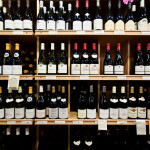
![Photo By Jorge Royan (Own work) [CC-BY-SA-3.0 (http://creativecommons.org/licenses/by-sa/3.0)], via Wikimedia Commons](http://www.academicwino.com/wp-content/uploads/2013/05/wine_shop_2_The_Academic_Wino-300x200.jpg)
Photo By Jorge Royan (Own work) [CC-BY-SA-3.0 (http://creativecommons.org/licenses/by-sa/3.0)], via Wikimedia Commons
Citation: Magali A. Delmas and Laura E. Grant, Eco-Labeling Strategies: The Eco-Premium Puzzle in the Wine Industry, INSTITUTE FOR SOCIAL, BEHAVIORAL, AND ECONOMIC RESEARCH PUBLICATIONS (Jan. 9, 2008), available at http://escholarship.org/uc/item/4qv7c61b.
Laura Collier is a wine consultant and lawyer in Raleigh, NC. When she’s not working at The Wine Feed, she’s exploring where the worlds of wine and the law intersect. Follow her @SpiritedLawyer on Twitter!
![By James Ellison (Flickr: Gaspereau Vineyards, NS) [CC-BY-2.0 (http://creativecommons.org/licenses/by/2.0)], via Wikimedia Commons](http://www.academicwino.com/wp-content/uploads/2013/03/Gaspereau_Vineyards_NS_The-Academic-Wino-300x225.jpg)
![By Patrick Heusser, www.x8ing.com (own work, www.x8ing.com) [GFDL (http://www.gnu.org/copyleft/fdl.html), CC-BY-SA-3.0 (http://creativecommons.org/licenses/by-sa/3.0/) or CC-BY-SA-2.5-2.0-1.0 (http://creativecommons.org/licenses/by-sa/2.5-2.0-1.0)], via Wikimedia Commons](http://www.academicwino.com/wp-content/uploads/2013/03/Empty_Wine_bottle_The_Academic_Wino-204x300.jpg)
![By Huhu Uet (Own work) [GFDL (http://www.gnu.org/copyleft/fdl.html) or CC-BY-3.0 (http://creativecommons.org/licenses/by/3.0)], via Wikimedia Commons](http://www.academicwino.com/wp-content/uploads/2013/03/container-ship-The-Academic-Wino-300x144.jpg)