Tag Archives: ecology

Some Don’t Like It Hot: Using Heat to Reduce the Spread of Phylloxera into Non-Infested Vineyards in Australia

Phylloxera (Daktulosphaira vitifoliae Fitch) is one of the most destructive pests for grape vines.  Historically, it has wreaked havoc on vineyards around the globe, and nearly wiped out the entire grape and wine industry in Europe (and many other parts of the globe) starting in the 19th century.  (Side note: for a comprehensive historical account of the phylloxera crisis, check out this book that I reviewed earlier this year: Dying on the Vine: How Phylloxera Transformed Wine by George Gale).

There is no one method that is adopted globally to completely eradicate  phylloxera, however, there are two main approaches that are used to attempt to keep the pest at bay: 1) grafting Vitis vinifera vines on the phylloxera-resistant American rootstock; and 2) quarantine methods to reduce the spread of phylloxera into non-infested areas.  Most viticulture areas around the globe employ the rootstock method, however, in Australia; the quarantine method is the method of choice.  The remainder of this post will focus on phylloxera quarantine and eradication methods in the Australian wine industry.

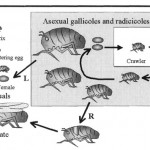
Photo from the Pests and Diseases Image Library:
http://old.padil.gov.au/pbt/files/uall/GP_lifecycle_from_Granett_et_al_2001_paper.jpg

Previous studies have found that phylloxera most often disperses to other vines and vineyards when it is in the first instar nymph life stage.  These are basically the creepy crawly baby phylloxera that has not yet matured into winged adults (in the image, see the white “crawler” highlighted critter).  Phylloxera at this stage is often in the vines and the leaves, and the risk for transferring these pests from one vineyard to another is highest during the spring and summer months when vineyard machinery is moving back and forth during their usual vineyard management programs.  These pests are tough little creatures, and are known to survive a lot of intense handling, including being squashed in between grape bins, and also the crushing, de-stemming, and pressing methods after harvest.

To minimize the transfer of phylloxera from infested to non-infested vineyards in Australia, strict quarantine methods are employed.  These methods include regulations for movement of machinery procedures, hygiene and cleaning procedures, and specific quarantine requirements.  Specifically, in Australia, there is a dry heat treatment requirement for all vineyard machinery which states that machinery needs to be kept in a temperature-controlled room at 45oC for at least 75 minutes or at 40oC for 120 minutes.

By Ji-Elle (Own work) [CC-BY-SA-3.0 (http://creativecommons.org/licenses/by-sa/3.0)], via Wikimedia Commons

Previous studies have shown that increased temperatures have an effect on phylloxera survival and development, though these studies more often focused on only one type of phylloxera (there are 83 known genotypes of the bug) or one geographical location.  Though there are 83 different genotypes, there are two that are particularly widespread and virulent throughout Australian vineyards:  “G1” is the phylloxera strain that is most widespread in Australia, and “G4” is the strain that is the most dangerous/harmful, and according to some are the two strains that provide the greatest threat to the Australian grape and wine industry.

The goals of the study presented today were to the minimum amount of time required for 100% mortality in phylloxera under different temperature and humidity conditions, to compare the impact of these conditions on the mortality of the G1 and G4 strains of phylloxera, and to confirm whether or not the current quarantine protocol for Australian vineyard machinery is effective in reducing the chance of further phylloxera infestations.

Methods

G1 and G4 strains of phylloxera were obtained from invested vineyards in the Yarra Valley and King Valley, Victoria, Australia.  Insects were confirmed to be one or the other strain by DNA microsatellite marker analysis.  Phylloxera were kept on Vitis vinifera roots until ready for use.  Eggs were incubated at a constant temperature for 5-7 days, and then newly hatched first instars of phylloxera were collected and used for the experiments.

Environmental chambers were created to maintain a constant temperature and humidity level.  Temperatures in chambers were kept between 30 and 45oC at 5oC increments with humidity levels at either 30% or 100%.  Separate chambers were used for each temperature and humidity combination.  20 newly hatched first instar phylloxera were placed in a vial with mesh on the ends to 1) prevent escape and 2) maintain air flow.  5 replicates of each vial were placed in each environmental chamber (100 instars per environmental chamber).

Instar survival was measured using a low-powered binocular microscope every 15 minutes for 30-120 minutes, depending upon the treatment.

Results

·         The highest temperature found to achieve 100% phylloxera mortality was 45oC regardless of humidity level.

o   The G1 strain exposed to 45oC achieved 100% mortality by 75 minutes at 30% humidity and by 90 minutes at 100% humidity.

o   The G4 strain exposed to 45oC achieved 100% mortality by 75 minutes at 30% humidity and by 60 minutes at 100% humidity.

·         At the 40oC temperature, 100% mortality was achieved at the 30% humidity level.

o   The G1 strain required 90 minutes to reach 100% mortality under these conditions.

o   The G4 strain required 105 minutes to reach 100% mortality under these conditions.

·         At 40oC and 100% relative humidity, 4% of the G1 strain survived and 7% of the G4 strain survived after an exposure time of 2 hours.

·         No other combination of temperature and humidity achieved 100% mortality for either phylloxera strain.

·         At 30oC and 30% relative humidity, survival was 60% for the G1 strain and 70% for the G4 strain.

·         At 35oC and 30% relative humidity, survival was 30% for both the G1 and G4 strains.

·         Temperature showed a significant effect on mortality of phylloxera.

·         Humidity did not have a significant effect on mortality of phylloxera.

o   The combined effect of temperature and humidity had a significant effect on mortality of phylloxera (though humidity alone had no effect).

·         There was no significant difference between the mortality rates of G1 and G4 strains of phylloxera at the different temperature and humidity combinations.

Conclusions

According to the authors, this is the first study that examined and showed the amount of time required to achieve complete mortality in first instars of

Photo attained from: http://upload.wikimedia.org/wikipedia/commons/thumb/a/a8/Phylloxera_cartoon.png/615px-Phylloxera_cartoon.png

phylloxera at different temperatures and humidity combinations (30oC, 35oC, 40oC, and 45oC; 30% and 100% relative humidity).  They were also able to confirm that the current quarantine protocol set forth by the National Vine Health Steering Committee in Australia of 45oC for 75 minutes exposure time or 40oC for 120 minutes exposure time are effective against the proliferation of phylloxera in non-infected areas.

The authors noted that with increased relatively humidity, the survival rate of the phylloxera instars went up.  They mentioned that this result shouldn’t be too worrisome, as the relative humidity in these designated “dry rooms” should not get much higher than 50%.  More work should be done to examine the survival rates of phylloxera at relative humidity between 30% and 50%, as these levels would be more likely to occur in one of these rooms than a relatively humidity of 100% as was tested in this study.  These results may determine if the regulations of in-room humidity control need to be strengthened or not.

It would also be interesting to see how other strains/genotypes of phylloxera survive under similar conditions.  Do the other 81 known strains have similar survival rates as G1 and G4?  Or are there some particularly tough strains that could take over once the competition was eradicated?  Even if those strains aren’t so common, they could be if they ever attained a competitive advantage.  Research into how to effectively quarantine these strains may be valuable for these reasons.

In general, the results of this study provide strong support for the procedures implemented currently for the quarantining of vineyard machinery in attempts to reduce or eliminate the spread of phylloxera into non-infested areas.  Further research could shed some light onto whether or not these methods may be effective in other locations around the world and may add an extra level of defense against the ever-present vineyard-destroying pest.

I’d love to hear what you all think about this research and the topic in general.  Please feel free to leave your comments!

Source: Korosi, G.A., Mee, P.T., and Powell, K.S. 2012. Influence of temperature and humidity on mortality of grapevine phylloxera Daktulosphaira vitifoliae clonal lineages: a scientific validation of a disinfection procedure for viticultural machinery.  Australian Journal of Grape and Wine Research 18: 43-47.

Using A Plants’ Own Natural Defenses to Protect Against Powdery Mildew and Increase Polyphenol Levels in Grapes and Wine

The use of commercial fungicides is commonplace in conventionally managed vineyards, often utilizing sulfur or synthetically produced formulations.  With the use of these fungicides there comes an associated health risk, both to the environment and to those animals or people that consume the fruit produced from a treated grapevine.  As a result of the increased concern over the health of the environment, particularly in this age of changing climate, there is an increased desire and pressure to move to a more organically managed style of

Photo by CIAT International Center for Tropical Agriculture: http://farm5.staticflickr.com/4140/4875332597_48221ef963.jpg

viticulture, including distancing from the conventional chemical fungicide approach to more environmentally-friendly bio-based alternatives.

One bio-based alternative in particular, chitosan, has been considered to be a potential more natural alternative to sulfur-based conventional fungicides and has been shown to be effective in other plant models.  Chitosan is present on the cell walls of many types of fungi and chitosan receptors are known to be present in the cells of many plant species.  If chitosan comes into contact with the chitosan receptors on the plant, the plants own natural defenses are activated, resulting in the natural protection of the plant against the foreign attacker.

In addition to the plant’s own natural defensive pathways ability to protect against an attack elicited by chitosan activation, it has been shown that chitosan treatments do not reduce crop yield in many plant species, suggesting that plant metabolism is not compromised by this type of treatment.

Powdery mildew (Erysiphe necator Schwein or Uncinula necator Schwein) is a common disease in grapevines that affect grape yield and quality.  Briefly, what happens is that mildew spores overwintering in the dead plant litter are released in the spring and infect the new grapevine host.  Secondary infections occur later and infect the skin layer of the leaves and fruit.  Ultimately, this infection leads to overall decreases in berry yield and berry quality, which subsequently leads to decreased wine quality.

Controlling powdery mildew in plants is typically managed by conventional chemical fungicides, though more organic approaches are being implemented every year.  Using chitosan to induce natural plant defenses has been shown to not only defend against plant pathogens, but also increase certain polyphenolic compounds in the plant.  This treatment results in the increased quality and antioxidant capacity of the foods created or produced from chitosan-treated plants.

Photo by wallygrom: http://farm7.staticflickr.com/6073/6159640497_6e87d6ff2c.jpg

The study presented today, which was published in 2011 and therefore may not be new for some of you, aimed to test the effectiveness of a new chitosan-based formulation on the grapevine against powdery mildew infection, as well as the analysis of the total polyphenol content of the grapes and resulting wine.

Methods

Kendal Cops (KC) was the chitosan-based formulation used in this study, and was based on a 4% solution of chitosan with 1.5% Cu2+ and 0.5% Mn2+.  Different dilutions of KC were tested, as well as mixtures of KC and conventional fungicides, and conventional fungicides alone.  Conventional fungicides used in the experiment were penconazole and methyldinocap.

Experiments were performed at an experimental vineyard in Chieti, Italy, the grapevines of which were planted in 1999.  The experimental vineyard was located in a place that is predisposed to severe powdery mildew infections (Piazzano d’Atessa).  Grapevines planted were the Montepulciano d’Abruzzo cultivar.

Negative controls were left as untreated vines, and positive controls were those treated only with chemical fungicides.  The experiment was set up as a complete randomized block design with 4 replicates and 10 vines per block.

Plants were sprayed every 7 days using a spray lance to avoid spray drift, from the beginning of the susceptibility of the grapes to powdery mildew infection to the end of the veraison period (i.e. once the grapes completely changed colors).

Powdery mildew infection symptoms were monitored weekly on the leaves and grape clusters by visual inspection.  Disease incidence (i.e. percentage of infected leaves or clusters) and disease severity (on a scale of 0-5) were measured.  Using these data, percentage of infection was calculated.

Experimental wines were produced using standard enological methods at the Viticultural Research Center of Conegliano.

Total phenolic content and antiradical/antioxidant activity were analyzed on grape clusters (isolating the skins, flesh, and seeds) as well as the experimental wines.

Results

  • In untreated controls, powdery mildew incidence was 98% in the leaves and 100% in the grape clusters.
  • All plants containing KC (chitosan-based formulation) were effectively controlled against powdery mildew without causing any phytotoxicity to the plant or the grapes.
  • The KC formulation with the highest concentration (10mL/L) was most effective against powdery mildew, with comparable protection levels compared to the fungicide control.
    • For example, on August 1st, disease severity was 87.5% in untreated control, whereas disease severity was only 2.39% in the more highly concentrated chitosan-based formulation (KC)and 0.92% in the fungicide-treated plants.
      • KC (high dose) and fungicide disease severity levels were not significantly different from one another.
      • All other doses of KC as well as combinations of KC and fungicides were not significantly different than the fungicide control, but were significantly more effective than the untreated control.
  • The highest polyphenol content was found in the skin, then the seeds, and then finally the grape flesh.
  • For grapevines treated with KC (chitosan), polyphenol levels in grape skins increased by 19% and levels in the grape seed since increased by 22.5%, compared to the control skins (not treated).
  • For grapevines treated with conventional fungicides, polyphenol levels in grape skins decreased by 19% in the skins and decreased by 10% in the seeds compared with the untreated control.
  • For wines, those made from grapes that were treated with KC (chitosan) had significantly higher levels of polyphenols than conventional wines (increase of 7%).
  • The highest concentration of polyphenols was found in the untreated control wine.
  • Antiradical activity was lowest for plants treated with KC.
  • There was a negative correlation between antiradical activity and polyphenol levels in the experimental wines.

What does this all mean?

In summary, the results of this study showed that the organic chitosan-based formulation KC was just as effective against powdery mildew at a concentration of 10mL/L as the conventional fungicide,without eliciting any negative phytotoxicity side effects.  Also, treatment with KC resulted in an overall

http://images.cdn.fotopedia.com/flickr-3496808324-hd.jpg

increase in polyphenols in the grape skins, seeds, and pulp, which is indicative of higher quality grapes and subsequently higher quality wines.

Even though the authors do describe some of the other work on with other alternatives to conventional fungicides, I would have liked instead for them to compare these other alternatives directly against KC, to determine if one was more effective than the other.  Based on some of the comments made by the authors of inefficiency and phytotoxicity in some of these other alternative formulations, KC may be the most efficient and least harmful for the environment as a whole.

I would also be curious to have seen a sensory analysis performed on these experimental wines.  Yes, the polyphenol content changed in wines treated with KC versus wines not treated with KC (or treated with conventional fungicides), but how do these wines differ in regards to their sensory characteristics?  Are they better?  Worse?  Depends?

Exactly which polyphenols saw concentration changes?  This study only looked at total polyphenols, but it would be interesting to see how individual polyphenols changed with this alternative fungicide treatment.  Do only certain polyphenols increase in concentration?  Or is it all polyphenols increasing all together?

Is this chitosan formulation effective against powdery mildew in all grape cultivars?  How about in different growing regions?

Overall, I think this is a very interesting study that provides a promising alternative to conventional fungicides that is very efficient at combating against powdery mildew infection, kind to the environment, and also potentially resulting in products that may be even better for you that if the grapes were not treated at all.  Using chitosan-based formulations employ the pathways of the plants’ own natural defenses, thus resulting in a truly organic and extremely effective tool for managing powdery mildew infections in the grapevine.

I’d love to hear your thoughts on this topic.  Please feel free to start a discussion!

Source: Iriti, M., Vitalini, S., Di Tommaso, G., D’Amico, S., Borgo, M., and Faoro, F. 2011. New chitosan formulation prevents grapevine powdery mildew infection and improves polyphenol content and free radical scavenging activity of grape and wine. Australian Journal of Grape and Wine Research 17: 263-269.

The Role of the Social Wasp in Yeast Ecology: Thank Your Local Wasp for the Complexity of Your Wine

Not too long ago, I read a post online discussing the relationship between social wasps and fermentation (ultimately) in wine.  The first thing that I thought, being the ecologist that I am, was “Wow, this is really cool! I need to read the source article and present it on my blog!”  My own Masters research focused on nutrition in bees (actually, my exact thesis was “Ecological and Evolutionary Shifts in Pollen Chemistry and Their Implications for Pollinators”), so finding an article related to not only wine but distantly-related wasps as well was extremely exciting for me (I know, I know, I am a huge nerd).

The basis of the research I will present to you today, which was recently published in the Proceeding of the National Academy of Science (PNAS), is that it is still unclear how the yeast, S. cerevisiae (the “wine yeast”) actually spreads around different environments.  In fact, studies have shown that before the grapes have matured, there almost no S. cerevisiae present, however approximately 25% of ripe grapes that have been damaged have these cells present.

It is known that S. cerevisiae is not transferred from place to place via the air; thereby some other mechanisms must be in place in order to explain its movement from winery to winery and environment to environment.  Some studies have suggested that migratory birds may place a role in this movement; however, since it has been shown that yeast cells do not survive longer than 12 hours in bird guts, it’s unlikely that birds would be a major player in this process.  As a result of this, it is suggested that perhaps insects play a role in the movement of yeasts from environment to environment.

Some studies have suggested that social wasps may be a vector for this movement of yeasts from one place to the next, since it has been shown that bees and wasps harbor yeasts in their hives in the fall and throughout the winter.  The authors of this study suggest that social wasps may be an ideal vector for this movement of yeast as a result of their relatively complex life cycle.  Nests are established in the spring by females, who recently emerged from overwintering (“hibernating”, if you will).  The female then feed their young by regurgitating, which the authors suggest is a possible mechanism for transferring yeasts from one generation to the next.   Wasp populations are also known to peak around the same time as grape maturation, and it is known that wasps do feed on the grapes themselves.  Some wasps are even equipped with mouth parts that are specifically designed to pierce tough surfaces, potentially such as the skins of grapes.

The two main questions that the authors of this study asked were: 1) Can S. cerevisiae cells complete an annual life cycle through transgenerational transfer in social wasps?; and 2) Do social wasps harbor specific yeast strains in their bodies, or do they move different strains about different environments depending upon what is present and where?

What did they find?

Methods: I’m sparing you the nitty gritty details of the methods, as many of them are extremely technical in nature.  I will say that the sample size was ample for proper statistical analysis, and upon brief review, everything sounds good to me!  In general, the guts of wasps were harvested and examined for the presence of different yeasts, and also technical genetic analyses were performed to identify the yeasts and other organisms present in these guts.  If you want to know specific details, please ask me and I’ll do my best to try and find the answer for you!

  • 17 S. cerevisiae strains were found in the guts of 61 wasps (4% of the microbial gut community).
  • The frequency of the species of yeasts changed depending upon the season.
  • Saccharomycodes species of yeasts (including S. cerevisiae) were found to have the strongest relationship between time of collection and yeast presence, specifically when the grapes were ripe.
  • In contrast to other species whose presence fluctuated depending upon season, S. cerevisiae strains were almost always present in the guts of wasps.

What about these S. cerevisiae strains found in wasp guts?

  • 10 of the strains found were related to wine strains, 3 were related to bread strains, 1 was related to a mix of African beer, palm wine, and laboratory strains, and 1 was related to African palm wine strains.
    • The strains isolated from the wasp guts belonged primarily to strains related to those from European grapes and wines.
    • The strains of yeast used in wine fermentation at a local winery (in Italy) were found to be genetically different than the yeast strains found in the guts of wasps in nearby vineyards.
      • This suggests that wasps may promote yeast biodiversity.
      • S. cerevisiae and other yeasts were found in the digestive tract of larvae and newborn workers.
        • This suggests wasps are able to “pass down” naturally collected yeast strains to the next generation by way of regurgitation of food.

What do these results mean, and why are they important?

It has been well established that grapes can undergo natural fermentation, even without inoculation of S. cerevisiae in the winery/laboratory.  This suggests that there must be yeast present on the grapes in order to achieve this, however, since there is no yeast present on unripe grapes, how do they establish a yeast colony to perform this natural fermentation?  According to this paper, the answer may very well come from the wasps.  Since S. cerevisiae is continually present in the guts of wasps, and wasps feed on grapes when they have reached a point of ripeness, it is logical to surmise that the act of the wasps piercing the grapes to feed results in a transfer of natural yeasts from gut to grape, thereby facilitating the natural fermentation process in the grape.

Basically, without wasps, natural fermentation cannot start in grapes!

This study also found that overwintering (“hibernating”) females carried yeast cells in their guts and then passed them along to their young in the spring, the process by which is theoretically a continually perpetuating process generation after generation.

In regards to yeast genetics, the study did not find any yeast strains that are native to animal species in the guts of wasps.  In fact, the yeast strains the genetic analysis of the yeast strains found in gut wasps reveal that the strains are directly related to wine, grapes, bread, and oak yeast strains.

Finally, the results of this study found that the yeast strains found in the guts of wasps, grapes, and winery of a particular vineyard are very similar to strains coming from other environmental and/or geographical locations.  This indicates that social wasps may play a large role in maintaining the genetic and ecological diversity of yeasts.  This result is extremely important in regards to conservation efforts, as the conservation of this genetic diversity of yeasts has potential importance within the whole wine industry as well as other fermented product industries.

The authors suggest that any change to the environment that results in the destruction or degradation of yeast genetic diversity may have a large negative impact on the overall quality of wine or other fermented products.  To maintain genetic diversity in yeasts and thus increase the complexity and quality of wines, we must make concerted efforts to maintain the diversity of social wasps, and to protect their habitats to the best of our ability.

Overall, I thought this was a really fascinating study, and completely opened my eyes to a “new” part of viticulture and enology that I was not otherwise in tune with.  We’ve known that grapes start their own natural fermentation process before beginning the artificial fermentation process in the winery, which contributes to the overall complexity and quality of the finished wine.  What I didn’t know was how this natural yeast even occurred on the grapes to begin with.  I just assumed the yeasts were just always there, and was unaware that the grapes are pretty much “yeastless” until they have ripened.

This study has opened my eyes to the fact that insects, specifically social wasps, may play a huge role in the initial inoculation of natural yeasts into the grape, which jump starts the fermentation process prior to fermentation in the winery which results in an overall increase in wine complexity and possibly quality.  Looks like we have the wasp to thank for much of the complexity in our wines, and that’s pretty amazing if you ask me!

I’d love to hear what you all think about this topic!  Please feel free to leave your comments!

Source: Steffani, I., Dapporto, L., Legras, J-L., Calabretta, A., Di Paola, M., De Filippo, C., Viola, R., Capretti, r., Capretti, P., Polsinelli, M., Turillazzi, S., and Cavalieri, D. 2012. Role of social wasps in Saccharomyces cerevisiae ecology and evolution. Proceedings of the National Academy of Sciences (Microbiology). Online before print.  DOI 10.1073/pnas.1208362109

Pollination Dynamics of Cabernet Sauvignon

In many plant species, including grape cultivars, autogamy (i.e. self-fertilization) is all that is necessary to successfully reproduce.  However, some cultivars require cross-pollination in order to reproduce and reach maturity.  The level of successful pollinations that occur will determine the grape yield, thereby understanding pollination dynamics of the grapevine is very important.

http://1.bp.blogspot.com/
-Y23G6131Ba0/T6lRsMNOOII/
AAAAAAAAAh0/rnWOJOkEw6o/
s1600/bee+on+grape+flower.jpe

Depending upon the species and cultivar, grapevines may be pollinated by wind or by insects.  One study in particular found that the presence of honeybee hives did not increase the number of fruit, but it did decrease the number of seedless grapes, thereby indicating that even though the grape yield was not increased by the presence of bees, the number of viable fruits had increased due to more efficient pollination by the bees.

To date, most studies involving pollination dynamics of grapevines examined finding links between annual pollen concentrations and grape yield, and how different environmental factors affect pollen dispersal.  According to the authors of the current study, there has been a resurgence in the study of grapevine pollination dynamics (Vitis vinifera, specifically), due to the increased presence of transgenic grapevines and the need to justify possible cross-pollination of these cultivars with other cultivars in the same area.

The goal of the study presented today was to further add to the scientific knowledge regarding pollination dynamics of Vitis vinifera, specifically anemophilous pollination (wind pollination), by examining airborne pollen concentrations.

Methods

The study vineyard was located in Zafra, in Badaioz in the southwest of Spain.  Vines were planted in rows 3 meters apart with 1.5 meters between each vine.  The main cultivar in the vineyard was Cabernet Sauvignon, though one small plot also contained Alphonse Lavallée, Cinsaut, Garnacha, Garnacha Tintorera, Mazuelo, Merlot, Morisca Real, Syrah, and Tempranillo.  All cultivars were grafted onto American rootstock.

Grapevine pollen concentrations were measured for the entire day, and also for each hour.  The average concentration per hour was calculated.  Hourly meteorological data was also measured.

Pollen grain dispersal was measured during sunlight hours of 1600 and 1830.  In order to take into account possible outside environmental influences, pollen concentrations of nearby species that were not grapevines were measured.  The most abundant plant nearby the vineyard was the olive tree, which was found no closer than 500m from the vineyard.

In order to measure the influence of height on the dispersal of pollen grains, samples were taken at 4 different heights in the center of the Cabernet Sauvignon vineyard and between the vineyard rows.  Pollen concentrations (both grapevine and olive tree) were measured at 0.5, 1m, and 2m above the ground.  This sampling took place on May 30, 2001.  For measuring horizontal dispersion of pollen, three locations 1.5m, 3m, and 4.5m from the vine were selected on the edges of the Cabernet Sauvignon vineyard.  14 samples were taken for 30 minutes on May 29th and 30th (6 samples at 1.5m, 4 samples at 3m, and 4 samples at 4.5m).  Mean concentrations of pollen (both grapevine and olive tree) were measured and calculated during these samplings.

To determine the effects of distance on pollen concentration in the vineyard, pollen concentrations of all cultivars were measured on May 22nd when 4 of the cultivars had more than 10% inflorescences with some open flowers.  Pollen concentration was measured by sampling each cultivar for 30 minutes.

Results

  •       Max daily concentrations of grapevine pollen occurred between May 26th and June 1st.
  •       The pollination period for Cabernet Sauvignon was only 7 days.
  •        During the max pollination period for Cab Sauvignon, the mean concentration of pollen was 62.7grains/m3 with a high concentration of 87.5grains/m3 noted on May 29th.

o   These concentrations are low for wind pollinated cultivars.

  •       Daily mean temperatures ranged from 15.1 to 28.5oC;  relative humidity ranged from 29.3 to 79.4%; daily wind speed ranged from 2.8 to 10.4km/hr; wind direction ranged from 60o to 253o ENE to SWS; and no rain was recorded during the sampling period.
  •        Relative humidity significantly affected pollen negatively

o   i.e. Higher relative humidity = lower pollen concentrations.

  •        Wind speed and wind direction had no significant effects on pollen concentrations.

o   Hourly and daily meteorological data affected pollen concentrations in the exact same manner.

  •       Pollination levels of Cab Sauvignon were at a minimum between 2300 and 0700 hours, and at a maximum during midday.
  •       Concentrations of olive tree pollen were greatest up to 0.5m aboveground and gradually decreased with increasing height aboveground.

o   This is possibly due to reduced wind speed at locations closer to the ground.

  •       Concentrations of Cab Sauvignon pollen were 200grains/m3 at 1m aboveground.

o   At 2m, there was a 10x reduction in pollen concentrations.

§  This result demonstrates the limited vertical dispersion of Cabernet Sauvignon pollen.

  •       Olive tree pollen concentrations remained steady, but pollen concentrations of Cabernet Sauvignon and other vinifera cultivars decreased beyond 1.5m after the end of the row.

Conclusions

The results of this study indicate that the dispersal capability of Vitis vinifera is relatively low, particularly for a wind-pollinated (anemophilous) plant.  This result is not surprising, considering the fact that Vitis vinifera species still retain some entomophilous (insect pollinated) characteristics from their ancestors, such as the production of sterile pollen by female flowers and the production of scented compounds which under true entomophilous species would attract insect pollinators.  The fact that Vitis vinifera possesses characteristics of both insect and wind pollinated plants indicates that this is a species in transition, with human selection driving the species toward a fully anemophilous state.

Finally, due to the pollination of this species only being effective at a short distance from the pollen source, if pollination were to take place between cultivars, it would need to occur between plants within very close proximity to each other.  Since wind speed and wind direction do not affect pollen concentrations, having a vineyard with transgenic vines neighboring a non-transgenic site would likely not result in the undesired cross-pollination between the two cultivars.

I’d love to hear what you all think about this topic!  We rarely see studies that are so heavily based in Ecology, so it’d be great to hear from you plant and insect lovers out there!  Please feel free to comment below (html tags will be deleted, so please do not post them).

Source: Muñoz-Rodríguez, A.F., Tormo, R., and Silva, M.I. 2011. Pollination Dynamics in Vitis vinifera L. American Journal of Enology and Viticulture 62(1): 113-117.

DOI: 10.5344/ajev.2010.10047
I am not a health professional, nor do I pretend to be. Please consult your doctor before altering your alcohol consumption habits. Do not consume alcohol if you are under the age of 21. Do not drink and drive. Enjoy responsibly!