Tag Archives: irrigation

Climate Change-Induced Water Stress: How Leaf Position Affects Water Use Efficiency in the Grape Vine

—————————————————————————————————-

Welcome to The Academic Wino! If you are new here, please read the “About Me” page to find out more about myself and the blog. If you would like to receive free updates on articles like this by email, then sign up here or you can subscribe to the RSS feed. Also, check us out on Twitter, Facebook, Google+, and or Pinterest. Thanks for visiting!

—————————————————————————————————-

According to scientists, climate change will affect various parts of the world differently than one another. Specifically, in regards to the Mediterranean region (as well as many others), a decrease in annual precipitation is currently predicted, based on past data and future forecast models. As a result of this predicted change, there has been substantial interest in research related to water use efficiency in both viticulture and agriculture in general, as precipitation changes will likely bring changes to the sustainability and quality of crops, so determining how to adapt to these changes is absolutely necessary for the future of viticulture and agriculture as a whole.

This type of research is not exactly new, and has been going on for many years. Current strategies for combating decreased water availability due to climate change include (but are not limited to) controlled irrigation and partial root zone drying. The problem with using irrigation in a climate that has significantly

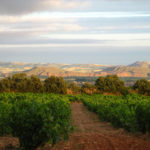
By Photo by Lynn Betts, USDA Natural Resources Conservation Service. (USDA NRCS Photo Gallery: NRCSCA00061.tif) [Public domain], via Wikimedia Commons

By Photo by Lynn Betts, USDA Natural Resources Conservation Service. (USDA NRCS Photo Gallery: NRCSCA00061.tif) [Public domain], via Wikimedia Commons

reduced precipitation is the issue of where the water used for irrigation would come from. To work around this issue, scientists are currently looking at plant water use efficiency, and how pruning or other viticulture strategies can optimize plant water use in such a way that the need for supplemental irrigation is reduced. Of course, there are some “issues” with looking only at water use efficiency, as higher water use efficiency has been linked to lower fruit yield in grapevines. Therefore, optimization, and not necessarily maximization of water use efficiency is key.

The goal of the study presented today was to examine variations in leaf water use efficiency in the grapevine (Tempranillo, to be specific) under water-stressed conditions as well as under different light conditions, as well as throughout different parts of the canopy.

Methods

This study took place at a commercial vineyard in Mallorca, Spain during 1997, 1998, and 2000. 20 year old Vitis vinifera grapevines of the Tempranillo variety were utilized for the study. The study consisted of two plots (located adjacent to one another) containing 350 plants each and underwent one of the two following treatments: 1) Irrigation: irrigation was applied via a drip system twice per week, and was set to drip enough to account for 30% of evapotranspiration; 2) No irrigation: soil progressively became more and more water stressed throughout the treatment period.

Climate conditions were determined by a local weather experimental station nearby. Pre-dawn and mid-day leaf water potential, as well as leaf gas exchange was measured in June, July, and early August. There were a total of 6 replicates per treatment.

Net photosynthesis, stomatal conductance, and transpiration were all measured 6 times a day for every 3 hours between the hours of 6am and 8pm.

All measurements were done on leafs located in 8 different locations within the plant canopy. For each measurement day, 6 replicates per leaf location were measured.

Daily-integrated intrinsic water use efficiency and instantaneous water use efficiency were both calculated.

After harvest, leaves from each canopy location were harvested from six plants per treatment. Fresh weight, leaf area, specific leaf weight, and total leaf area of each canopy location were measured or calculated.

Results

• Irrigation resulted in stable plant water status throughout the growing season.
• Pre-dawn water potential decreased throughout the growing season for those plants in the non-irrigation treatment.
• The ratio of photosynthesis to stomatal conductance was significantly higher in water-stressed plants compared with irrigated plants.
• Photosynthetic active radiation (PAR) interception varied depending upon where in the canopy the leaf was located, with a decrease in PAR noted from the upper part of the canopy to the lower part of the canopy.
o Those leaves in the innermost part of the canopy showed the lowest PAR values, which makes sense due to the fact that the leaves are in the shade do not experience as much radiation from the sun as leaves in full sunlight.
• Water stress did not affect PAR values for any leaf position.
• Midday leaf temperature and leaf-to-air vapor pressure deficit did not differ between any of the leaf positions.
• Water stress resulted in an increase in midday leaf temperatures.
• Water use efficiency was extremely variable between the different leaf positions in the canopy.
o The lowest water use efficiency was in shaded leaves, whereas the highest water use efficiency was in the leaves at the top of the canopy.
o Leaves in sunnier positions had 3x greater water use efficiency than leaves in the shade.
• Water use efficiency was increased in water-stressed plants.
o Those leaves near the top (but not all the way on the top) of the canopy (i.e. those leaves with 67.5% light interception compared with the top leaves) were found to have the highest water used efficiency.
• There was a significant relationship between water use efficiency and the daily intercepted PAR of the leaf.
• South-facing leaves at the top of the canopy had the highest water consumption levels per leaf area than all other leaves.
• Shaded leaves showed the lowest rates of transpiration, however, since there were so many of them (making up 37% of the total number of leaves on the plant), the water use efficiency actually decreased compared to leaves at the top of the canopy.
• Total water consumption decreased in water-stressed plants.
o Moderately-stressed plants showed a 47% decrease in water consumption compared to irrigated plants.
o Severely-stressed plants showed a 70% decrease in water consumption compared to irrigated plants.

Conclusions

The results of this study indicate that there were significant differences between the locations of the leaves in the canopy in regards to water use efficiency. The authors speculated that these differences could be due to the differences found in PAR and light exposure. In regards to the entire plant, it was found that water use efficiency increased when the plants were under water stress. This makes sense, as when the plant has less water to work with it needs to make sure it’s spending the appropriate amount of resources on water consumption while at the same time reducing the resources needed for evapotranspiration. In other words, it is in the plants’ best interest to become more efficient at using water when water is scarce, so it doesn’t prematurely shrivel and die due to poorly managed resources (though at some point, this will happen anyway if no water is ever seen again).

The results also indicated that the shadiest of areas on the plant had cumulatively the lowest water use efficiency (or highest daily water loss)

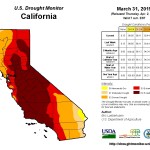
By Agne27 at en.wikipedia [Public domain], from Wikimedia Commons

By Agne27 at en.wikipedia [Public domain], from Wikimedia Commons

compared to all other locations. The authors suggested that by using selective thinning or pruning in this area could decrease the total water loss and increase the water use efficiency of the grape vine. Of course, one must be careful when undertaking a new pruning management plan, as water use efficiency will not be the only thing changed after the pruning occurs.

It is important to note that pruning has influence on many other factors, including the maturation of the grape and the overall quality of the fruit, so it is important to find some sort of middle ground if selective pruning is of interest to you. Selective pruning may be a good approach to adjusting to climate change-induced water stress, however, it is important to take all factors into consideration before just tearing apart your entire vineyard canopy. It is advised to experiment with a small number of vine first prior to partaking in a vineyard-wide pruning management regime.

One other side note to mention is that this study examined just one grape variety (Tempranillo). It’s possible other grape varieties may behave slightly differently in regards to their water use efficiency and their ability to adapt to changes in water availability, so certainly further studies using more grape varieties is warranted.

What do you all think of these results? What other vineyard management programs do you think could be applied after seeing the results of this study? Those of you with experience in vineyards under high water stress, or those that may be experiencing change in water availability at your vineyard: what sorts of vineyard management practices are you doing to adapt to the conditions? Please feel free to comment!

Source: Medrano, H., Pou, A., Tomás, M., Martorell, S., Gulias, J., Flexas, J., and Escalona, J.M. 2012. Average daily light interception determines leaf water use efficiency among different canopy locations in grapevine. Agricultural Water Management 114: 4-10.

The Effect of Irrigation on the Chemical Composition of Grapes

Every chemical compound in grapes and in wine play some role in the life of the grape/wine, be it during physiological processes during the growth stage, or in the finished wine itself, where it may contribute to the taste and flavor of the wine or the stability of the beverage over time.  For example, anthocyanins are responsible for the color of the grape berries, and ultimately for the finished wine.  Also, flavonols, while they are colorless in the skins of grapes, they are thought to act as a sort of shield against UV radiation.  The exact composition of these compounds in grapes and wine depend on a variety of factors, including grape variety/genetics, environmental factors, and viticulture and winemaking practices.  Studies have also suggested that anthocyanin and flavonol composition is a function of grape growth and skin characteristics.

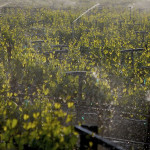
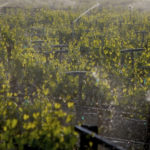
http://www.environment.gov.au/water/
topics/images/drip-irrigation.jpg

Most research to date has focused on the phenolic composition of grapes and wine, with very little focus on the many remaining chemical compounds in the fruit and finished beverage.  Phenolics should not be the only thing considered during these research studies, as there is likely a synergistic effect between multiple compounds in the system.  Understanding of the full chemical composition of grapes and wines are important not only from a purely scientific standpoint, but also for the grape grower and winemaker due to the direct effects on fruit and wine quality.

The goals of the study presented today were to determine the effect of irrigation management (a viticultural factor that may possibly alter the chemical composition of grapes/wine) on plant yield and physiology, as well as grape berry morphological characteristics, polyphenol and metal composition.  The study also sought to determine the absence of irrigation all together could have an effect on grape quality.

Methods

The experiment was performed in 2008 in a 5 year old vineyard in Montegiordano Marina, Southern Italy.  The climatic conditions there are considered “very hot” (climatic region 5).

The experimental vineyard plot was 0.3ha, with 10 rows of spur-pruned vines trained to a permanent horizontal unilateral cordon.  Distance between vines was 2.5m with 1m between rows.  Final plant density was 4000 vines per hectare.  Rows were planted in a north-south orientation.

Half of the plants were subject to irrigation from the early stages of fruit set to veraison using water amounts equal to 100% of cultural evapotranspiration.  Specifically, this equaled 24L per plant per each irrigation event (10 total) at 5 day intervals.  The other half of the plants were not subject to irrigation.

Meteorological variables that were measured or calculated were: temperature, rainfall, and photosynthetic photon flux density.  Physiological characteristics measured or calculated were leaf-to-air vapor pressure deficit, stem water potential (in order to determine plant water status), leaf gas exchange, chlorophyll florescence, basal florescence yield in dark-adapted leaves, maximal florescence yield in dark and light conditions, maximum quantum yield of PSII photochemistry in dark-adapted leaves, and finally the effective quantum yield of PSII in light-adapted leaves.

At harvest, 30 plants per treatment were randomly selected and the following were measured/calculated: number of clusters and yield per plant, cluster weight, number of berries per cluster, total berry weight per cluster, and the number of leaves per shoot.  For each plant, 3 clusters were randomly selected.

Berries from each cluster were separated into different weight categories: 1) less than 0.60g; 2) between 0.60 and 0.90g; 3) between 0.90 and 1.25g; and 4) greater than 1.25g.  For each plant, 20 grapes per weight class were randomly selected to measure/calculate berry fresh weight, berry diameter at the “equator”, and berry diameter at the “poles”.  The following characteristics were calculated for the berries: surface, volume, surface/volume ratio, the ratio of berry surface/berry weight, and the ratio of skin weight/berry weight.  Skin thickness and soluble solid content of berries was also measured.

For anthocyanin and flavonol extraction and analysis, three clusters per plant were randomly selected and berries separated into the aforementioned weight categories.  Anthocyanins and flavonols were measured, as well as levels of iron, copper, zinc, and calcium.

Results

(Note: I’m leaving out many exact details about values due to space limitations, but if you need to know exact numbers/values of any item presented in the results, just ask and I’ll see if those details are available and will let you know).

  • The growing season was marked with high temperatures and low rainfall.

o   Max temperatures ranged between 15.3 and 38.5oC.

o   Min temperatures ranged from 12.3 and 29.1oC.

o   Rainfall during the experimental growing season was a very low 21.9mm.

  •  There were no significant differences between irrigated and not irrigated plants in regards to net photosynthesis.
  • There were no significant differences in transpiration values between either of the treatments.
  • There were no significant differences in stomatal conductance between either of the treatments.
  • Maximum quantum yield of photosystem II and actual quantum yield of PSII reaction centers in leaves were not affected by irrigation treatment.
  • Mean numbers of clusters per plant were not different between treatment groups.
  • Yield per plant, cluster weight, and total berry weight were significantly different between treatment groups, with higher values occurring in the irrigation group.

o   Irrigation significantly increased the frequency of grapes with greater than 1.25g mass and reduced the frequency of grapes with less than 0.6g mass.

  • Irrigation treatment significantly affected berry fresh weight and skin fresh weight.

o   Irrigation significantly affected berry surface/volume ratios, and were significantly higher in irrigated plants.

o   Skin fresh weights were higher in non-irrigated plants, which resulted in a decrease in skin specific surface and increased in skin specific weight.

o   For the two intermediate weight categories, there were significant differences between the two treatment groups were noted for seed weight per berry as a result in the differences between seed number per berry.

§  There were more seeds in non-irrigated plants than in the irrigated treatment group.

  •  Soluble solid content was significantly higher in the non-irrigated group than the irrigated group.
  • Total anthocyanins were significantly higher in the non-irrigation group than the irrigation group.

o   This result was positively correlated with berry weight.

  • Significant differences were found in the concentrations of petunidin-3-O-acetylglucoside, peonidin-3-O-acteylglucoside, and petunidin-(6-O-caffeoyl)glucoside.

o   Levels were higher in non-irrigated plants (9x, 18x, and 10x, respectively).

  • Levels of single anthocyanins increased with decreasing berry weight.
  • Berries from irrigated plants had significantly lower ratios of acetylated anthocyanins/coumaroylated anthocyanins.
  • Total flavonols were not significantly different between the two treatment groups.

o   Levels of single flavonols were significantly higher in heavier berries.

  • Iron, copper, and zinc levels were significantly higher in berries from irrigated plants than from non-irrigated plants.
  • Calcium levels were not significantly different between the two treatment groups.
  • Metal levels significantly decreased in increasing berry weight.
  • There were no differences in berry skin thickness between either treatment group.
  •  No significant differences were found in the number of skin layers and thickness of the berries between either treatment group.

Conclusions

One undesired outcome of this experiment was the near drought-like conditions of the weather during the experiment.  This resulted in plants being subject to moderate-severe water stress, which caused some leaf necrosis and can influence the micro-climate at the cluster.  Specifically, it has been shown that this type of stress may affect berry size and chemical composition, thereby potentially changing the outcomes of some of the tests, and making it generally more difficult to tease out cause and effect.

The results of this study also showed that total anthocyanins were higher in grapes from non-irrigated plants than in irrigated plants.  This results in a positive influence on the long-term color stability of wines, as these compounds working in concert with tannins and flavonols to strengthen color stability in the aging beverage.  Additionally, increases in these compounds and well as the observed increases in petunidin-3-O-acetylglucoside and peonidin-3-O-acteylglucoside, can have positive sensory benefits to the finished wine as well.

Another interesting result from this study is that metal levels significantly decreased with increasing berry weight.  Excess metal concentrations in wine are known to cause negative sensory characteristics, delay the fermentation process, and increase instability.  Fe, Cu, and Zn were all found to be significantly lower in grapes from non-irrigated plants than in irrigated plants.

Overall, the results of this study suggest that less irrigation increased the quality of the finished wine.  Specifically, little to no irrigation results in lower berry yield and a reduction in berry size without negatively affecting grape quality in terms of the chemical composition of the grapes.  This study confirms what many in the wine industry in that grapes grown under water stress conditions can result in higher quality wine (provided there are no set-backs during the winemaking process).  Even though many already knew less water is better, this study paints a good picture of exactly how the chemical composition of the grapes changes when subject to these drier conditions.

There are many more results to this study that I did not cover due to time and space considerations, but I’d love to hear your thoughts or questions on them, even if I didn’t specifically cover it.  What do you all think of the study?  What would you like to have seen done differently (if anything).  I, for one, would have liked to see them create experimental wines from these two treatment groups and measure the same compounds to see how irrigation actually alters the chemical composition of the finished wine and not just the starting point grapes.  Do these differences carry through the winemaking process?  Are different winemaking techniques better suited to maintaining the original/similar chemical composition of the grapes?

I’d love to hear what you think! Please feel free to comment below!

Source: Sofo, A., Nuzzo, V., Tataranni, G., Manfra, M., De Nisco, M., and Scopa, A. 2012. Berry morphology and composition in irrigated and non-irrigated grapevine (Vitis vinifera L.). Journal of Plant Physiology 169: 1023-1031.

DOI: 10.1016/j.plph.2012.03.007
I am not a health professional, nor do I pretend to be. Please consult your doctor before altering your alcohol consumption habits. Do not consume alcohol if you are under the age of 21. Do not drink and drive. Enjoy responsibly!

The Effect of Cover Crops on Aromatic Quality of Wine: Which Works Best?

The use of cover crops in a vineyard has been well studied, and is often employed in vineyards around the world.  Basically, cover crops are plants (usually grasses) sown in between the rows of vines, which are most often used in areas of the world where there is summer rainfall events or irrigation systems.  Many studies to date have examined the effects of cover crops on grapevine growth as a result of water competition between the cover crops and the grapevines, and have found that the water consumption by the cover crops effectively reduces the amount of water available to the grapevine, thus reducing vegetative growth. 

http://newfarm.rodaleinstitute.org/depts/notill/f
eatures/cc_images/NRCSCA01010.jpg

Reduced vegetative growth results in a favorable vegetative to reproductive growth ratio, with more energy being put into the berries instead of the vegetative portions of the plant.  Less vegetative growth means a lower canopy density, which effectively improves the microclimate at each grape cluster.  Cover cropping also results in reduced must titratable acidity and increased soluble sugar, increased sugar to acid ratios, and increased total phenols and anthocyanin concentrations in the skins of red grapes.  All of this results in enhanced grape and wine quality.

Even though there have been many studies examining viticultural and enological effects of cover cropping, very few studies have examined the effects of cover cropping on the aromatic compounds of a wine.  It is been shown that cover cropping enhances the flavor and overall favorability of the wine; however, few studies have examined what changes chemically in the aroma of the wine.  The study under review today, which was published at the beginning of this year, sought to examine that very question.  The overall goal of this study was to determine the influence of a permanent cover crop on the major volatile compounds of the Cabernet Sauvignon grown in a continental monsoon climate, and whether different types of cover crops changed the overall quality of the wines.

Methods

Study Site and Vineyard

The study site was located in the Yangling district of Shaanxi Province in northwest China.  This area sees a temperate climate, with a mean precipitation of 580mm per growing season.  The soil type in this vineyard was primarily loam, with organic matter of 1.2% and a pH of 8.3.  The grapes used were Cabernet Sauvignon (Vitis vinifera L.) and was planted in 2002 (experiment performed 2006-2007).  Spacing between rows was 1.5m, and spacing between vines was 1.0m.  Rows were oriented in a south-north direction.  Vines were trained on a vertical shoot positioning system with a pair of wires, with the shoots trimmed twice (manually) between bloom and veraison to a height of 1m.

Experimental Treatments

There were four treatments which were established in a randomized complete block design with three replicates for each treatment (for those not familiar with stats, this type of a design is very common and effective).  Each replicate contained four rows of vines, with 60 vines per row (or 200 vines per replicate; 600 per treatment).

The four treatments (sown in 2005, with the experiment starting in 2006) were as follows:

1)      Control:  clean tillage between rows

2)      Permanent cover crop of white clover (Trifolium repens L.)at 15kg/ha

3)      Permanent cover crop of alfalfa (Medicago sativa) at 20kg/ha

4)      Permanent cover crop of tall fescue (Festuca arundincea Schreb.) at 30kg/ha

All cover crops were mowed with a flail mower three times per year to a height of 10-15cm.  All of the clippings were left on the surface of the soil/cover crop to decompose naturally.  Weeds were controlled using a spading machine.  All other cultivation practices were constant for all treatments.

Winemaking

Cabernet Sauvignon grapes were harvested at 20oBrix.  Grapes were destemmed and crushed, then transferred to stainless steel tanks.  Forty liters in three replicates for each treatment were produced.  Sixty mg/L of SO2 was added to the must, and 20g/hL of dried active yeast (Saccharomyces cerevisiae) were added according to commercial specifications.  Maceration occurred simultaneously with fermentation for a total of 10 days at 25-28oC.  After fermentation was complete, wines were transferred to another tank and cold stabilized for three weeks at 4oC before being bottled.

General enological parameters measured were: degrees alcohol, reducing sugar, pH, total acidity, volatile acidity, free SO2, and dry extract.  Identification of volatile compounds was completed using mass spectrometry. 

Sensory Analysis

Judges were graduate students and teachers at the College of Enology, Northwest A and F University in Shaanxi Province, China.  Wines were randomly and blindly distributed to the judges, and sensory characteristics evaluated were visual aspects, aroma, taste and balance (“harmony”).

Results

General Enological Parameters

  •       All general enological parameters were within the standards, though compared to the control, all cover crop treatments showed a significant decrease in total acidity.
  •       Cover crops treatments also showed a significant increase in wine pH and dry extract compared to the control, though no difference between the different cover crop treatment types.

Volatile Compounds

  •       The majority of volatiles found in the wines were: higher alcohols, ethyl esters, acetate esters, and fatty acids.  Minor compounds found were: terpenes, norisoprenoids, volatile phenols, sulfur compounds, and furan.
  •       Concentrations of total volatiles of the four treatments ranged from 39.8-88.1mg/L.

o   Wines from the alfalfa cover crop had the highest levels of volatiles, while the control had the lowest.

§  This suggests that cover crops may enhance wine quality.

  •       Four acetate esters were detected in the wines of study, with concentrations ranging from 5.8-10.2mg/L (or 14.2-22.9% of the total volatiles).

o   Acetate esters detected: ethyl acetate (fruity, sweet), isoamyl acetate (fresh, banana), hexyl acetate (pleasant fruity, pear), and heptyl acetate (pear, apricot, almond).  Higher levels of these esters are considered to improve the quality of young wines.

o   Wines from the alfalfa cover crop showed the highest levels of acetate esters, with the tall fescue coming in second.  The lowest levels of acetate esters belonged to the wine produced from the control (no cover crop) treatment.

  •       Based on odor thresholds, ethyl acetate and isoamyl acetate had the most impact on odor of the wines, and were higher in the cover crop treatments than in the control treatment.
  •       Fourteen ethyl esters (which contribute to the fruity aroma of young wines) were found in the sample wines in concentrations ranging from 7.2-14.7mg/L (or 10.8-20.1% of the total volatiles).

o   Wines in the cover crop treatments had significantly higher levels of ethyl esters than the control (no cover crop) treatment.

§  The tall fescue cover crop showed the highest levels of ethyl esters, with the alfalfa cover crop coming in second (again, with the control containing the lowest levels).

o   The most abundant ethyl esters in the sample wines were: ethyl octanoate (sweet, fruity, anise), ethyl decanoate (fruity, fatty, pleasant vinegar), ethyl hexanoate (green apple, strawberry, anise), and phenylethyl acetate (pleasant, floral).

§  All cover crop treatment wines showed higher levels of these ethyl esters than the control (no cover crop) treatment, which indicates higher quality wine.

  •       The two fatty acids of higher alcohol found in samples wines were: isoamyl octanoate and isoamly decanoate.

o   These fatty acids were higher in the alfalfa and tall fescue cover crops than all other treatments.

  •       In regards to total esters, wines made from the alfalfa cover plot contained the highest levels, followed by tall fescue, and the control last.

o   Acetate esters and ethyl esters are the main aromatic contributors in young wines, giving off fruity and floral aromas, therefore wines that have been cover cropped in the vineyard should have greater fruity and floral aromas than wines that had come from non-cover cropped vineyards, which ultimately results in higher quality wines.

  •       Higher alcohols were the most abundant volatiles found in the sample wines.  Concentrations ranged from 24.1-54.9mg/L (or 58.4-62.3% of the total aromatic compounds).

o   Higher alcohols detected were: isoamyl alcohol (alcohol, harsh, bitter), isobutyl alcohol (fusel alcohol), 1-hexanol (green, grass), and phenylethanol (rose, pollen, flowery).

o   Cover crops showed significantly higher levels of these higher alcohols (alfalfa treatment the highest), which contributed in a positive manner to the aroma of the wines.

  •       Six terpene and norisoprenoids were detected in the sample wines with concentrations ranging from 0.5-0.7mg/L (or 0.7-1.2% of the total aromatic compounds).

o   The alfalfa treatment wines contained the highest levels of these compounds, including citronellol (close, anise), β-damascenone (bark, canned peach, baked apple, dried plum), and trans-nerolidol (muscat, flowery, fruity).

  •       Other compounds found in the sample wines included: 3-methylthio-1-propanol, 5-amyl-dihydro-2(3H)-furan, and 2,4-di-tert-butyl-phenol.

o   Wines with the cover crop treatments showed higher levels of 5-amyl-dihydro-2(3H)-furan than the control.

Sensory Analysis

  •        Cabernet Sauvignon wines from cover crop treatments were evaluated better/higher than the control (no cover crop) in regards to visual aspects, aroma, taste, and balance.
  •       The best olfactory characteristics came from the alfalfa treatment and the tall fescue, followed by the white clover and finally, the control.
  •       Out of 100 points, the best valued wine was the alfalfa treatment wine, with a  total of 83.7 points.

o   2nd place: tall fescue treatment: 81.1 points “very good”

o   3rd place: white clover treatment: 76.4 points “good”

o   Last place: Control/no cover crop treatment: 68.2 points “regular”

Conclusions

Based on the results of this study, it is clear that cover crop treatments play a very important role in the aroma of wine, resulting in an increased quality of cover crop treated wines.  Out of the three cover crops studied, it appears as though alfalfa provides the greatest levels of aromatic volatiles, and thus the greatest quality wine, with the tall fescue coming in a close second.

http://www.ipm.ucdavis.edu/IPMPROJECT/
2007/IMAGES/mustarcoverinvineyeardlg.jpg

For many of these compounds found in the sample wines, the levels of the aromatic compounds were found to be able threshold, thus result in significant effects of the aroma of the wines created from the different treatment grapes.  Wines from cover crop treatments contained higher levels of all aromatic compounds, thus it can be inferred that cover crops should contribute positively to the aroma and ultimately overall quality of wine.

It would be interesting to see if this sort of viticulture practice still had positive effects on wine aged in oak barrels, of which contribute specific aromatic compounds that are separate and different from wines produced in stainless steel tanks (as was done in this experiment).  I would also be curious to see if this type of viticulture practice will result in increased aromatic quality of wines from grapes grown in different climate types, as opposed to the one climate type that was studied in this experiment.  This study tells us that wines produced from grapes grown in temperate climates and produced in stainless steel tanks will see increased wine quality when cover cropping is employed, however, what about other climates or barrel types?  Will the results still hold?

I’d love to hear what you all think!  Please feel free to comment below!

Source= doi: 10.1016/j.foodchem.2011.01.033
I am not a health professional, nor do I pretend to be. Please consult your doctor before altering your alcohol consumption habits. Do not consume alcohol if you are under the age of 21. Do not drink and drive. Enjoy responsibly!