Tag Archives: organic winemaking

Comparing Biogenic Amines and Polyphenols of Grapes and Wine After Conventional, Biodynamic, and Organic Practices: Which Method is Best?


—————————————————————————————————-

Welcome to The Academic Wino! If you are new here, please read the “About Me” page to find out more about myself and the blog. If you would like to receive free updates on articles like this by email, then sign up here or you can subscribe to the RSS feed. Also, check us out on TwitterFacebookGoogle+, and or Pinterest. Thanks for visiting!

—————————————————————————————————-

Biogenic amines are carefully monitored in the food and beverage industries, since if they are taken in at too high of concentrations, they can cause significant health problems including headaches, breathing problems, and cardiac problems. Biogenic amines are nitrogen-based compounds that are derived from amino acids and include compounds such as histamine, serotonine, tyramine, tryptamine, phenylalanine, agmatine, putrescine, cadaverine, spermidine, and spermine. Many of these compounds may be formed during the fermentation processes of food and beverage production, which are caused by interactions with the microbial population in the system.

In wine, several biogenic amines have been identified, with the most common being histamine, tyramine, and putrescine, and with concentrations reported up to 50mg/L. It has been shown that polyphenols in wine actually serve to keep biogenic amine levels in check, as some polyphenols in wine have been seen targeting the enzymes facilitating biogenic amine production, thus keeping amine levels relatively low. In essence, these polyphenols are providing protection to the wine so that these biogenic amine compounds don’t rise to potentially toxic levels.

Several studies have examined whether or not certain agricultural or processing techniques affect the balance of polyphenols and biogenic amines in a variety of food products with varied results. Studies have examined conventional, organic, and biodynamic agricultural methods only to come up short in terms of general

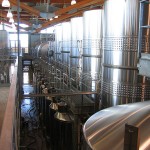
Photo By drdcuddy (Flickr: Italia 2010) [CC-BY-SA-2.0 (http://creativecommons.org/licenses/by-sa/2.0)], via Wikimedia Commons

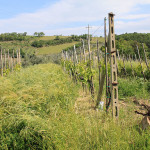
Photo By drdcuddy (Flickr: Italia 2010) [CC-BY-SA-2.0 (http://creativecommons.org/licenses/by-sa/2.0)], via Wikimedia Commons

observable trends. Some studies have shown that organic products have better biological activity than conventional products, while other studies have found no differences between conventional and organic agriculture and production methods. In general, it is assumed that organic and biodynamic agriculture and production methods are better for human health overall, though there is no solid scientific evidence to back that up quite yet (only mixed results).

Generally speaking, organic agriculture and biodynamic agriculture are very similar in that they both utilize composting and cover crops and prohibit the use of commercial pesticides, fungicides, herbicides, and other sorts of man-made chemicals. One major difference between the two practices is that biodynamic agriculture utilizes special preparations that use mineral and/or herbs, as well as various animal organs, which can be buried until the soil or made into a spray to apply to the foliage of the plants.

The study presented today aimed to compare conventional, organic, and biodynamic viticulture and winemaking practices for both red and white grapes and wine, and to determine if any of these methods differ from one another in terms of their polyphenol and biogenic amine content and particularly if one viticulture or winemaking method is ideal compared to the rest in terms of wine and human health quality.

Methods

Red and white grapes of the Sangiovese and Pignoletto varieties, respectively, were all grown in 2009 from vineyards in the Emilia-Romagna region of Italy. Conventional, organic, and biodynamic viticulture practices were performed for the different treatments.

Grapes were all picked on the same day from random locations throughout the vineyards and throughout the vines and clusters. 10kg of grapes were harvested from each treatment vineyard and were ground into a powder for chemical analysis.

Wine was made from the grapes at each of the treatment vineyards on site using conventional, organic, and biodynamic winemaking practices.

The following biogenic amines were measured for both grapes and wine: tryptamine, histamine, tyramine, diamine-propane, cadaverine, putrescine, spermidine, and spermine.

The following were measured for both grapes and wine: total polyphenols, individual polyphenols, anthocyanins, and antioxidant activity.

Results

Grapes

• Putrescine was the most abundant biogenic amine in all samples.
• Tryptamine was 4.7 times higher in Sangiovese grapes than Pignoletto grapes.
• Total biogenic amine levels in Sangiovese grapes were 5.5 times higher than in Pignoletto grapes.
• There were no clear trends or differences between viticulture methods in terms of biogenic amine levels.
• There were no significant differences between viticulture methods in terms of total polyphenol levels.
• Total anthocyanins were significantly higher in Sangiovese grapes compared with Pignoletto grapes (as expected).
• Total anthocyanin levels were highest using conventional viticulture methods, followed by biodynamic methods and finally organic methods.
• Catechins and stilbenes were significantly different between the Sangiovese and Pignoletto grape varieties (lower in Pignoletto grapes); however there were no significant differences between the two groups in regards to viticulture practice treatment.
• Resveratrol and trans-resveratrol were found in all samples, though cis-piceid and trans-resveratroloside were only found in Sangiovese grapes.
• Piceatannol was 2 times higher in Pignoletto grapes compared to Sangiovese grapes.
• Sangiovese grapes had 3 times greater antioxidant capacity than Pignoletto grapes.

Wine

• Biogenic amines were 3.6 times higher in Pignoletto wines compared with Sangiovese wines.
• There were no differences in biogenic amine levels between the different winemaking practices.
• Total polyphenols were 6.5 times higher in Sangiovese wines compared with Pignoletto wines.
• Sangiovese wines had the highest levels of anthocyanins and stilbenes compared with Pignoletto wines.
• Sangiovese wines had greater antioxidant capacities than Pignoletto wines.

Conclusions

The results of this study indicated that there were no significant differences in the chemical profile of Sangiovese and Pignoletto wines when treated with conventional, organic, or biodynamic viticulture and winemaking practices. The clear differences found in this study were in terms of grape variety (red versus white), and not viticulture or winemaking method, which was confirmed using Principle Components Analysis. Sangiovese grapes were found to have higher levels of biogenic amines, though none of the levels were high enough to cause a threat to human health. Conversely, after the winemaking process, it was found that Pignoletto wine had higher levels of biogenic amines compared with Sangiovese, which is likely due to winemaking technique and the interactions with the compounds present in the white must.

It seems as though reducing the levels of biogenic amines in wines may be difficult, as there are a number of factors that could be contributing to their

Biodynamic Composting.  Photo credit: By Mark Smith [CC-BY-2.0 (http://creativecommons.org/licenses/by/2.0)], via Wikimedia Commons

Biodynamic Composting. Photo credit: By Mark Smith [CC-BY-2.0 (http://creativecommons.org/licenses/by/2.0)], via Wikimedia Commons

levels (i.e. grape variety, winemaking technique, geographical growing area, etc), though this study shows that using biodynamic or organic viticulture or winemaking methods as opposed to conventional methods will not affect biogenic amine levels.

Of course, there are many environmental benefits of using biodynamic and organic viticulture and winemaking practices, so these results are certainly not meant to deter anyone from adopting these methods. It’s simply a matter of determining what viticulture or winemaking technique will help lower biogenic amine levels in wine, and it’s clear from the results that choosing biodynamic or organic methods over conventional methods will not help in this case. I encourage biodynamic and organic agriculture and production methods, though again if one is seeking to change practices just to lower biogenic amine levels, switching to either of these won’t make a difference (but it will make a difference in other areas!).

I’d love to hear what you all think of this topic! Feel free to share comments or stories with everyone!

Source: Tassoni, A., Tango, N., and Ferri, M. 2013. Comparison of biogenic amines and polyphenol profiles of grape berries and wines obtained following conventional, organic and biodynamic agricultural and oenological practices. Food Chemistry 139: 405-413.

The Importance of Nitrogen Availability in Grape Must During Biodynamic Vinification

The following is a guest post written by Anty Fung.  Please read Anty’s full bio at the end of this post!

A Brief History of Biodymanics

Biodynamics is “the basic new way of thinking about the relationship between earth and soil to the formative forces of etheric, astral and ego activity of nature”.[1] Part of the Anthroposophist movement founded by Rudolf Steiner in 1924, biodynamic agriculture was first developed by Maria Thun and her team in Germany and Holland, and since then has gained increasing support from winemakers around the world.

In 1928, Demeter was established as a program certifying the practice of biodynamic agriculture. The cardinal rule of biodynamic agriculture is to respect the “cosmic creative and shaping forces” of nature and celestial bodies

Biodynamic Composting. Photo credit: By Mark Smith [CC-BY-2.0 (http://creativecommons.org/licenses/by/2.0)], via Wikimedia Commons

by closely observing the cosmic and lunar cycles.  Biodynamic agriculture also requires the use of nine biodynamic field and compost preparations in homeopathic proportions in order to maintain the flow of energy and vitality in the vineyard. Biodynamic agriculture is a relatively well-documented area aptly covered first by the “Agriculture Course”, a series of 8 lectures given by Dr. Steiner in 1924.

This post, however, sets out to deal with biodynamic vinification (a.k.a. biodynamic winemaking), an area highly relevant to biodynamic viticulture and yet it has only been formalized in June 2008 as an essential part of “Standards for Demeter/ Biodynamic Wine”.[2] Arguably, the standards required for fulfillment fell short of the expectations of France and Italy, both of which have their own disciplinary bodies to regulate and monitor whether biodynamic standards are strictly conformed by Demeter certified wineries in their countries. Nonetheless, the 2008 standards laid down a few rules for Demeter certified wineries on alcoholic fermentation, which were to be enforced from the 2008 vintage onward.  These standards include the following:

  1. Fermentation technique: Heating to speed up fermentation is permitted. Pasteurization is disallowed.
  2. Choice of yeast: Indigenous yeasts, pied de cuve (Demeter or organic), Demeter or organic yeast, GMO free commercial yeast are allowed.
  3. Yeast nutrients: Demeter/ organic yeast hulls are allowed. All other forms of nutrients require approval from respective organizations.[3]

Experiment

In 2011, a group of Italian researchers looked deeper into the chemistry behind biodynamic winemaking, specifically examining the evolution of indigenous yeasts during different spontaneous biodynamic alcoholic fermentation processes.

For that study, Trebbiano grapes grown along principles of biodynamic agriculture were picked from an Italian winery in Abruzzo, harvested by hand as is required by Demeter standards, and randomly placed into five different treatments after soft crushing.

The five different treatments were performed during this study: 1) “Low Nitrogen vinification”; 2) “Nitrogen vinification”; 3)“Nitrogen-thiamin vinification”; 4) “Nitrogen-oxygen vinification”; and 5) “Nitrogen-pied de cuvee vinification”. 

The team monitored the rate of decrease in must density to gauge the rate of alcoholic fermentation. The level of promptly assimilable nitrogen (PAN) was also measured, since the higher the level of PAN, the lower the risk of having a stuck fermentation. According to Bisson and Butzke, the level of PAN is crucial for yeast growth. The production of aromatic compounds, notably esters, is also largely dependent on the level of PAN available for assimilation by yeasts.[4]

Results

Photo credit: I, Tomas er [GFDL (http://www.gnu.org/copyleft/fdl.html), CC-BY-SA-3.0 (http://creativecommons.org/licenses/by-sa/3.0/) or FAL], via Wikimedia Commons

During the first four days of fermentation, the rate of decrease in must density was rather uniform among all five treatments. After Day 4, fermentation in the first three treatments slowed down due to scarce nitrogen availability in grape must (low PAN level) whilst the last two treatments continued due to an increase in PAN concentration of 200mg/L.


There is a synergy between nitrogen and oxygen[5], meaning that given an aerobic alcoholic fermentation environment, cellular permeability is maintained thus ensuring ease of nitrogen absorption whilst sugars are continuously utilized and converted to alcohol. The “Nitrogen-pied de cuvee vinification” treatment maintained a good rate of must density since the existence of Pied de cuvee gave the fermenting must time and opportunities to adapt to the process conditions. Pied de cuvee involves the cultivation of indigenous yeasts on skins of early harvested grapes and allow the same yeasts inoculate the fermentation.

As fermentation rates started to vary among different treatments from Day 4 onward,  diammonium phosphate and diammonium sulphate (1:1) salts were added in limited quantity to integrate nitrogen availability in grape must. Note: the use of diammonium phosphate is strictly prohibited according to the 2008 Demeter standards.  Nonetheless, the addition revived alcoholic fermentation and sugar consumption continued for all treatments except the “low-nitrogen vinification” treatment.

The number of days elapsed for density loss to reach 0% ranged from 14 to 16 days for the other five treatments, whilst that for treatment no. 1 lasted 11 days only. The results of this first part of the experiment illustrate the importance of nitrogen integration in grape must during biodynamic vinification.

The second part of the experiment looked at the level of lactic acid bacteria and acetic acid bacteria which can be found at the end of alcoholic fermentation. The levels of these two bacteria are generally predictable when one uses commercial starter yeasts, which produce low levels of sulphur dioxide. Uncertainty kicks in when indigenous yeasts are used, as the level of sulphur dioxide produced varies. This is important because the higher the level of sulphur dioxide, the lower the rate of malolactic fermentation due to suppressed lactic acid bacterial activity. Given a low pH, this process may be completely halted despite possible intentions of the winemaker to soften acidity.

The existence of acetic acid bacteria correlates with the level of volatile acidity in a wine. The level of sulphur dioxide and acetic acid bacteria are in negative correlation. Among all five treatments, the “nitrogen-thiamin vinification” treatment recorded the highest level of lactic acid and acetic acid bacteria. On the other end, the “low-nitrogen vinification” treatment recorded the lowest levels of lactic acid and acetic acid bacteria.  The researchers attributed this result to this particular treatment having the highest concentration of non-commercial starter yeasts (non Saccharomyces), which generated considerable amounts of sulphur dioxide.

Conclusion

A rather obvious conclusion drawn from this experiment on indigenous yeast activity under different biodynamic vinification mechanisms is that the role of nitrogen is essential to ensure a smooth and complete

Nitrogen: Lewis Diagram

fermentation of grape must. The synergy between nitrogen and oxygen may reduce the reliance on nitrogen addition during alcoholic fermentation.

Which Biodynamic Vinification Method is Best?

To attain a rounder malolactic fermentation-driven wine style using biodynamic vinification, the “nitrogen-oxygen” and “nitrogen-thiamin” vinification processes would be ideal. The researchers identify the results of “nitrogen-pied de cuvee” vinification process as the most interesting one due to the surprisingly low level of acetic acid detected in the results.  Finally, the “nitrogen vinfication” processes would come in handy for winemakers aiming for stable, aromatic wines with refreshing acidity.  Depending upon which style of wine the winemaker ultimately aims to produce, any one of these biodymanic vinification processes would work.

Sources:

  1. Cusack, C. M., & Norman, A. (2012). Handbook of new religions and cultural production. Leiden, Brill. Page 125
  2. P. Vastola, A. (2008) Biodynamic Wine: An economic and ethic choice. Università degli Studi della Basilicata, DITEC.
  3. Demeter International e.V. (2008) Standards for Demeter/ Biodynamic Wine. [online] Available at: http://organicstandard.com.ua/files/standards/en/demeter/st_wine_e08.pdf  [Accessed: 15 Nov 2012].
  4. Daniel GRANES, Edouard MEDINA, Lucile BLATEYRON, Céline ROMERO, Eric BRU, Christophe ROUX, Caroline BONNEFOND, Agnès PIPERNO, Myriam ROUANET, Thomas OUI (2007) ICV Harvest Flash Info. ICV Montpellier, France [online] Available at: http://www.icv.fr/documents/Bibliotheque/Biblio_flashs_infos/Flash_infos_22_Nitrogen_nutrition_yeasts.pdf [Accessed: 15 Nov 2012]
  5. R. Guzzon, G. Widmann, L. Settanni, M. Malacarne, N. Francesca, R. Larcher (2011) Evolution of Yeast Populations during Different Biodynamic Winemaking Processes. South African Journal of Enology and Viticulture, Vol. 32, No. 2. Page 242-250

Anty Fung currently works at AsianPalate.com where she contributes regularly to the food and wine trend sections. She has completed her WSET Advanced Certificate and is now pursuing WSET Level 4 Diploma. She bases in Hong Kong where she enjoys looking for hidden food joints and local delis to try out unconventional pairings whenever she is allowed to bring her own bottles (and glasses!). You can reach her at antyfung@gmail.com or via Facebook (Anty Fung).