Tag Archives: sensory characteristics

Altering the Aromatic Profile of Tempranillo Wines Using Foliar Urea Fertilization


The use of soil nitrogen fertilization has been frequently studied in grapes for its ability to alter wine aroma, however, the results of these studies have been quite variable.  Some studies found that using organic and inorganic nitrogen fertilization improves wine aroma by increasing the concentrations of desirable aromatic volatile compounds, while many others found that this application damages wine aroma by increasing the levels of urea and ethyl carbamate, both of which are undesirable in wine.

One problem with using soil nitrogen fertilization is that the nitrate salts in the fertilizer are extremely soluble, thus increasing the risk of the salt leaching (i.e. leaking) into the soil and not contributing at all to fertilization or wine aroma.

U.S. National Archives and Records Administration: Photo in Public Domain

Also, the more that this salt that leaks out into the soil, the greater the risk is of environmental harm and degradation.

In addition to soil fertilization, some vineyard managers opt to incorporate foliar fertilization (i.e. fertilization applied to the leaves), which functions as a more direct way to get nutrients to the vines instead of having much of it leach out into the soil unused.  Since foliar fertilization results in the direct absorbance into the grapes themselves, much less of it needs to be applied than soil fertilizer.

With the knowledge that fertilization of grape vines affects wine aroma by increase the levels of certain desirable volatile compounds, one study aimed to examine the effects of foliar fertilization of urea (a nitrogen-based compound) on Tempranillo grape vines and how this fertilization altered the volatile chemistry of the finished wine.  According to the authors, this type of study has never been done on Tempranillo vines.

Methods

Tempranillo vines (Vitis vinifera) from the 2008 vintage were used in this study.   Experimental vines were split into three plots in the same vineyard which was located in the Rioja region of northern Spain.  The vines were planted in 1990, and were about 9 ha total in vineyard size.  Vine density was 2.7m x 1.5m, and the pruning regime used was the Gobelet method.

Soil pH was 8.3 and nitrogen fertilizer was applied to the entire vineyard at 21kg N/ha.

Two of the experimental plots were foliar urea fertilizer treatment plots, with one plot receiving 2kg N/ha and the other receiving 4kg N/ha.  The third experimental plot was left untreated as a control.

Foliar fertilizer used was Nitrotecnia-20, 20% w/w of the total nitrogen in the fertilizer originating from urea.

Foliar urea fertilizer was applied at 7 day intervals between July 31st and October 9th, 2008.  Treatment was started close to veraison (i.e. when the grapes start to change color) in order for the urea to be absorbed directly by the grape instead of most of it going into the leaves of the plant.  As a side note for

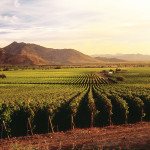
By Véronique PAGNIER (Own work) [CC-BY-SA-3.0 (http://creativecommons.org/licenses/by-sa/3.0)], via Wikimedia Commons

those that aren’t very familiar with veraison, at this stage of a grape’s life, the skin becomes more permeable, allowing more “stuff” to be absorbed than prior to this stage when the skin was tougher and not letting as much inside.

At harvest, all grapes from all three plots were harvested, in order to create a homogenous must/wine from each plot.  Grapes were de-stemmed, crushed, and pressed.  The common wine yeast, Saccharomyces cerevisiae strain MV 92081 was used for the fermentation.  Fermentation was held in stainless steel tanks and wine was fermented until dry.  Wines were subsequently stabilized the filtered. Fermentation occurred in duplicate.  Wine samples for analysis were chosen from different parts of the tank then blended, in order to create representative samples of the entire batch.

Odor activity values (OAV’s) were calculated for each volatile compound.  Any OAV’s over a value of 1 meant that the flavor threshold has been reached meaning that the aroma of that compound can be detected in the wine.

In addition to measuring volatile compounds, amino acids, ammonium nitrogen, yeast assimilable nitrogen, and general enological parameters were measured.

For sensory analysis, 5 panelists (3 men and 2 women) were selected from 5 different wineries in Rioja.  Panelist judged body, acidity, sweetness, bitterness, astringency, and tannin, as well as red fruits, plums, currants, chocolate, honey, vanilla, and green.  Each characteristic was judged using a 5 point scale: 1 = very poor; 2 = poor; 3 = acceptable; 4 = good; and 5 = very good.  Six sets of 3 wines were used for forced-choice tests.

Results

  • Total acidity was higher in musts made from grapes treated with urea than musts made from control grapes.
  • pH increased in the musts and wines of grapes treated with urea.
  • Alcohol content (including higher alcohols) and total acidity decreased in wines made from grapes treated with urea compared with wines made from control grapes.
  • Volatile acidity was below threshold for all wines.
  • Amino nitrogen and YAN levels increased in wines made from grapes treated with urea.
  • Isoamyl alcohol, isobutanol, 2-phenylethanol, tyrosol, tryptophol, and 3-methylthio-1-propanol all decreased in wines made from grapes treated with urea compared to wines made from control grapes.
    • 1-hexanol and benzyl alcohol did not change due to treatment.
    • 1-butanol increased in wines made from grapes treated with the higher dose of urea.
    • OAV levels of isoamyl were greater than 1 in all three wines, thus corresponded to aroma.
    • OAV levels of 2-phenylethanol were greater than 1 in control wines and the lower dose of urea wines.  (This compound contributes to floral characteristics in wine).
    • OAV levels of 2-phenylethanol were lower than 1 in the higher dose of urea wines, thus it did not contribute to the aroma of those wines.
  • Precursor amino acids (with the exception of the precursor to tryptophan) all increased in wines made from grapes treated with urea compared with the control.
  • Total esters decreased in wines made from grapes treated with urea.
  • Ethyl hexanoate, ethyl octanoate, and ethyl decanoate all increased in wine made from grapes treated with the higher dose of urea.
    • Ethyl hexanoate and ethyl octanoate OAV levels were greater than 1 for all wines, thus they both contributed to the aromatic profile of the wines, though the levels were significantly higher in the wines made from grapes treated with the higher dose of urea.
  • Isoamyl acetate and ethyl acetate levels decreased in wines made from urea-treated grapes and contributed to wine aroma.
  • Diethyl succinate, diethyl malate, and ethyl-3-hydroxybutyrate decreased in wines made from urea-treated grapes.
  • 3-hydroxy-2-butanone and acevanillone increased in wines made from the grapes treated with the highest dose of urea.
  • Foliar urea fertilization did not have much of an effect on fatty acids in wines.
    • Butyric acids increased with grapes treated with the highest dose of urea.
    • C10, C12, C14, C16, and C18 fatty acids (i.e. fatty acids with 10, 12, 14, 16, and 18 carbons) decreased in wines made from grapes treated with urea.
  • Sensory Analysis:
    • Body, acidity, sweetness, bitterness, and tannin were similar for all three wines.
    • Wines treated with foliar urea fertilizer were lower in astringency than control wines.
    • Fruity notes were higher in wines made from urea-treated grapes.
    • Notes of chocolate, honey, and vanilla were the same for all three wines.
    • Herbaceous notes were higher in control wines than wines made from urea-treated grapes.
    • Wines made from urea-treated grapes were noted to have higher aromatic intensity, fruitier character, and bigger red fruit notes than control wines.
    • Isoamyl alcohol and 2-phenylethanol are compounds than tend to cover up wine aroma, and it was found that wines made from urea-treated grapes were lower in these compounds than control wines.

Conclusions

The results of this study showed that there are significant differences in the aromatic profile of wines made from grapes that were treated with foliar urea fertilization.  It is not known whether the panelists preferred one type of wine over another, just that the aromatic profiles were different.  For Tempranillo wines made from grapes treated with foliar urea fertilization during the growing season, the aromatic profile shows increased fruity notes, as well as greater aromatic intensity.  For control Tempranillo wines not treated with any foliar fertilizer, aromatic intensity was lower, and herbaceous notes were more pronounced.

It doesn’t appear that one wine was necessarily better than the other, but then again, there were no questions in the sensory analysis that addressed this question.  Depending on what style of wine you enjoy, you may like either the

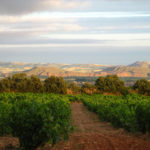
By María Jesús Tomé (Flickr: Rioja Alavesa) [CC-BY-2.0 (http://creativecommons.org/licenses/by/2.0)], via Wikimedia Commons

control wines or the wines treated with foliar urea fertilization.  The authors of this study claimed that urea treatment did, in fact, improve the aromatic profile of Tempranillo wines.

If you want to create a Tempranillo wine that is fruitier and more aromatic, it may be beneficial to employ a foliar urea fertilization regime in your vineyard management practices.  It would be important to know how this fertilization treatment affects not only the grapevines and the resulting wine, but also the environment around it.  This may be something to consider prior to employing such a practice.

It’s not clear how this type of treatment would affect other grape varieties; however, one would likely expect to see a varied outcome.  Certainly, some grapes would have the ability to absorb more of the fertilizer than others, and some grapes would be able to utilize the excess nitrogen better than others.  The effect of foliar urea fertilization is likely a case-by-case situation and it would be interesting to see in a follow up study how other grapes and resulting wines were affected by the treatment.

I’d love to hear what you think about this study. What other questions would you have liked to see answered that the authors did not discuss?  Please leave your comments!

Source: Ancín-Azpilicueta, C., Nieto-Rojo, R., and Gómez-Cordón, J. 2012. Effect of foliar urea fertilization on volatile compounds in Tempranillo wines. Journal of the Science of Food and Agriculture. Released online prior to publication in print. DOI 10.1002/jsfa.5921.

Does Serving Temperature Effect the Perception of Flavor and Fault Intensity in Wine?

Now that I have done two medical-related reviews in a row, it’s time I review some research in another field.  For today’s post, I’ve decided to review an article based on sensory perception and wine tasting.  A very common question I get while working in the tasting room is, “At what temperature should I serve wine?”  Does serving temperature really make a difference in regards to capturing the flavor of the wine?

The article I will review for this post addresses the issue of changing serving temperatures and perception of flavors in wine, in addition to perception of imperfections in the wine as the serving temperature changes.

The title of the article reviewed for today is: 

Influence of Serving Temperature and Wine Type on Perception of Ethyl Acetate and 4-ethyl Phenol in Wine; by M. Cliff and M. King

Introduction

Up until this article was published, there had been very few studies looking at olfactory responses to aromas at different temperatures.  One study found that there was no difference in olfactory sensitivity with varying temperatures; however, this was later speculated to be as a result of the temperature of the sample equilibrating with body temperature, since the air entering the nasal cavity rapidly equilibrated with body temperature.  A later study found a more significant response, in that for beef flavor at varying temperatures, meaty intensity decreased with increasing temperatures, while vegetable intensity increased with increasing temperatures.

So what about wine?  Does the perception of flavors change in wine with changing serving temperatures?

The accepted serving temperatures for white wines range from 8-12oC (46-54oF), and 18-22oC (64-72oF) for red wines.  Frequently, people serve their white wines straight out of the refrigerator, which is often set in the mid-30’s oF, and serve their red wines at the temperature of the room they are sitting in (which if not in a wine cellar, is somewhere in the mid-70’s oF).  Does this difference in serving temperatures make a difference in regards to the flavor of the wine?

One former study found that variations in wine temperature change the relative proportion of headspace aromatics (in other words, changes the nose of the wine in the glass).  It has been speculated that changes in temperature could possibly enhance or suppress the detection of specific aromas in wine.  Some have attested that oak aromas can dominate in chilled white wines, while when the same wines are at room temperature, the fruit aromas are more pronounced and the oak becomes more integrated with the fruit.

The overall objective of the study under review in this post was to evaluate the effect of temperature on the perception of two compounds, ethyl acetate and 4-ethyl phenol.  When these two compounds are found in wine at higher levels, it is indicative of faulty or poor quality wine, or more specifically, increased volatile acidity and Brettanomyces (a yeast in wine that at low levels is fine, but at high levels has negative effects on flavor and quality).  In order to avoid methodological mistakes of the past, this study made special efforts to control and maintain the wine temperature, and to avoid any cognitive or psychological clues.

Methods

In my past few review posts, I’ve not gone into great details of the methods; however, I will be more specific with this article, since I feel the methods were particularly interesting and helpful with your own analysis and interpretations of results.

Wines Used

Four wine blends, which were prepared from bottled British Columbia Vintners Quality Alliance commercial wines were used (Chardonnay, Gewurztraminer, a white blend, and a red blend).

The Chardonnay was barrel aged, so it had a strong oaky character.  The Gewurztraminer was very aromatic, with flavors of lychee, muscat, and floral notes.  The white blend was chosen to give clean, light fruit character.  The red blend was made from all Bordeaux grape varietals. 

Each of the four wines was partitioned into four equal volumes: 2 for control, and one each for the two compound treatments (200ppm ethyl acetate or 1000ppm 4-ethyl phenol).  These levels were chosen to be just above the threshold levels, so that they would be detectable by all of the judges, but not so dominant that temperature differences would not be detectable.  All of the wines and wine glasses were stored at the three different treatment temperatures (0, 10, and 22oC; or 32, 50, and 72oF) for eight hours before the study began.

Sensory Panel

The judges for this study were eight staff members (4 male, 4 female) from the Agriculture and Agri-Food Canada (Summerland, BC), who were chosen based on their availability, motivation, and previous sensory experience.  Tests were performed to be sure the judges could detect the ethyl acetate and 4-ethyl phenol in the wine, and they were able to practice until they were able to correctly identify which wines contained the added compounds.

Wine Glasses

Black 8-oz tulip shaped wine glasses were used, and were each individually wrapped with 1cm thick milar bubble film and secured with duct tape.  The glasses were placed in temperature controlled rooms set at the treatment temperatures (0, 10, and 20oC).  The milar film was tested for effectiveness at maintaining the desired temperature, and it was proven successful and maintained for a period of four minutes.

Experimental Design/Procedures

In each sensory evaluation session, one of each of the wine types was tested at each treatment temperature.  The judges took breaks in between sets of wine samples.  At each temperature, the base wine (control, no chemicals added) and the treated wine were evaluated in random order.  All wine types were completely randomized in their order of presentation to the judges, and were evaluated twice over the entire study.

The wines and wine glasses were stored at the treatment temperatures, and 30mL of wine were poured into the glasses just prior to the judges’ arrival.  Each wine was evaluated within three minutes of being removed from the temperature controlled storage.  Glasses were covered with 6cm plasic Petri dishes, to avoid contamination of external factors.  The judges wore wool gloves and scarves to eliminate any thermal clues from the stems and rims of the wine glasses, and to act as a physical barrier from the cold. 

To evaluate, the judges swirled the glasses and held the glasses to their noses without touching their faces.  Judges evaluated the wines for intensity of fruit and volatile acidity (ethyl acetate) or intensity of fruit and Brettanomyces (4-ethyl phenol) on a low, moderate, and high intensity scale.

Results

This study found that temperature was in fact a significant source of variation for perceived fruit intensity and perceived faults (i.e. ethyl acetate or 4-ethyl phenol) by the judges.  Wine-by-temperature effects proved NOT significant, meaning that each individual wine type shared similar responses to temperature changes.

The relationship between the perceived intensities and the temperature were linear for fruitiness (r=0.979; which if you’re unfamiliar with statistical analysis means that almost all of the variation of fruit intensity is explained by the temperature change!!), and ethyl acetate (r=0.980), in the ethyl acetate wines.  The relationship held the same as well for fruitiness (r=0.991) and 4-ethyl phenol (0.951) in the 4-ethyl phenol wines. 

The major findings of this study included the following:

·         The fruity components of the wines, as well as the added wine fault components, were more noticeable at higher temperatures.

·         The presence/addition of ethyl acetate and 4-ethyl phenol changed the response of the fruit intensity perceptions.

o   The effect of added 4-ethyl phenol reduced the fruit intensity at all temperatures for all wine types.

§  The magnitude of this effect was most noticeable in the white blend and Gewurztraminer.

o   4-ethyl phenol(i.e. Brettanomyces) significantly depressed fruit character.

Overall Conclusions

The results of this study showed that the perception of the added wine faults, ethyl acetate and 4-ethyl phenol increased linearly with increases in serving temperature

In the control wines without these faults, the study showed that fruit intensity increased as temperature increased.  However, in the wines with faults added, the increase in perceived defect occurred even though there was an overall increase in fruit intensity.  Basically, the faults were stronger than the fruit intensity, and thus their presence negated an increased fruit intensity in the wines alone.  Therefore, it is speculated that the presence of 4-ethyl phenol (i.e. Brettanomyces) not only has its’ own aroma, but also suppresses the much desired fruit character of the wine.

What does this mean for serving temperatures?

If there are faults in your wines, you’re more likely to notice them at higher temperature, due to their increased intensity and ability to suppress fruit character at higher temperatures.  I would imagine that one would be more likely to notice these faults in red wine, since as a whole, people serve them too warm.  For white wines, it’s a little more questionable.  Yes, if you serve them at a warmer temperature, you will be more likely to notice the faults of the wine if they are present, however, if you serve them too cold (i.e. straight out of the refrigerator), the flavor intensity is suppressed as well (though for a reason other than the wine fault).

So, what should you do?

If you are serving a red wine, and store it willy nilly about your warm house, pop it in the ‘fridge about 20-30 minutes before you are going to drink it.  If you are serving a white wine, and have it stored in your cold refrigerator, take it out of the ‘fridge 20-30 minute before you are going to drink it.  This will bring the wines to the temperature optimal for flavor intensity and minimal fault perception. 

Cheers!

Full Citation:

Cliff, M.A., and King, M.C. 2009. Influence of Serving Temperature and Wine Type on Perception of Ethyl Acetate and 4-ethyl Phenol in Wine. Journal of Wine Research 20(1): 45-52.

I am not a health professional, nor do I pretend to be. Please consult your doctor before altering your alcohol consumption habits. Do not consume alcohol if you are under the age of 21. Do not drink and drive. Enjoy responsibly!