Tag Archives: serving temperature

Size Does Matter: The Effect of Bottle Size on Dissolved Carbon Dioxide Loss after Pouring Champagne


In celebration of the New Year, we’ll once again focus our blog posts on current research related to Champagne/sparkling wine!

Briefly, the bubbles in Champagne and other sparkling wine beverages are created by trapped CO2 molecules during the secondary fermentation process.  The vessel in which these bubbles are trapped varies depending upon the method used; however, they all effectively function the same way:  sugar and yeasts are added to a still base wine in a closed system.  The yeast consume the sugars producing alcohol and carbon dioxide, and since the fermentation is taking place inside a closed system, there is nowhere for the bubbles to escape, thus remaining trapped within the wine itself, creating the characteristic bubbly.  In the traditional method (or méthode champenoise in Champagne, France), secondary fermentation is completed in the bottle itself, while with other methods (i.e. Charmat method), fermentation is completed in a sealed tank.

How many bubbles are actually in that bottle of Champagne or Sparkling Wine?

According to Henry’s Law, “the concentration of a dissolved gas is proportional to its partial pressure in the vapor phase” (Liger-Belair 2012).  Taking it a step further, the dissolved carbon dioxide portion in Champagne or sparkling wine is proportional to the amount of sugar added to the base wine to start secondary fermentation.  The amount of sugar added dictates how much alcohol and CO2

By Waldo Jaquith (Flickr) [CC-BY-SA-2.0 (http://creativecommons.org/licenses/by-sa/2.0)], via Wikimedia Commons

By Waldo Jaquith (Flickr) [CC-BY-SA-2.0 (http://creativecommons.org/licenses/by-sa/2.0)], via Wikimedia Commons

the yeasts will be able to produce, thus one can calculate exactly how much dissolved CO2 is inside the bottle based on this simple statistic.  For example, if 24g/L of sugar is added to the base wine (which is a typical amount used), there will be approximately 12g/L of dissolved CO2 or 5L gaseous CO2 for a standard sized bottle of Champagne or sparkling wine.

The CO2 bubbles in the Champagne or sparkling wine are known to affect sensory perception during Champagne or sparkling wine tasting.  Some studies have found that the bubble “pops” intensify the aromatics of the wine, therefore the levels of dissolved CO2 within the wine would effectively alter the sensory and quality perception by the taster.  It should therefore be the goal of the winemakers and those serving the beverage to maintain higher levels of dissolved CO2 in the wine for as long as possible.

After a bottle of Champagne or sparkling wine is uncorked, CO2 loss is already taking place.  CO2 escapes a few different ways, with effervescence being the one most visually obvious.  Cracks or tiny imperfections within the bottle act to entrap the bubbles and produce a steady stream of bubbles that travel up through the wine and are released when they break the surface tension at the top of the liquid.

One less obvious mechanism for CO2 loss in Champagne or sparkling wine that actually results in the greatest levels of CO2 loss is what is known as “invisible diffusion”.  This takes place at the air/liquid barrier at the top of the bottle (or glass) and is a mechanism that one does not actually see.  Studies have shown that for every one CO2 molecule that escapes via bubble that one can see, 4 more molecules escape via “invisible diffusion” at the air/liquid barrier.

There has been a lot of research done on CO2 loss in Champagne or sparkling wine; however most of these studies have only focused on “bubble physics”.  According to the authors of the study presented today, there has been very little research done on the pouring step of the serving process and the CO2 losses associated with the physical pouring of the wine into the glass.

Imagine how a bottle of Champagne or sparkling wine is served:  the standard practice is that the bottle is moved from a vertical to a horizontal position while the liquid is being poured directly into the center/bottom of the glass.  The air-

By ori2uru (originally posted to Flickr as champagne tower) [CC-BY-2.0 (http://creativecommons.org/licenses/by/2.0)], via Wikimedia Commons

By ori2uru (originally posted to Flickr as champagne tower) [CC-BY-2.0 (http://creativecommons.org/licenses/by/2.0)], via Wikimedia Commons

to-liquid surface area, as you can imagine, is greatly increased in this horizontal position, thus increasing the opportunities for CO2 loss via “invisible diffusion”.  This horizontal position is kept all the way through the last glass being filled, thus providing great opportunities for CO2 loss.

The study presented today aimed to explore this concept of CO2 loss during the pouring step during whole bottle Champagne or sparkling wine service, which has been not been properly studied or included as a source of CO2 loss in this type of research in past studies.


Methods

The wine used in this study was a “standard commercial Champagne wine” (Liger-Belair 2012) using 100% Chardonnay grapes from the 2009 vintage from the Cooperative Nogent l’Abbesse in Marne, France.  Prior to use, the wines were stored in a cellar at 12oC.

Bottle types used during this study were Champagne/sparkling wine shaped and were: 1) standard 750mL; 2) magnum 1500mL; and 3) half bottle 375mL.  The authors noted that while the bottle volumes were different, the headspace volumes were the same. Similar corks were used to seal all wines.

24g/L of sugar were added to the base wine for all bottle sizes.

Temperature dependence of the Champagne was measured and it was found that the smaller the bottle, the lower the starting dissolved CO2 concentration.

Glasses used in this study were identical “long-stemmed glasses with a deep tapered bowl and a narrow aperture” (Liger-Belair 2012).  All flutes were etched at the bottle in an attempt to avoid the randomness of CO2 loss via visual effervescence.  After each use, glasses were washed with a dilute aqueous formic acid solution, rinsed with distilled water, then dried using compressed air.  When not in use, flutes were stored at room temperature.

After uncorking a bottle, 100mL of Champagne was poured successively into flutes.  The magnum bottle required 14 flutes, the standard bottle required 7 flutes, and the half bottle required 3 flutes to finish the bottle.  Flutes were lined up horizontally on a table and close to each other so that each pour of Champagne was vertical and hitting the bottom of each glass.

Experiments were performed at three different temperatures: 4oC, 12oC, and 20oC.

Dissolved CO2 was measured in each flute immediately after pouring.  5 pourings were completed for each bottle size and each temperature, in order to create an average dissolved CO2 value per bottle size and temperature for statistical analysis.

Complex mathematical models were created to try and simulate the results found during this study, the gory details of which I will spare you for this post.

Results

  • Dissolved CO2 levels in the flutes were lower than what they were in the bottle.
    • This indicates there is a loss of dissolved CO2 during the pouring process.
    • Loss of dissolved CO2 during the pouring process was roughly between 3 and 4g/L.
  • The levels of dissolved CO2 within the flute decreases as bottle volume decreased.
    • Example given: The amount of dissolved CO2 in the flute from a magnum bottle was higher than the amount of dissolved CO2 in the flute from a standard bottle, with the amount of dissolved CO2 in the flute from a half bottle containing the lowest levels of dissolved CO2.
  • The levels of dissolved CO2 within successive flutes in general decreased with each flute further down the line.
    • In other words, the last flute in pouring succession had lower levels of CO2 than the 3rd flute in pouring succession.
  • Despite the general trend of CO2 decreasing with each subsequent pour, the first pour actually saw an increase in dissolved CO2 levels.
    • The authors attribute this to the “glug glug” effect.  When the bottle is full of liquid, it comes out quickly and more “wild”, introducing more air bubbles into the liquid.  Once the liquid level inside the bottle decreases, the flow becomes more uniform and gentle, and we see the aforementioned decrease in dissolved CO2 levels with each subsequent pour.  The “glug glug” name comes from the sound we attribute to the quickness of the liquid frantically coming out of the bottle when it’s full.
      • The “glug glug” effect was seen in the first 4 flutes poured from the magnum bottle, the first 2 flutes poured from the standard bottle, and the first flute poured from the half bottle.
  • Levels of dissolved CO2 within the flutes decreases as serving temperature increased.
    • In other words, the higher the serving temperature, the fewer the bubbles present in the flutes (i.e. the greater the CO2 loss to the atmosphere).
    • The higher the serving temperature, the greater the dissolved CO2 loss for each successive pour.
  • The levels of dissolved CO2 within successive flutes decreased with each flute further down the line and were highly affected by temperature increases.
    • In other words, the difference in dissolved CO2 levels between the first and last flute was greater with higher serving temperatures (i.e. greater dissolved CO2 loss between the last and first flutes at 20oC than at 4oC).
  • The mathematical model confirmed much of the experimental data described above.
    • The model accurately described the phenomena that dissolved CO2 decreases with each subsequent pour.
    • The model confirmed that dissolved CO2 concentrations are higher in larger sized bottles than smaller bottles.

Conclusions

Overall, the results of this study found that there is a decreasing trend of dissolved CO2 as one moves from the first flute to the last flute of the succession.  In other words, the pouring process has an effect on the “bubbliness” of the wine with each subsequent pour.  In order to maintain a higher level of dissolved CO2 (i.e. more bubbles) when pouring for tasting or other serving purposes, the results indicate that a larger bottle may be the best choice.

Figure 4 from Liger-Belair et al, 2012

Figure 4 from Liger-Belair et al, 2012

The authors speculate from these results that the magnum bottle is able to better retain dissolved CO2 within the bottle and therefore the flutes poured from the bottle, thus may be important for those tasting and drinking the beverage.  In general, the larger the volume, the greater the ability of the wine to retain dissolved CO2 bubbles and maintain Champagne/sparkling wine quality.  Armed with this knowledge, one may want to grab one of the first flutes poured rather than the one of the last in order to be certain the levels of dissolved CO2 are high enough to experience the full glory of the Champagne or sparkling wine.

The authors also noted that serving temperature also has a significant effect on dissolved CO2 loss in Champagne/sparkling wine.  The results indicated that higher temperatures resulted in a faster loss of dissolved CO2, therefore resulting in “flat” wine a lot faster at a higher temperature after being poured than if the wine were served at a colder temperature.  It is important to keep the Champagne or sparkling wine at a cooler temperature in order to maintain the levels and quality of the bubbles therein.

One thing I would like to have seen is the relative contribution of the pouring step in regards to overall dissolved CO2 loss in Champagne/sparkling wine.  We can clearly see from the results that the pouring step does elicit dissolved CO2 loss, but just how much loss is this compared with losses via the other studied mechanisms.  Is the pouring process the most significant mechanism for dissolved CO2 loss?  Or is there something else that’s more important?

I would have also liked to have seen the same experiments run with different types of sparkling wine.  How does Champagne compare with sparkling wine, Prosecco, Cava, etc?  How does the winemaking method affect the rate of dissolved CO2 loss in the wines?  Is dissolved CO2 loss greater in the traditional method, the Charmat method, or any other method?  Or is dissolved CO2 loss independent of winemaking methods?

Finally, I would have liked to have seen the authors go one step further and examine which pouring method results in the smallest loss of dissolved CO2.  We can see that the traditional pouring method results in a certain loss of dissolved CO2, but how does this compare with other pouring methods?  If you hold the glass at a 45o angle, does this result in less dissolved CO2 loss?  What if both the glass and the bottle are held at an angle?  Surely this takes longer and isn’t as “pretty” as the traditional pouring method, but if maintaining the integrity of the dissolved CO2 bubbles and maintaining Champagne/sparkling wine quality is the ultimate goal, it may be of interest to determine which pouring method minimizes dissolved CO2 losses.

I’d love to hear what you all think of this study! Please feel free to leave your comments!

HAPPY NEW YEAR from The Academic Wino!  Cheers!

Photo by The Academic Wino: November 2008.

Photo by The Academic Wino: November 2008.

Source: Liger-Belair, G., Parmentier, M., Cilindre, C. 2012. More on the Losses of Dissolved CO2 during Champagne Serving: Toward a Multiparameter Modeling. Journal of Agricultural and Food Chemistry 60: 11777-11786.

The Effect of Serving Temperature on Red Wine Aroma


Countless studies have shown that the serving temperature of wine is critical in terms of what aromatic attributes are notable and which are diminished.  In other words, the temperature at which you serve your wine could make or break your overall enjoyment of the libation.  Specifically, serving temperature can affect the presence and intensity of certain aromatic characteristics.  In general, it is recommended that red wine be served somewhere between the mid 50’s (oF) and low 60’s (oF) depending upon the varietal or blend, and it is recommended that white wine be served somewhere in the 40’s (oF).

“Room temperature” is often too warm for reds, as we tend to keep our rooms much warmer than they did when the room temperature rule was created.  If you don’t have a temperature-controlled wine refrigerator, put the bottle of room temperature red wine in the refrigerator for 10-20 minutes to drop the temperature down to ideal red wine serving temperature. Also, refrigerator

Photo by isante_magazine: http://farm5.staticflickr.com/4086/5057195715_74f63d6cca.jpg

Photo by isante_magazine: http://farm5.staticflickr.com/4086/5057195715_74f63d6cca.jpg

temperature tends to be a little too cold for white wines, and one should let the wine sit out at room temperature for 20 minutes or so to achieve optimal white wine serving temperature.

Previous studies have found that sensory thresholds of basic taste characteristics such as salt, bitter, sour, and sweet vary with changes in temperature.  Other studies have found that not only is the temperature of the food or beverage important in how the item tastes, but the temperature of the tasters tongue and mouth also influences what taste characteristics are more notable.  In addition to these basic tastes, studies have shown that temperature also changes the specific aromatic and sensory characteristics of a particular food or beverage.

The purpose of the study presented today was to use  projective mapping or “napping” as a method to determine how serving temperature influences the sensory profile of red wine.  Napping is a method that allows less sensory training for the panelists involved, and utilizing the panelists’ own knowledge and terms related to taste and not a set vocabulary only known to experts.  In other words, when panelists are presented with particular foods or beverages, they arrange the items on a tablecloth or napkin and group them in a way such that “like” items are grouped with “like” items and “non-like” items are kept separate from “non-like” items.  Think of it as a visual cluster analysis, if you will.

The authors of the study presented today hypothesized that serving temperature would affect the aromatic intensity of red wine and that increasing temperature would serve to increase aromatic intensity.  Also, they predicted that there would be a moderate effect of serving temperature on bitterness and astringency, with increasing temperature resulting in decreased bitterness and decreased astringency.

Methods

6 Lemberger wines from Washington State were used in this study.  Wines were stored at 5oC in the dark until use.

The sensory panel included 8 women and 4 men between the ages of 25 to 65.  Panelists were recruited from Washington State University and were regular red wine consumers.  The study took place at the Washington State University Sensory Evaluation Facility.

In addition to tasting the wines, panelists were asked to fill out a demographics survey.

Sensory analysis took place at isolated tables under white light and at room temperature.  Wines were served in Styrofoam cups, as according to the authors they did not contribute any sensory impact on the wines and the color intensity between the wines were the same when served in the cups.

Prior to sensory analysis, panelists received a basic training in evaluating the intensity of aromatics, mouthfeel, and flavor characteristics of Merlot wines.  Panelists were also trained in the napping procedure first using pieces of chocolate, then again using Merlot wine.  Panelists were trained to group samples according to sensory similarities and to place those with similar characteristics closer together and those with different characteristics further apart.

For the analysis of the Lemberger wines, the wines were kept at three different serving temperatures: 10oC (50oF), 16oC (60.8oF), and 22oC (71.6oF).

Unsalted crackers and deionized water were supplied to panelists for cleansing their palates.

At each temperature, all 6 wines were presented to the panelists in 25mL samples in Styrofoam cups and covered with Petri dishes to keep aromatic volatile compounds from escaping into the atmosphere.  Panelists were then asked to separate the wines using the napping method.  After separating the wines using the napping method, panelists were asked to write directly onto the tablecloth different sensory characteristics that characterized each of the groups that they created.  A wine tasting glossary was given to the panelists to help with this task, though they were also allowed to use their own terminology if they preferred.  Each tasting session was replicated for a total of 6 tasting sessions for each serving temperature.

Results

  • There was greater variability between replicates in the composition of wine “groups” at the lower serving temperatures (10oC and 16oC) while wine group composition was exactly the same for each replicate at the higher serving temperature (22oC).
    • The authors attributed this finding to previous studies that suggest that bitterness is more obvious at lower temperatures. Also, since panelists may vary in their ability to detect bitterness, there may be more variability in how each panelist groups each wine compared with warmer temperatures that don’t affect bitterness intensity in the same manner.
  • Sour tastes were more prominent in wines served at 10oC than at 22oC with wines served at 16oC falling in between the higher and lower temperatures in regards to the number of sour tastes noted.
  • Sweet tastes were more prominent in wines served at 22oC than 16oC, with wines served at 10oC falling in between the two.
  • Wines served at 10oC were more often described as bitter compared to wines served at 16oC and 22oC.
  • Wines served at 10oC were described as thinner and smoother than wines served at 22oC.
  • Wines served at 16oC and 22oC were described as more viscous than wines served at 10oC.
  • Wines served at 10oC and 16oC were described as more astringent than wines served at 22oC.
  • Wines served at 16oC and 22oC were described as having more spicy and berry characteristics than wines served at 10oC.
  • Wines served at 22oC were described as having more leather aromas than wines served at 10oC and 16oC.
  • Aromas did not appear to be as intense in wines served at 10oC than they were in wines served at 22oC.

Conclusions

The results of this study indicate that, as we already know from other studies, serving temperature has a significant effect on the sensory characteristics of red wine.  The results also showed that there appeared to be more variability in what individual panelists were able to detect in wines served at the lower temperatures than in wines served at the highest temperature (22oC).  Overall, the wines served at lower temperatures tended to have more sour and astringency characteristics than wines served at the higher temperatures, and also were lower in aromatic intensity than the wines served at higher temperatures.

By CDC [Public domain], via Wikimedia Commons

By CDC [Public domain], via Wikimedia Commons

What is not clear from these results was whether or not the panelists preferred one particular wine over another, though it was clear that there were obvious sensory differences between the different temperatures.

It is important to note that the exact sensory changes due to temperature seen in this study are only applicable to the Washington State Lemberger wines tested.  Other studies have found that temperature affects different wines in different ways, so exact aromatic and basic taste changes may be different from one varietal to another.  I think what it important and what is globally generalizable is that serving temperature in general does affect the sensory characteristics of wine regardless of varietal/blend.  What wasn’t discussed in this study was whether or not certain temperatures were more desirable than others in regards to acceptability and liking, but it could come down to personal preference.

What do you think of this study? What other tests would you have liked to have seen performed?  Please feel free to comment!

Source: Ross, C.F., Weller, K.M., Alldredge, J.R. 2012. Impact of serving temperature on sensory properties of red wine as evaluated using projective mapping by a trained panel. Journal of Sensory Studies 27: 463-470.

Wine Technology of the Future: Corkscrew with an Integral Intelligent Thermometer


It’s always fascinating to see what new products are being invented and patented in regards to wine technology.  Previously on The Academic Wino, I presented the “Self-Aerating Wine Bottle” in the first installment of “Wine Technology of the Future”.  Today’s featured patent comes to us by the inventor Debra Harris Fogel, and is named the “corkscrew with integral intelligent thermometer”.

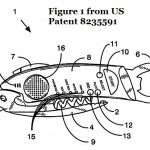
The patent for the “corkscrew with integral intelligent thermometer” (US8235591) was first filed in October 2003 and was finally issued in August 2012.  Briefly, this corkscrew was designed to not only open the bottle of wine, but to also inform the consumer what temperature the wine currently is, as well as what wines would be best at that temperature.  The device is designed in such a way that this information may be transmitted by audio and/or visually by a digital display.  Temperature is measured either from a probe on the outside of the bottle (think a probe in the handle of the corkscrew) or via the screw itself once it was inserted into the cork.

Figure 1 from US Patent 8235591

Note: This figure illustrates the corkscrew with integral intelligent thermometer.  Temperature probes are located at #2 and the corkscrew itself.

Why was this device invented?

According to the inventor, this corkscrew with the integral intelligent thermometer was designed to assist consumers in determining the proper temperature at which a wine should be served.  Studies have shown that different wines have different optimal serving temperatures, which are dependent upon a variety of factors, most notably the color of the varietal (red, white, or rosé).  For the inexperienced consumer, who makes up a large number of the consumer population, the knowledge of exactly what temperature (or temperature range) a particular wine should be served is not part of their memory banks.  By having a corkscrew tell one at what temperature they should be serving their wine, it eliminates the stress and worry that they might not be serving it properly.

The author also cites the entertainment value of the device.  According to Harris, having a corkscrew talk to you and tell you what temperature your wine is, or what temperature your wine should be, it provides a level of entertainment that will encourage the consumer to use it over and over again.  To be honest, while I think it’s a novel idea and probably “fun” the first few times I used it, I would be more likely to be entertained each and every time if I could change up the voice that calls out the temperature to me.  Just imagine some celebrity like Mr. T telling you what temperature your wine is:  “It’s 2oC!  I pity the fool who serves their wine so cold!” (Mr. T. pictured below)

By Annie Mole [CC-BY-2.0 (http://creativecommons.org/licenses/by/2.0)], via Wikimedia Commons

Harris also made mention of the fact that having a device give you the temperature of the liquid within the bottle without actually opening the bottle would be optimal.  I completely agree, as if one opens the bottle and finds out it’s the wrong temperature, it’s harder to get back in the refrigerator without risking leakage from the cork (ok, it’s actually not that hard, but one does run the risk of leakage if the bottle is placed on its’ side).  By having the temperature probe on the arm of the device, the temperature is able to be read through the side of the bottle.  Similarly, by having a probe on the screw itself, the temperature inside the bottle can be measured without breaking the seal of the corkon the sides of the neck (though now there is a hole in the top of the cork…).

Figure 2 from US Patent 8235591

Note: This figure highlights the digital screen where the temperature readout would be located.

Would you buy it?

In general, I think it is a pretty neat little gadget, and may be useful for technology geeks that want to be certain they are serving their wine at the correct temperature either to truly taste the wine at the temperature it was designed to be served at, or to just impress their friends at their next dinner party.  I technically wouldn’t need this device, since I have a wine refrigerator by which I can set the precise temperature to store my wines, however, it would be useful if for some reason I wasn’t sure if my refrigerator was accurately reporting temperature anymore, or, if I just wanted Mr. T to yell at me to warm up or chill down my wine.  OK, OK, Mr. T’s voice is not available on this device, but I would buy it in a heartbeat if it were!

What do you all think of this new device?  Would you buy it?  Is it just a marketing ploy that people don’t REALLY need?  Do you think it helps or hurts the wine business?  Please feel free to leave your comments!

Source:  US Patent: US8235591  http://ip.com/pat/US8235591  Accessed 11/11/12

Does Serving Temperature Effect the Perception of Flavor and Fault Intensity in Wine?

Now that I have done two medical-related reviews in a row, it’s time I review some research in another field.  For today’s post, I’ve decided to review an article based on sensory perception and wine tasting.  A very common question I get while working in the tasting room is, “At what temperature should I serve wine?”  Does serving temperature really make a difference in regards to capturing the flavor of the wine?

The article I will review for this post addresses the issue of changing serving temperatures and perception of flavors in wine, in addition to perception of imperfections in the wine as the serving temperature changes.

The title of the article reviewed for today is: 

Influence of Serving Temperature and Wine Type on Perception of Ethyl Acetate and 4-ethyl Phenol in Wine; by M. Cliff and M. King

Introduction

Up until this article was published, there had been very few studies looking at olfactory responses to aromas at different temperatures.  One study found that there was no difference in olfactory sensitivity with varying temperatures; however, this was later speculated to be as a result of the temperature of the sample equilibrating with body temperature, since the air entering the nasal cavity rapidly equilibrated with body temperature.  A later study found a more significant response, in that for beef flavor at varying temperatures, meaty intensity decreased with increasing temperatures, while vegetable intensity increased with increasing temperatures.

So what about wine?  Does the perception of flavors change in wine with changing serving temperatures?

The accepted serving temperatures for white wines range from 8-12oC (46-54oF), and 18-22oC (64-72oF) for red wines.  Frequently, people serve their white wines straight out of the refrigerator, which is often set in the mid-30’s oF, and serve their red wines at the temperature of the room they are sitting in (which if not in a wine cellar, is somewhere in the mid-70’s oF).  Does this difference in serving temperatures make a difference in regards to the flavor of the wine?

One former study found that variations in wine temperature change the relative proportion of headspace aromatics (in other words, changes the nose of the wine in the glass).  It has been speculated that changes in temperature could possibly enhance or suppress the detection of specific aromas in wine.  Some have attested that oak aromas can dominate in chilled white wines, while when the same wines are at room temperature, the fruit aromas are more pronounced and the oak becomes more integrated with the fruit.

The overall objective of the study under review in this post was to evaluate the effect of temperature on the perception of two compounds, ethyl acetate and 4-ethyl phenol.  When these two compounds are found in wine at higher levels, it is indicative of faulty or poor quality wine, or more specifically, increased volatile acidity and Brettanomyces (a yeast in wine that at low levels is fine, but at high levels has negative effects on flavor and quality).  In order to avoid methodological mistakes of the past, this study made special efforts to control and maintain the wine temperature, and to avoid any cognitive or psychological clues.

Methods

In my past few review posts, I’ve not gone into great details of the methods; however, I will be more specific with this article, since I feel the methods were particularly interesting and helpful with your own analysis and interpretations of results.

Wines Used

Four wine blends, which were prepared from bottled British Columbia Vintners Quality Alliance commercial wines were used (Chardonnay, Gewurztraminer, a white blend, and a red blend).

The Chardonnay was barrel aged, so it had a strong oaky character.  The Gewurztraminer was very aromatic, with flavors of lychee, muscat, and floral notes.  The white blend was chosen to give clean, light fruit character.  The red blend was made from all Bordeaux grape varietals. 

Each of the four wines was partitioned into four equal volumes: 2 for control, and one each for the two compound treatments (200ppm ethyl acetate or 1000ppm 4-ethyl phenol).  These levels were chosen to be just above the threshold levels, so that they would be detectable by all of the judges, but not so dominant that temperature differences would not be detectable.  All of the wines and wine glasses were stored at the three different treatment temperatures (0, 10, and 22oC; or 32, 50, and 72oF) for eight hours before the study began.

Sensory Panel

The judges for this study were eight staff members (4 male, 4 female) from the Agriculture and Agri-Food Canada (Summerland, BC), who were chosen based on their availability, motivation, and previous sensory experience.  Tests were performed to be sure the judges could detect the ethyl acetate and 4-ethyl phenol in the wine, and they were able to practice until they were able to correctly identify which wines contained the added compounds.

Wine Glasses

Black 8-oz tulip shaped wine glasses were used, and were each individually wrapped with 1cm thick milar bubble film and secured with duct tape.  The glasses were placed in temperature controlled rooms set at the treatment temperatures (0, 10, and 20oC).  The milar film was tested for effectiveness at maintaining the desired temperature, and it was proven successful and maintained for a period of four minutes.

Experimental Design/Procedures

In each sensory evaluation session, one of each of the wine types was tested at each treatment temperature.  The judges took breaks in between sets of wine samples.  At each temperature, the base wine (control, no chemicals added) and the treated wine were evaluated in random order.  All wine types were completely randomized in their order of presentation to the judges, and were evaluated twice over the entire study.

The wines and wine glasses were stored at the treatment temperatures, and 30mL of wine were poured into the glasses just prior to the judges’ arrival.  Each wine was evaluated within three minutes of being removed from the temperature controlled storage.  Glasses were covered with 6cm plasic Petri dishes, to avoid contamination of external factors.  The judges wore wool gloves and scarves to eliminate any thermal clues from the stems and rims of the wine glasses, and to act as a physical barrier from the cold. 

To evaluate, the judges swirled the glasses and held the glasses to their noses without touching their faces.  Judges evaluated the wines for intensity of fruit and volatile acidity (ethyl acetate) or intensity of fruit and Brettanomyces (4-ethyl phenol) on a low, moderate, and high intensity scale.

Results

This study found that temperature was in fact a significant source of variation for perceived fruit intensity and perceived faults (i.e. ethyl acetate or 4-ethyl phenol) by the judges.  Wine-by-temperature effects proved NOT significant, meaning that each individual wine type shared similar responses to temperature changes.

The relationship between the perceived intensities and the temperature were linear for fruitiness (r=0.979; which if you’re unfamiliar with statistical analysis means that almost all of the variation of fruit intensity is explained by the temperature change!!), and ethyl acetate (r=0.980), in the ethyl acetate wines.  The relationship held the same as well for fruitiness (r=0.991) and 4-ethyl phenol (0.951) in the 4-ethyl phenol wines. 

The major findings of this study included the following:

·         The fruity components of the wines, as well as the added wine fault components, were more noticeable at higher temperatures.

·         The presence/addition of ethyl acetate and 4-ethyl phenol changed the response of the fruit intensity perceptions.

o   The effect of added 4-ethyl phenol reduced the fruit intensity at all temperatures for all wine types.

§  The magnitude of this effect was most noticeable in the white blend and Gewurztraminer.

o   4-ethyl phenol(i.e. Brettanomyces) significantly depressed fruit character.

Overall Conclusions

The results of this study showed that the perception of the added wine faults, ethyl acetate and 4-ethyl phenol increased linearly with increases in serving temperature

In the control wines without these faults, the study showed that fruit intensity increased as temperature increased.  However, in the wines with faults added, the increase in perceived defect occurred even though there was an overall increase in fruit intensity.  Basically, the faults were stronger than the fruit intensity, and thus their presence negated an increased fruit intensity in the wines alone.  Therefore, it is speculated that the presence of 4-ethyl phenol (i.e. Brettanomyces) not only has its’ own aroma, but also suppresses the much desired fruit character of the wine.

What does this mean for serving temperatures?

If there are faults in your wines, you’re more likely to notice them at higher temperature, due to their increased intensity and ability to suppress fruit character at higher temperatures.  I would imagine that one would be more likely to notice these faults in red wine, since as a whole, people serve them too warm.  For white wines, it’s a little more questionable.  Yes, if you serve them at a warmer temperature, you will be more likely to notice the faults of the wine if they are present, however, if you serve them too cold (i.e. straight out of the refrigerator), the flavor intensity is suppressed as well (though for a reason other than the wine fault).

So, what should you do?

If you are serving a red wine, and store it willy nilly about your warm house, pop it in the ‘fridge about 20-30 minutes before you are going to drink it.  If you are serving a white wine, and have it stored in your cold refrigerator, take it out of the ‘fridge 20-30 minute before you are going to drink it.  This will bring the wines to the temperature optimal for flavor intensity and minimal fault perception. 

Cheers!

Full Citation:

Cliff, M.A., and King, M.C. 2009. Influence of Serving Temperature and Wine Type on Perception of Ethyl Acetate and 4-ethyl Phenol in Wine. Journal of Wine Research 20(1): 45-52.

I am not a health professional, nor do I pretend to be. Please consult your doctor before altering your alcohol consumption habits. Do not consume alcohol if you are under the age of 21. Do not drink and drive. Enjoy responsibly!