Tag Archives: spoiled wine

Using Microwave Technology to Eliminate Spoilage Organisms in Oak Barrels: A Novel Approach


—————————————————————————————————-

Welcome to The Academic Wino!  If you are new here, please read the “About Me” page to find out more about myself and the blog. If you would like to receive free updates on articles like this by email, then sign up here or you can subscribe to the RSS feed. Also, check us out on TwitterFacebookGoogle+, and or Pinterest. Thanks for visiting!

—————————————————————————————————-

As many, if not all, of you reading this blog already know, the use of oak in winemaking is a very common practice for adding complexity and quality to a wine. Using oak is typically more expensive than using stainless steel tanks, as the cost of the equipment is simply much higher. As a result of this added cost of using oak barrels, winemakers will often use the same barrel for multiple vintages. Of course, using older barrels is also a style choice and not always a financial necessity, as older barrels give a more delicately oaked wine that is well desired among many wine consumers.

All that being said, using a barrel multiple times brings up the issue of having to clean it properly in order to avoid contaminating the next wine that resides inside of it. The porous structure of wood easily allows microbial and other spoilage organisms to “set up camp”, if you will, and is extremely difficult to remove via the current cleaning systems in place at wineries all over the globe. In fact, the washing process will typically only remove the larger particles and

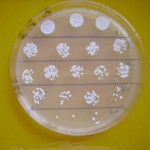
By Maxdesbacchus (Own work) [GFDL (http://www.gnu.org/copyleft/fdl.html) or CC-BY-SA-3.0-2.5-2.0-1.0 (http://creativecommons.org/licenses/by-sa/3.0)], via Wikimedia Commons

By Maxdesbacchus (Own work) [GFDL (http://www.gnu.org/copyleft/fdl.html) or CC-BY-SA-3.0-2.5-2.0-1.0 (http://creativecommons.org/licenses/by-sa/3.0)], via Wikimedia Commons

organisms on the surface of the oak, and can easily miss those organisms that are living deeper inside the wood staves. Many organisms, such as the spoilage critters Brettanomyces, can develop into very large colonies while only starting from a very small number of cells. So, even if you think you are cleaning the barrel thoroughly, you could miss just a couple of little buggers and they’ll still propagate and thrive to spoil your next batch of wine by causing off-aromas and unpalatable sensory characteristics.

Since the current method of cleaning and sanitation of wine barrels is relatively sub-par, a method that allows for the removal of all organisms from all crevices of the barrel needs to be found. There is some research on the topic; however, none of the methods so far have been completely effective in reducing spoilage organisms in the oak barrels. The authors of the study presented today introduced the use of microwave technology in order to remove the spoilage organisms from the cracks and crevices of the oak barrel. They claim that this technology could not only potentially solve the spoilage microorganisms problem in oak barrels, but could also reduce the levels of SO2 needed in wine

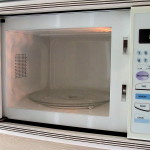
By Mk2010 (Own work) [CC-BY-SA-3.0 (http://creativecommons.org/licenses/by-sa/3.0)], via Wikimedia Commons

By Mk2010 (Own work) [CC-BY-SA-3.0 (http://creativecommons.org/licenses/by-sa/3.0)], via Wikimedia Commons

since it would no longer be needed to prevent the spoilage usually caused by oak barrel contamination. They also mention that using microwave technology to kill the spoilage organisms in oak barrels would result in the lowering of water consumption and energy costs since the usual high-energy blasts of water would no longer be needed to remove the spoilage organisms.

Methods

The equipment used to sanitize the oak was based off a “pulse train generator of high frequency microwaves”. Oak was exposed to the microwaves for 3 minutes at 3000 watts. Over the three minutes, the following treatment was applied: 0-90% for 10 seconds, followed by 90% for 40 seconds, followed by 90-0% for 10 seconds, all repeated 3 times for a total of 3 minutes. The authors noted that the maximum temperature that occurred on the oak was 48oC.

The equipment used in the experiment was only large enough to treat 30cm length oak staves, though ideally the commercial product would be large enough to treat the entire barrel.

The barrels used in this experiment were: a 3 year old American oak barrel, and a 2 year old French oak barrel. Both were confirmed to be highly contaminated with spoilage organisms from previous winemaking and storage. The barrels were first washed with hot water vapor pressure and then were broken down into staves. Half of the staves were randomly assigned to the microwave treatment, while the other half were assigned to the control treatment (no microwave exposure). Treatments were performed in duplicate.

Microbial analysis was performed by collecting wood scrapings from each of the staves to a depth of 8mm.

Results

• The most prominent organism found in both microwave-treated oak staves and control oak staves was Brettanomyces bruxellenxis, representing 99.6% and 98% of the respective microbial populations.
• Even after being washed with hot water vapor pressure, the staves from both American and French staves in the control treatment had a high level of microbial contamination.
o Total cell counts found in control oak staves were: 4.16 log units of total yeasts, 3.27 log units of Brettanomyces, 2.15 log units for lactic acid bacteria, and 2.48 log units for acetic acid bacteria.
• The microwave treatment on the oak staves resulted in significantly fewer microbial population counts than the control treatment.
o Total cell counts found in the microwave-treated oak staves were: 3.24 log units of total yeasts, 2.74 log units of Brettanomyces, 0.20 log units of lactic acid bacteria, and 0 log units of acetic acid bacteria.
• The microwave treatment resulted in a 36-38% reduction in the yeast population, a 35-67% reduction in the Brettanomyces population, a 91-100% reduction in the lactic acid bacteria population, and finally a 100% reduction (i.e. total elimination) of the acetic acid bacteria population.
• The percentage of reduction of microorganisms was larger in American oak barrel staves, which the authors deduce is possibly a result of the greater porosity of French oak barrel staves allowing for greater wine infiltration and thus greater difficulty in cleaning and sanitizing the barrels.
• The microwave treatment did not affect the chemical composition and quality of the wood itself.

Conclusions

The results of this study are fascinating in that microwave treatment of oak barrel staves effectively reduces yeast populations inside the pores of the wood, and nearly eliminates the lactic and acetic acid bacterial populations. While it doesn’t completely eliminate all of the spoilage microorganisms responsible for creating off flavors and aromas in wine (i.e. Brettanomyces yeasts), it does significantly reduce them, and in certain cases remove them all together (i.e. lactic and acetic acid bacteria). According to the authors, this microwave treatment is a significant improvement over any of the current cleaning and

Photo by Bernt Rostad: http://farm4.staticflickr.com/3457/3246033875_f9556cf61b.jpg

Photo by Bernt Rostad: http://farm4.staticflickr.com/3457/3246033875_f9556cf61b.jpg

sanitizing methods for removing potential contaminants in oak barrels.

I agree with the authors when they suggested perhaps combining the microwave treatment with another method for microorganism removal, such as laser, ultrasonics, or UV radiation, all of which are currently being studied as possible methods for contaminant removal. Perhaps the combination of one or more of these methods would create a synergy that could remove significantly more of the microbial population than either one on their own. Microwave treatment appears to nearly eliminate all of the lactic acid and acetic acid bacteria in the oak barrel staves, so combining it with a method that effectively reduces the yeasts populations may result in the “perfect storm” of spoilage organism removal techniques.

Determining if a system could be created that would effectively reduce or eliminate the spoilage organism populations in whole oak barrels, and not simply oak barrel staves, is of utmost importance. Real world applications of this technique will occur in the whole barrel, so it is important to determine if this method will work in this scenario, or if the system needs to be altered or tweaked in any way, in order to remain effective in this different scenario.

The authors mentioned that the microwave treatment did not affect the chemical composition of the wood itself, but only affected the microbial population. I would like to see a sensory analysis of wine fermented and/or stored in these microwaved barrels (compared to controls) in order to confirm that, in fact, the chemical composition of the barrels did not change.

If this technique can be applied on a larger scale (i.e. at the intact whole barrel level), it could be a very good investment for the wine industry, particularly if a combination treatment is found to eliminate not only the bacteria populations but also the trouble yeasts. Not only would the winemaker not have to worry about spoilage in their wines (theoretically), but they would not have to use as much SO2 for protecting against these potential contaminants, and they would not be wasting nearly as much water on the hot water vapor pressure washing process. Good for the winemaker, good for the consumer, and good for the environment (theoretically!).

I’d love to hear what you all think! Please feel free to leave your comments!

Source: González-Arenzana, L., Santamaría, P., López, R., Garijo, P., Gutiérrez, A.R., Garde-Cerdán, T., and López-Alfaro, I. 2013. Microwave technology as a new tool to improve microbial control of oak barrels: A preliminary study. Food Control 30: 536-539.

Detecting Brettanomyces in Wine: A Novel Approach Using qPCR


Brettanomyces bruxellensis (also known as Dekkera bruxellensis), or what the wine community lovingly calls “Brett”, is a huge cause of economic decline in the wine business as a result of the yeasts’ ability to decrease the quality of wine on a grand scale, though this fact remains very controversial in the industry.  While many believe that Brett is bad for wine quality, producing ethyl phenols that increase the incidence of “off” aromas in wine (including “barnyard”, “Band-Aid”, “phenolic”, etc), there are few others that believe that Brett character is critical in giving wine individual flavor characteristics and expression of terroir.

Chemically, Brettanomycesyeasts possess hydroxylcinnamate decarboxylase activity and vinylphenol reductase activity, both of which function to convert hydroxylcinnamic acids into the ethyl phenols responsible for “off” aromas and

By Maxdesbacchus (Own work) [GFDL (http://www.gnu.org/copyleft/fdl.html) or CC-BY-SA-3.0-2.5-2.0-1.0 (http://creativecommons.org/licenses/by-sa/3.0)], via Wikimedia Commons

flavors.  In addition, Brettanomycesyeasts are known to be highly polymorphic and have increased mutation rates, making controlling their populations more problematic.

In regards to ethyl phenols, which are produced by the Brett yeasts, the sensory threshold is very low, thus even low levels of these compounds in the wine result in detectable “off” flavors and aromas that often result in a marked decrease in wine quality.  Though the Brett character is often off-putting to some, others find the flavors and aromas desirable and indicative of terroir, which makes the presence of Brettanomyces in wine controversial to say the least.

From a microbiology stand point, monitoring Brettanomyces can be problematic, as the yeast can be difficult to distinguish strain diversity in a population of Brett using current analytical methods, it has a relatively slow growth rate, and it is very difficult to isolate from media and other yeasts.  Another very important and problematic characteristic of Brett is that it can enter what is known as a “viable but not cultivable” state after the addition of sulfur dioxide to the wine.  In other words, Brett is unable to grow under the high free sulfur dioxide conditions, but can continue to grow at a later time after the wine has had some time to evolve.

Unfortunately, Brett detection protocols are sometimes performed during this stage of “viable but not cultivable”, which results in a false negative reading.  To say it another way, the cellar worker is “tricked” into thinking that the winery is sterile, however the Brett is merely just “laying low” and remaining temporarily undetectable using traditional detection methods.  The current methods for measuring Brett are not sensitive enough to detect the yeast when in this stage, thus running the risk of the wine developing Brett character later on when the yeasts “wake up”, so to speak.

A recent study by Tofalo et al (2012) aimed to find a different method for measuring Brettanomyces yeasts in wine, in hopes that a more sensitive method can be utilized and employed in wineries all over the world, potentially saving wineries a financial headache later on.  Specifically, the method tested in this

By Kevin Tong, UC Davis College of Engineering (Ghausi Hall Labs) [CC-BY-2.0 (http://creativecommons.org/licenses/by/2.0)], via Wikimedia Commons

study was a combination approach of qPCR and culture counts, the latter which is the more traditional Brett detection method.  While culture/plating counts can only detect those cells that are cultivatable (thus missing the “viable but not cultivatable” Brettcells), whereas qPCR uses DNA to quantify the number of yeast cells present regardless of their viability or “cultivatabilty” statuses.

Methods (very very briefly)

30 red wine samples were collected from vineyards in central Italy (specifically, the Abruzzo region).  5 of these samples were from organically managed vineyards, while the other 25 samples were from conventionally managed vineyards.  All wine samples were positive for Brettanomyces bruxellensis.

Wine samples were diluted in a serial dilution and plated onto an enrichment medium (designed to isolate Brett).  Yeast colonies were counted after 12 days of 25oC incubation.

DNA was extracted from the yeast colonies using previously performed methods.

qPCR was performed on the DNA samples.

All samples at all stages were performed in triplicate.

Different DNA extraction kits were compared in order to determine which resulted in the highest quality DNA for qPCR analysis.

Results

  • Brettanomyces was not detected in 20 of the 30 wine samples using the plating count method, even though these wines were previously confirmed to be Brett positive.
    • 16 of these samples were from conventional vineyards, and 4 were from organic vineyards.
  • The DNA extraction kit that provided the highest quality DNA for qPCR analysis was the DNAPowerSoil Isolation Kit.  This was the only kit used for further analysis.
    • According to the authors, the results of this kit were “fast, simple, and efficient”.
  • Using qPCR, Brettanomyceswas detected in 22 of the 30 wine samples (as opposed to only 10 of 30 using the plating count method).
    • Concentrations of Brett ranged from 10 to 104 CFU/mL, with organic wine samples harboring the lower concentrations of the bunch.
    • According to the authors, these results indicate that Brett is detectable at levels of at least 10 CFU/mL.

Conclusions

The results of this study indicate that using qPCR instead of traditional plating or culture count methods is superior in regards to detecting Brettanomyces in wine.  The authors noted that qPCR was able to identify 12 more wine samples to be Brett positive than the plating count method could detect.

It is important to note that 8 of the wines still did not give positive results in either the plating method or the qPCR method, indicating that there are more complicated factors “clouding up” the detection of Brett in the samples, questioning whether or not there are potentially even more sensitive assays available that what had been tested in this study.  The authors noted it is very

By Quinn Dombrowski (originally posted to Flickr as Wine) [CC-BY-SA-2.0 (http://creativecommons.org/licenses/by-sa/2.0)], via Wikimedia Commons

difficult to completely isolate Brett from other yeasts, bacteria, or other cells, so it is possible that the cultures of these 8 samples were not completely “clean” and contained other organisms that effectively “hid” the Brettfrom the qPCR.

The authors also noted that different strains of Brettanomyces have different abilities to produce ethyl phenols, thus simply counting the numbers of Brett cells in the wine may or may not be indicative of wine spoilage.  Specifically, a strain of Brett that does not produce much ethyl phenol could potentially be present in very high concentrations and still not spoil the wine, while another strain of Brett that has the ability to produce exorbitant levels of ethyl phenol only needs to be present in small numbers before spoiling the wine it inhabits.

In summary, while there is still room for improvement, this study showed that qPCR may be a more effective way to monitor Brett levels in wine, and may be a good practice for wineries to adopt in their Brettanomyces management protocols.  Certainly, more research needs to be done (i.e. would this method be just as effective in white wines?), but this study provides a more sensitive alternative to the traditional Brett detection methods that could be financially beneficial to wineries.

Source:  Tofalo, R., Schirone, M., Corsetti, A., and Suzzi, G. 2012. Detection of Brettanomyces spp. in Red Wines Using Real-Time PCR. Journal of Food Science 77 (9): M545-M549.