Tag Archives: vineyard management

Metabolic Changes in Grapes After Botrytis cinerea Infection and Implications for Early-Detection in the Vineyard


—————————————————————————————————-

Welcome to The Academic Wino! If you are new here, please read the “About Me” page to find out more about myself and the blog. If you would like to receive free updates on articles like this by email, then sign up here or you can subscribe to the RSS feed. Also, check us out on TwitterFacebookGoogle+, and or Pinterest. Thanks for visiting!

—————————————————————————————————-

As almost everyone in the wine business knows, Botrytis cinerea is a fungal pathogen that attacks many plants, including grapes, which can cause significant crop and quality losses and ultimately economic losses for wineries and vineyards. Physiologically, B. cinerea excretes enzymes onto the plant leaves and fruit which results in the degradation of the plant cell walls and ultimately infections and necrotic lesions. Under most circumstances, grapes infected with B. cinerea are not fit to produce wine, as they would possess significant off aromas and flavors that are undesirable for the majority of wine consumers.

When faced with continuous damp or humid environmental conditions, Botrytis cinerea infections can wreak havoc on vineyards, resulting in what’s commonly referred to as “grey rot”. However, under drier conditions, B. cinerea is sometimes desirable, as Botrytis infections of dried or raisinated grapes results in “noble rot”, or in other words a high quality concentrated sweet wine. Under most circumstances around the world, Botrytis cinerea is highly undesirable and steps to avoid widespread contamination are frequently practiced.

Studies on other plants have shown that examining the metabolic changes of the

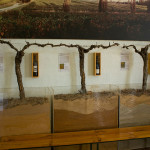
By John Yesberg (Own work) [Public domain], via Wikimedia Commons

By John Yesberg (Own work) [Public domain], via Wikimedia Commons

plant under stressful conditions such as a fungal infection may provide important information on how plants protect themselves and recover from disease, as well as how this stress affects the entire plant and not just the sites of infection. These types of studies are not very common in the grapevine, and grapevine metabolic changes induced by Botrytis cinerea infections in particular have not been studied much at all. Thus, the goal of the study presented today was to examine and determine how Botrytis cinerea infections influence metabolic changes in the grapevine, which could have important implications for Botrytis cinerea management as well as early detection in the field.

Methods

Five bunches of healthy Chardonnay grapes as well as five bunches of botrytised Chardonnay grapes were randomly selected and harvested from a vineyard in Champagne, France in 2010. Skins were manually separated from the pulp for all treatments. Treatments included: 1) the skins and pulp from healthy grapes on healthy bunches; 2) skins and pulp from healthy grapes on botrytised bunches; and 3) skins and pulp from botrytised grapes on botrytised bunches.

Metabolites were then extracted and measured from each of the samples using Nuclear Magnetic Resonance (NMR) methods.

Results

• Using NMR, skin and pulp extracts were found to be significantly different in regards to their metabolite content between healthy grapes, healthy grapes from botrytised bunches, and botrytised grapes.

Skin

• D-Gluconic acid was only found in botrytised grape samples and was 2x higher in the skin than in the pulp.
• Valine, isoleucine, leucine, threonine, arginine, and proline were significantly increased and sucrose, caffeic acid, trans-coumaric acid, and quercetin/kaempferol-3-O-glucoside were decreased in the skins of healthy grapes from botrytised bunches compared with the skins of healthy grapes from healthy bunches.
• Alanine, glutamate, succinate, fructose, and glucose were significantly increased and sucrose was decreased in the skins of botrytised grapes compared with the skins of healthy grapes from healthy bunches.
• Caffeic acid, trans-coumaric acid, and quercetin/kaempferol-3-O-glucoside were not found in botrytised grape skins.
• Glycerol was significantly increased in the skin of botrytised grapes.

Pulp

• Valine, isoleucine, threonine, proline, glutamine, and glutamate were significantly increased in the pulp of healthy grapes from botrytised bunches compared with healthy grapes from healthy bunches.
• Succinate, arginine, and γ-aminobutyrate were significantly increased in the pulp of botrytised grapes compared with the pulp of healthy grapes from healthy bunches.
• Glycerol was significantly increased in the pulp of botrytised grapes.

Discussion and Conclusions

Overall, the results of this study indicate that Botrytis cinerea infections affect the metabolic profile of not only botrytised grapes, but also the healthy grapes that are located on a bunch with botrytised berries. They are not affected in the same manner, as then compared with health grapes from healthy bunches, the three populations are significantly different from one another in regards to their metabolite content, however, it is important to note that even healthy grapes on botrytised bunches have significant changes in their metabolite content that are not seen in healthy grapes from healthy bunches.

Many of the metabolites that were found to be increased in botrytised grapes as well as the healthy grapes from botrytised bunches are known to be involved in many plant defense mechanisms. Specifically, these metabolites respond to the infection by synthesizing into more complex compounds that subsequently react and combine with polyphenols in order to defend and fight against the infection. The metabolites involved with this type of defense mechanisms include (but are not limited to) arginine, glutamate, and alanine.

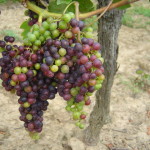
Photo by Tom Maack (Own Work), via Wikimedia Commons

Photo by Tom Maack (Own Work), via Wikimedia Commons

Other metabolites noted to be increased in the healthy grapes from botrytised bunches are known to be the basis for structural components of plant cell walls. It could be that in response to the Botrytis cinerea infection, the plant sent the still healthy grapes on the bunches increased levels of the amino acids required for cell wall synthesis in order to combat against the increased threat of cell wall degradation as a result of the fungal infection. The metabolites involved with cell wall synthesis that were found increased in healthy grapes from botrytised bunches were: proline, hydroxyproline, valine, threonine, and isoleucine.

Other metabolites were found to be either partially degraded or completely degraded in healthy grapes from botrytised grapes and botrytised grapes, respectively, indicating that Botrytis cinerea infections causes significant metabolic changes and activation of plant defense mechanisms even in berries that look healthy to the human eye.

It was also noted that glycerol and gluconic acid were only found in botrytised grapes. According to the authors, this indicates that Botrytis cinerea infections can trigger the synthesis and increase of certain defense metabolites which are not normally present in healthy grapes.

Overall, this was a very fascinating study that starts to answer some of the questions related to the physiological changes in the metabolite content of grapevines when under attack by Botrytis cinerea. The results indicate that it may be possible to develop a test for monitoring Botrytis cinerea in the vineyard, particularly in very early stages when it is not yet clear by the naked eye that the infection has taken place. Since the metabolite content of the grapes significantly changes in the healthy grapes of infected bunches, this study shows promise that this type of field test is feasible and that this early detection could help vineyard managers combat the infection before it spreads to other plants.

I’d like to see future work implementing this type of Botrytis cinerea early detection test in the field, perhaps by measuring those metabolites that were found to be increased in the healthy grapes from botrytised bunches. If these metabolites are found at a certain threshold (to be determined with more research), then it could indicate that more aggressive Botrytis vineyard defense actions should take place. Would this type of test be applicable to all grape varieties? Or are the results we saw in this study unique only to Chardonnay? Future tests should include multiple varieties of grapes to determine how universal these results are and how the early detection tests may need to be altered depending upon the variety in question.

I’d love to hear what you all think of this study and the implications therein. Please feel free to comment and discuss!

Source: Hong, Y.S., Martinez, A., Liger-Belair, G., Jeandet, P., Nuzillard, J.M., and Cilindre, C. 2012. Metabolomics reveals simultaneous influences of plant defence system and fungal growth in Botrytis cinerea-infected Vitis vinifera cv. Chardonnay berries. Journal of Experimental Botany 63 (16): 5773-5785.

Mealybug-Infested Grapes: How Do They Influence Wine Quality?


—————————————————————————————————-

Welcome to The Academic Wino! If you are new here, please read the “About Me” page to find out more about myself and the blog. If you would like to receive free updates on articles like this by email, then sign up here or you can subscribe to the RSS feed. Also, check us out on Twitter, Facebook, Google+, and or Pinterest. Thanks for visiting!

—————————————————————————————————-

There is a lot of research focused on the effect of various fungal agents on the quality of finished wine; however, to date there has been very little examining the effect of insects on wine quality. While some insects are considered to be beneficial (i.e. ladybugs; since they are known to prey on pest insects), many other are considered to be pests as a result of their contamination of the grapes which result in undesirable aromatic characteristics in the finished wine.

One insect pest of grapevines in particular is the mealybug (Hemiptera: Pseudococcidae). Certain species tend to be more problematic than others, though in general they aren’t exactly wanted ever in the vineyard. In California and Argentina, the most common species of mealybug is Planococcus ficus

By Tegermee (Own work) [GFDL (http://www.gnu.org/copyleft/fdl.html) or CC-BY-SA-3.0-2.5-2.0-1.0 (http://creativecommons.org/licenses/by-sa/3.0)], via Wikimedia Commons

By Tegermee (Own work) [GFDL (http://www.gnu.org/copyleft/fdl.html) or CC-BY-SA-3.0-2.5-2.0-1.0 (http://creativecommons.org/licenses/by-sa/3.0)], via Wikimedia Commons

(Signoret), whereas in Chilean vineyards, the most common species is Pseudococcus viburni (Signoret). As the grapes go through veraison and continue to ripen, the mealybug moves to the grape clusters where it continues to feed and reproduce. One problem with mealybugs in regards to grape health is that when they are going through the process of feeding, they excrete honeydew, which has been shown to act as a solid base for the development of sooty mold or other fungi. Also, it has been shown that mealybugs can carry and transmit grapevine viruses, including the leaf-roll virus.

Though it is generally understood that mealybugs (and other similar insects) are undesirable in the vineyard for the reasons mentioned above, there has been very little research done examining the effects of mealybug infestation on the quality of the wine produced from the exposed grapes. The goal of the study presented today was to test whether or not wine produced from different levels of mealybug infestation had different chemical and sensory characteristics for both red and white wines.

Methods

Grapes used were Chardonnay from the Casablanca Valley in Chile, and Carménère from the Colchagua Valley also in Chile. Mealybug damage on the grape clusters were based on a scale of 0-3; with 0 reflecting completely healthy grapes, 1 reflecting the presence of less than 5 mealybugs or a light bit of honeydew, 2 reflecting an infested cluster with only part of it useable, and 3 reflecting a completely infested cluster. After harvest, grapes were taken to the Enology lab at the Universidad Católica de Chile in Santiago, Chile.

180kg of grapes were harvested from the Chardonnay vineyard and another

Carmenere Photo Credit: By Lebowskyclone (Own work) [CC-BY-SA-3.0 (http://creativecommons.org/licenses/by-sa/3.0) or GFDL (http://www.gnu.org/copyleft/fdl.html)], via Wikimedia Commons

Carmenere Photo Credit: By Lebowskyclone (Own work) [CC-BY-SA-3.0 (http://creativecommons.org/licenses/by-sa/3.0) or GFDL (http://www.gnu.org/copyleft/fdl.html)], via Wikimedia Commons

180kg from the Carménère vineyard, with approximately half the grapes being healthy, and the other half being infested with mealybugs.

Once grapes were brought to the laboratory, healthy and infested grapes were mixed together to create four different treatment types: 1) 100% healthy grapes; 2) 66% healthy and 33% infested grapes; 3) 33% healthy and 66% infested grapes; and 4) 100% infested grapes.

Wine was made using small-scale winemaking procedures. Chardonnay was not allowed to go through malolactic fermentation, while the Carménère was made as reds are made traditionally with malolactic fermentation. A total of 12 batches were made for each wine, representing the 4 treatments and 3 replicates each.

For the musts, the following were measured and analyzed: pH, sugar content, and titratable acidity.

For the finished wines, the following were measured and analyzed: free sulfites, total sulfites, pH, alcohol degree, titratable acidity, volatile acidity, residual sugar, and nitrogen content. For the Chardonnay, specifically, total polyphenols were also analyzed. For the Carménère, specifically; total polyphenols, hue, total anthocyanins, dimethyl amino cinnamaldehyde index, total tannins, and average degree of tannin polymerization were also analyzed.

Sensory analyses were performed by 20 people from the Pontifica Universidad Católica de Chile, including 2 enologists and 18 graduates of the ecology major program. Wines were randomly (and blindly) presented to the subjects in groups of 4, representing each of the 4 treatments. Tastings were done prior to the experimental tastings, in order to get a solid grasp of the taste descriptors that were being analyzed in this study. Flavors and aromas were scored on a 1-9 scale (1 being the worst and 9 being the best).

Results

• The chemical compositions of the musts were not different between mealybug infestation treatments.
• After the completion of alcoholic fermentation, there were no differences in chemical composition between the different treatments in the Chardonnay. However, in Carménère, pH and alcohol content were lower in the 100% infested treatment than all other treatment than all other treatments.
o Also, Carménère showed greater levels of nitrogen in the 66% and 100% infestation treatments than the 33% and 0% infestation treatments (no difference in Chardonnay).
• In Chardonnay, total polyphenols decreased as mealybug infestation proportions increased, with the 100% infestation treatment being statistically significant.
• In Carménère, total polyphenols, anthocyanins, tannins, and dimethyl amino cinnamaldehyde index all decreased in wines made from mealybug infested grapes.
• In Carménère, as mealybug infestation increased, total anthocyanins, malvidin, acetylated anthocyanins, non-acetylated anthocyanins and cumarilated anthocyanins all decreased.
• In Carménère, as mealybug infestation increased, total tannin content and the proportion of galiolated tannin decreased, whereas the average degree of tannin polymerization increased.

Sensory Analysis

• Principle Component Analysis on the sensory analysis results showed that Chardonnay made from the 100% mealybug infested grapes were associated with negative characteristics, including that of oxidation.
• Chardonnay wines from the 33% and 66% infestation treatments were associated with bitterness.
• Chardonnay wines from the 100% healthy treatment (0% infestation) were associated with positive flavor and aroma characteristics, as well as higher quality.
• Carménère wines from the 100% infestation treatment were associated with dry fruit and dry vegetable characteristics.
• Carménère wines from the 100% healthy treatment were associated with fresh fruit, body, and higher quality.

Conclusions

The results of this study indicate that mealybug infestation does, in fact, play a negative role in the overall quality of a wine created from infected grapes. The grape variety also seems to play a small role, as there were some differences between Chardonnay and Carménère when it came down to the changes in chemical composition and the sensory analysis of the wines. It was interesting to note that the musts of the wines actually did not differ in their chemical compositions, but throughout the alcoholic fermentation (and malolactic fermentation in the red) there appeared to be specific chemical composition changes related to the proportion of mealybug infested grapes used in the processing of the wines.

Specifically, the higher the proportion of mealybug infested grapes used to make the wine, the lower the phenolic content, which as the authors mention (and I

Leaf roll virus: Photo credit: William M. Brown Jr., Bugwood.org

Leaf roll virus: Photo credit: William M. Brown Jr., Bugwood.org

agree) could lower the overall quality of the wine. This lowering in quality was confirmed in the sensory analysis of the wines.

While it’s clear there is a negative effect of mealybug infestation on wine quality (at least with Chardonnay and Carménère), it is unclear exactly why. The authors mentioned the mechanism could be related to the insects themselves directly contaminating the grapes, or possibly indirectly through the honeydew left after feeding or through the fungus attracted to the grapes after mealybug feeding. Whatever the mechanism may be, it is clear that mealybug infestation should be controlled in order to avoid possible undesirable flavors and aromas in the finished wine, in addition to an overall decrease in the quality of the wine.

I would love to see more research focusing on determining the mechanism of this process, as knowing exactly what causes the lower quality wines would give vineyard managers a better idea of exactly how to target their protection and control defenses.

I would also like to see more research breaking down the influence of different species of mealybug and how infestations of one or the other (or both concurrently) affect the quality of finished wines. The authors made mention of differences between the two species in their introduction, however, these differences were not tested. I wonder if one species over another is more damaging to wine quality or if they are roughly equivalent in their harm.

What do you all think of this study? Do you have any experience with mealybug infestation? How have you been successful or unsuccessful in combating against these pests? Please leave these and any other general comments you have for discussion!

Source: Bordeu, E., Troncoso, D.O., and Zaviezo, T. 2012. Influence of mealybug (Pseudococcus spp.)-infested bunches on wine quality in Carménère and Chardonnay grapes. International Journal of Food Science and Technology 47: 232-239.

Climate Change-Induced Water Stress: How Leaf Position Affects Water Use Efficiency in the Grape Vine

—————————————————————————————————-

Welcome to The Academic Wino! If you are new here, please read the “About Me” page to find out more about myself and the blog. If you would like to receive free updates on articles like this by email, then sign up here or you can subscribe to the RSS feed. Also, check us out on Twitter, Facebook, Google+, and or Pinterest. Thanks for visiting!

—————————————————————————————————-

According to scientists, climate change will affect various parts of the world differently than one another. Specifically, in regards to the Mediterranean region (as well as many others), a decrease in annual precipitation is currently predicted, based on past data and future forecast models. As a result of this predicted change, there has been substantial interest in research related to water use efficiency in both viticulture and agriculture in general, as precipitation changes will likely bring changes to the sustainability and quality of crops, so determining how to adapt to these changes is absolutely necessary for the future of viticulture and agriculture as a whole.

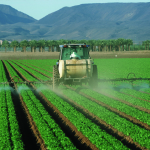
This type of research is not exactly new, and has been going on for many years. Current strategies for combating decreased water availability due to climate change include (but are not limited to) controlled irrigation and partial root zone drying. The problem with using irrigation in a climate that has significantly

By Photo by Lynn Betts, USDA Natural Resources Conservation Service. (USDA NRCS Photo Gallery: NRCSCA00061.tif) [Public domain], via Wikimedia Commons

By Photo by Lynn Betts, USDA Natural Resources Conservation Service. (USDA NRCS Photo Gallery: NRCSCA00061.tif) [Public domain], via Wikimedia Commons

reduced precipitation is the issue of where the water used for irrigation would come from. To work around this issue, scientists are currently looking at plant water use efficiency, and how pruning or other viticulture strategies can optimize plant water use in such a way that the need for supplemental irrigation is reduced. Of course, there are some “issues” with looking only at water use efficiency, as higher water use efficiency has been linked to lower fruit yield in grapevines. Therefore, optimization, and not necessarily maximization of water use efficiency is key.

The goal of the study presented today was to examine variations in leaf water use efficiency in the grapevine (Tempranillo, to be specific) under water-stressed conditions as well as under different light conditions, as well as throughout different parts of the canopy.

Methods

This study took place at a commercial vineyard in Mallorca, Spain during 1997, 1998, and 2000. 20 year old Vitis vinifera grapevines of the Tempranillo variety were utilized for the study. The study consisted of two plots (located adjacent to one another) containing 350 plants each and underwent one of the two following treatments: 1) Irrigation: irrigation was applied via a drip system twice per week, and was set to drip enough to account for 30% of evapotranspiration; 2) No irrigation: soil progressively became more and more water stressed throughout the treatment period.

Climate conditions were determined by a local weather experimental station nearby. Pre-dawn and mid-day leaf water potential, as well as leaf gas exchange was measured in June, July, and early August. There were a total of 6 replicates per treatment.

Net photosynthesis, stomatal conductance, and transpiration were all measured 6 times a day for every 3 hours between the hours of 6am and 8pm.

All measurements were done on leafs located in 8 different locations within the plant canopy. For each measurement day, 6 replicates per leaf location were measured.

Daily-integrated intrinsic water use efficiency and instantaneous water use efficiency were both calculated.

After harvest, leaves from each canopy location were harvested from six plants per treatment. Fresh weight, leaf area, specific leaf weight, and total leaf area of each canopy location were measured or calculated.

Results

• Irrigation resulted in stable plant water status throughout the growing season.
• Pre-dawn water potential decreased throughout the growing season for those plants in the non-irrigation treatment.
• The ratio of photosynthesis to stomatal conductance was significantly higher in water-stressed plants compared with irrigated plants.
• Photosynthetic active radiation (PAR) interception varied depending upon where in the canopy the leaf was located, with a decrease in PAR noted from the upper part of the canopy to the lower part of the canopy.
o Those leaves in the innermost part of the canopy showed the lowest PAR values, which makes sense due to the fact that the leaves are in the shade do not experience as much radiation from the sun as leaves in full sunlight.
• Water stress did not affect PAR values for any leaf position.
• Midday leaf temperature and leaf-to-air vapor pressure deficit did not differ between any of the leaf positions.
• Water stress resulted in an increase in midday leaf temperatures.
• Water use efficiency was extremely variable between the different leaf positions in the canopy.
o The lowest water use efficiency was in shaded leaves, whereas the highest water use efficiency was in the leaves at the top of the canopy.
o Leaves in sunnier positions had 3x greater water use efficiency than leaves in the shade.
• Water use efficiency was increased in water-stressed plants.
o Those leaves near the top (but not all the way on the top) of the canopy (i.e. those leaves with 67.5% light interception compared with the top leaves) were found to have the highest water used efficiency.
• There was a significant relationship between water use efficiency and the daily intercepted PAR of the leaf.
• South-facing leaves at the top of the canopy had the highest water consumption levels per leaf area than all other leaves.
• Shaded leaves showed the lowest rates of transpiration, however, since there were so many of them (making up 37% of the total number of leaves on the plant), the water use efficiency actually decreased compared to leaves at the top of the canopy.
• Total water consumption decreased in water-stressed plants.
o Moderately-stressed plants showed a 47% decrease in water consumption compared to irrigated plants.
o Severely-stressed plants showed a 70% decrease in water consumption compared to irrigated plants.

Conclusions

The results of this study indicate that there were significant differences between the locations of the leaves in the canopy in regards to water use efficiency. The authors speculated that these differences could be due to the differences found in PAR and light exposure. In regards to the entire plant, it was found that water use efficiency increased when the plants were under water stress. This makes sense, as when the plant has less water to work with it needs to make sure it’s spending the appropriate amount of resources on water consumption while at the same time reducing the resources needed for evapotranspiration. In other words, it is in the plants’ best interest to become more efficient at using water when water is scarce, so it doesn’t prematurely shrivel and die due to poorly managed resources (though at some point, this will happen anyway if no water is ever seen again).

The results also indicated that the shadiest of areas on the plant had cumulatively the lowest water use efficiency (or highest daily water loss)

By Agne27 at en.wikipedia [Public domain], from Wikimedia Commons

By Agne27 at en.wikipedia [Public domain], from Wikimedia Commons

compared to all other locations. The authors suggested that by using selective thinning or pruning in this area could decrease the total water loss and increase the water use efficiency of the grape vine. Of course, one must be careful when undertaking a new pruning management plan, as water use efficiency will not be the only thing changed after the pruning occurs.

It is important to note that pruning has influence on many other factors, including the maturation of the grape and the overall quality of the fruit, so it is important to find some sort of middle ground if selective pruning is of interest to you. Selective pruning may be a good approach to adjusting to climate change-induced water stress, however, it is important to take all factors into consideration before just tearing apart your entire vineyard canopy. It is advised to experiment with a small number of vine first prior to partaking in a vineyard-wide pruning management regime.

One other side note to mention is that this study examined just one grape variety (Tempranillo). It’s possible other grape varieties may behave slightly differently in regards to their water use efficiency and their ability to adapt to changes in water availability, so certainly further studies using more grape varieties is warranted.

What do you all think of these results? What other vineyard management programs do you think could be applied after seeing the results of this study? Those of you with experience in vineyards under high water stress, or those that may be experiencing change in water availability at your vineyard: what sorts of vineyard management practices are you doing to adapt to the conditions? Please feel free to comment!

Source: Medrano, H., Pou, A., Tomás, M., Martorell, S., Gulias, J., Flexas, J., and Escalona, J.M. 2012. Average daily light interception determines leaf water use efficiency among different canopy locations in grapevine. Agricultural Water Management 114: 4-10.

Is Soil Dryness Responsible for Early Grape Ripening in Australia?


Climate change, be it brought on by anthropomorphic sources or the natural cycle of the earth (I’m not trying to start that debate), is continuing to be touted as having a significant influence on agriculture and also viticulture worldwide.  Scientists have been predicting that growing and ripening seasons are likely to change in some places, while some (if not all, eventually) will find that the variety of grapes traditionally grown in their region will no longer survive there and other varieties of grapes will have to be planted in order to keep up with the changing environment and climate.

In Australia, studies have found that many grapes varieties in 11 of 12 grape growing regions have been ripening earlier in time periods between 35 and 115 years.  It was noted that these early ripening years were correlated with increases in temperature.  One study in particular by Webb et al (2012) surmised that the earlier ripening in these regions was quite possibly due to temperature increases, soil drying, and/or changes in vineyard management techniques.

By Amanda Slater (originally posted to Flickr as Barossa Valley. SA) [CC-BY-SA-2.0 (http://creativecommons.org/licenses/by-sa/2.0)], via Wikimedia Commons

By Amanda Slater (originally posted to Flickr as Barossa Valley. SA) [CC-BY-SA-2.0 (http://creativecommons.org/licenses/by-sa/2.0)], via Wikimedia Commons

The author of the study presented today (White 2013) claims that there are several issues with the conclusions that Webb et al (2012) came up with.  First, he claimed that the data Webb et al (2012) used was for areas of land around 2500 hectares, whereas the vineyards they were analyzing were significantly smaller at 0.2 to 16 hectares.  The “behavior” of any given piece of land can be radically different even at relatively close distances.  Assuming the environmental information ascertained from a 2500 hectare plot is similar to a random tiny vineyard of no more than 16 hectares in size could be dangerously inaccurate, resulting in missed data or other important hydrological and geographical information unique to that particular vineyard or area.

White (2013) also noted that the soil data used by Webb et al (2012) was for the entire continent of Australia and not for any one particular vineyard site.  Again, similar to the concept described above, the soil in one particular area may be radically different from the soil in another, thus using the average for an entire continent may lead to inaccurate results.

Next, White (2013) noted that the water data used by Webb et al (2012) did not include data from regions by which some of the study vineyards were located.  This may have resulted in some loss of data and loss of result accuracy.

Finally, the last beef that White (2013) had with the study by Webb et al (2012) was that they only used growing season rainfall totals, whereas White argued that the more appropriate variable would be the annual rainfall total.  Just because the vines are dormant in the winter does not mean that the rainfall occurring at that time has no influence on the growth and development of the vine the following spring and summer.

Focusing on Soil Dryness

One of the claims Webb et al (2012) made is that earlier ripening could be due to increased soil dryness.  As a result of the aforementioned flaws in the study design, White (2013) sought to examine this claim further, to either confirm or refute the hypothesis based on more accurate data.

Soil moisture can be simply defined as the balance “between rainfall and actual evapotranspiration, with a variable small surplus in winter going to drainage” (White, 2013).  In other words, the soil will be moist or dry depending upon how much rain it got, plus the amount of moisture that is lost through evapotranspiration (think moisture lost due to heat to the atmosphere) with a small amount draining into the water table far below the surface.  As air temperatures increase, potential evapotranspiration increases.  In other words, as air temperature increases, more water is lost from the plant to the atmosphere.

By Tomas Castelazo (Own work) [GFDL (http://www.gnu.org/copyleft/fdl.html) or CC-BY-3.0 (http://creativecommons.org/licenses/by/3.0)], via Wikimedia Commons

By Tomas Castelazo (Own work) [GFDL (http://www.gnu.org/copyleft/fdl.html) or CC-BY-3.0 (http://creativecommons.org/licenses/by/3.0)], via Wikimedia Commons

It is important to note that as temperatures and carbon dioxide increase, plants have a mechanism to conserve their water by closing their stomatal pours on the leaves.  By closing the stomata, the amount of water that is lost by the plant to the atmosphere decreases and remains within the plant and within the soil around the plant for survival.

So in reality, as White (2013) noted, for most vegetation in areas that are known to have low rainfall or suffer from near drought-like conditions, the decrease in water loss by the plant is directly affected by increased temperatures and increased carbon dioxide, thus counteracting the potential loss of water to the atmosphere had these stomatal closing mechanisms not been in place.  Hydrological research also found that catchment runoff (i.e. runoff from the higher elevations to the lower elevations)  increases with increasing carbon dioxide, thus supporting the idea that as temperatures and carbon dioxide increase, water is not lost into the atmosphere but is in fact retained in the plant and in the soil around the plant.

Due to the results of this research in plant physiology and catchment hydrology as mentioned just previously, White (2013) concluded that annual rainfall may be a good surrogate for soil moisture when the measurements of soil moisture are not readily available.  The overall goal of the study was to determine if trends in annual rainfall confirmed or refuted the theory that soil drying has an effect on earlier ripening in grapes based on the conclusions made by Webb et al (2012).

Briefly, the annual rainfall data and the grape ripening data from 5 different grape growing regions in Australia and over an 11 year moving average were analyzed using a linear mathematical model.

Conclusions

The results of the study found that 3 out of 5 grape growing regions showed positive annual rainfall trends (i.e. increased annual rainfall over time), while 2 out of 5 regions showed negative annual rainfall trends (i.e. decreased annual rainfall over time).  Only one of each was statistically significant.  According to White (2013) the model results are consistent with the data collected from those same regions in Australia during those same time periods.

Since there was a significant increase in annual rainfall during this 11 year period, White (2013) said it was not possible that soil drying would be contributing to the early ripening found at vineyards throughout the region.  In fact, if anything, the soil was getting wetter while the grapes were ripening earlier!

At the site that did see a significant decrease in annual rainfall, there was actually no change in grape ripening found in previous studies.  So, if Webb et al (2012) were correct in their assumption, this site should have seen either no change in annual rainfall plus no change in ripening date, or a decrease in rainfall plus an earlier ripening date.  Since neither of these scenarios played out, White (2013) ascertained that soil dryness was not contributing to earlier ripening in the grapes of Australia.

Based on these results, White (2013) expressed confidence that soil dryness did not influence the date of ripening for grape varieties in Australia.  In fact, it is likely that there are other factors involved that are significantly affecting this date, with the more likely culprits, according to White (2013), being vineyard management practices and increased air temperatures.  According to White (2013), vineyard management practices had changed around this time period, which is something that should be significantly considered as a major player in earlier grape ripening.

Personally, I don’t lay the blame on any one factor in particular.  I think many different factors act in concert to speed up the ripening process of these grapes, and thereby more complex mathematical models taking more of these factors into consideration should be tested.

I’d love to hear what you all think!  Please feel free to leave your comments!

Source: White, R.E. 2013. Has soil drying contributed to earlier grape ripening in wine regions of southern Australia? Australian Journal of Grape and Wine Research 19 (1): 123-127.