Tag Archives: wine color

Examining Variations in Grape Phenolic Maturity and Ripeness at Harvest and How It Influences Wine Quality


—————————————————————————————————-

Welcome to The Academic Wino! If you are new here, please read the “About Me” page to find out more about myself and the blog. If you would like to receive free updates on articles like this by email, then sign up here or you can subscribe to the RSS feed. Also, check us out on Twitter, Facebook, Google+, and or Pinterest. Thanks for visiting!

—————————————————————————————————-

It is well known among grape growers and winemakers that the phenolic maturity of the grapes at harvest significantly impacts the overall quality of the finished wine. Specifically, the aroma, flavor, mouth feel, and astringency (to name a few) are all tied in with the composition of phenolic compounds in grapes and wine, thus are strongly influenced by grape ripeness or a lack thereof. Studies have found that certain phenolics in the skins of unripe grapes are less extractable and certain phenolics in the seeds of unripe grapes are more extractable than those in the skins and seeds of fully matured grapes, thus resulting in altered flavor and aroma of the finished wine.

The current demand from consumers in terms of ideal red wine characteristics are wines with a dark red color, full body, soft tannins, and ripe fruit flavors and aromas. In order to create wines with these types of characteristics, winemakers need to use fully ripened grapes, specifically those grapes that have reached “phenolic maturity”. It is because of this that there has been a lot of work done looking for a method or system to test grapes in the field to determine their ideal harvest date when phenolic maturity has been reached. There has been some progress in this field of research, however, according to the authors of today’s paper, these methods rely on the average values of a sample of grapes in the vineyard, and don’t take into account the variability of the phenolic maturity of grapes within that sample. A large variability in grape phenolic maturities could spell trouble for a winemaker attempting to create the “ideal wine” for consumers.

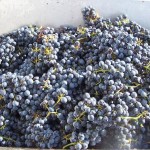
Agne27 at the English language Wikipedia [GFDL (http://www.gnu.org/copyleft/fdl.html) or CC-BY-SA-3.0 (http://creativecommons.org/licenses/by-sa/3.0/)], from Wikimedia Commons

Agne27 at the English language Wikipedia [GFDL (http://www.gnu.org/copyleft/fdl.html) or CC-BY-SA-3.0 (http://creativecommons.org/licenses/by-sa/3.0/)], from Wikimedia Commons

When grapes ripen throughout the season, each and every grape does not ripen at the exact same rate. A lot of factors go into this variability, from weather to vineyard management practices and even to the specific location on the cluster. As a result of this variability in ripening rates, there is the potential for there to be a large variability in phenolic maturities of the grapes at harvest, even when the average values indicate it’s about time to pick. According to the authors of today’s study, no one has ever looked at this variability (in other words, heterogeneity) of phenolic maturities in grapes, nor has it ever actually been quantified.

Thus, the goal of the study presented today was to evaluate the variability or heterogeneity of the degree of grape ripeness (degree of phenolic maturity) and how this variability affects wine quality and phenolic composition.

Methods

Grapes used for this study were Cabernet Sauvignon from experimental vineyards at Constantí owned by the Rovira i Virgili University in Spain. Grapes were studied during the 2007 and 2008 vintages and were harvested from the two central rows in this experimental vineyard.

600 grapes were collected randomly at 1, 3, 5, and 7 weeks after veraison (i.e. when the grapes start to change color) and analyzed. Sugar content, titratable acidity, pH, weight, and ripening heterogeneity of a portion of those grapes were measured.

Grapes were harvested 7 weeks after veraison for winemaking purposes and were separated into three different groups based on their densities. Grapes were then crushed, and then underwent typical red winemaking procedures (including a 14 day maceration period). After bottling, wines were stored at 15oC until ready for analysis.

The following were measured for grapes: sugar content, probable alcohol degree, titratable acidity, and pH; and the following were measured for the finished wines: ethanol content, titratable acidity, and pH. Also measured were: color intensity, lightness, chroma, hue, red-greenness, yellow-blueness, total color difference, total anthocyanin content, flavanol content (including catechins and oligomeric proanthocyanidins), total phenolic index, and astringency index.

A sensory analysis was performed on all wines by a panel of 10 “expert enologists” from Rovira i Virgili University after a 6 week storage period after bottling. Dark tasting glasses were used so the appearance of the wine color did not have any influence on the panel’s scores. Wines were compared in pairs, with the pairs being made up of two of the following: low density wine, medium density wine, and high density wine. The panel was asked to determine if they could tell a difference between the two samples and also what their favorite sample was and why.

Results

• As expected, during the growing season, sugar content, probable alcohol degree, pH, and berry weight increased, while titratable acidity decreased.
• The 2007 vintage grapes reached a greater phenolic maturity than the 2008 vintage grapes, though both years were considered “normal” years.
• Significant heterogeneity in phenolic composition and maturity of grapes was noticed from the start of the sampling period all the way through harvest.
o According to the authors, this means that are likely many unripe grapes mixed in at harvest prior to the winemaking process, which could increase bitterness and astringency due to lower sugar content, higher acidity, lower anthocyanin levels, and higher seed tannin levels, ultimately lower the quality of the finished wine.
o They suggest that these results indicate a significant influence of grape heterogeneity on phenolic composition of wine.
• As grape density increased, ethanol content and pH of wines increased, and titratable acidity decreased.
• Grape density significantly affected wine color.
o Higher density grapes resulted in wines with higher color intensity, chroma, and red-greenness as well as lower lightness levels.
o Hue and yellow-blueness levels were not consistent from year to year.
• The sensory panel was able to tell the different in wine color of wines from different grape densities just by using the naked eye.
o According to the authors, these results indicate that grape heterogeneity significantly impacts wine color.
• Grape density significantly influenced the anthocyanin content in the wines.
o As grape density increased, anthocyanin content increased (for both free and combined with flavanol forms)
o The authors noted that the presence of unripe grapes (i.e. less dense) at harvest could significantly impact the anthocyanin content of the finished wine.
• As grape density increased, proanthocyanidin concentrations and astringency increased.
o Denser grapes resulted in greater proanthocyanidin levels, which according to the authors could result in greater tannin levels, indicating a greater ability for aging than less dense grapes with lower levels of proanthocyanidins.
• As grape density increased, (+)-catechin decreased and (-)-epigallocatechin increased.
• Grape density significantly influenced proanthocyanidin monomer and oligomer concentrations.
o As grape density increased, monomers and dimers increased.
• Only 50% of the sensory panel could tell the difference between the medium and high density wines, while 100% of the panel could tell the difference between the low and high density wines.
o Overall preference was unanimous for the higher density wines, which the panel indicated had greater fruit and floral notes, as well as having better balance, lower acidity, and less bitterness than low density wines.

Conclusions

According to the results of the study and the author’s interpretations, grape ripeness heterogeneity has significantly more influence on finished wine quality than initially thought. Specifically, less ripe grapes (i.e. indicated by the lower density grapes in the study) can significantly influence the phenolic composition of the finished wine, and ultimately the overall quality of that wine. Basically, lower density grapes (i.e. less ripe grapes) lower the ethanol content, pH, anthocyanin concentrations, color intensity, total phenolic index, and proanthocyanidin concentrations, as well as increase the titratable acidity of the finished wine, resulting in an overall lower quality wine. By mixing in these lower density grapes in with the higher density grapes, the overall quality of the finished wine will most certainly be lowered some.

Agne27 at the English language Wikipedia [GFDL (http://www.gnu.org/copyleft/fdl.html) or CC-BY-SA-3.0 (http://creativecommons.org/licenses/by-sa/3.0/)], from Wikimedia Commons

Agne27 at the English language Wikipedia [GFDL (http://www.gnu.org/copyleft/fdl.html) or CC-BY-SA-3.0 (http://creativecommons.org/licenses/by-sa/3.0/)], from Wikimedia Commons

While only half of the sensory panel could differentiate between the medium and high density wines based on taste alone, 100% of the panel could tell the difference between the low and high density wines, indicating that grape ripeness heterogeneity is an extremely important factor in determining overall wine quality. Even though not all the panelists could tell the difference between the medium and high density wines based on taste alone, they were able to tell the difference based on color, so adding those two factors together could potentially decrease the overall acceptability and likelihood of purchase of even medium density (or not as many unripe grapes) wines (this was not tested—just my theory).

According to the authors, more research on grape phenolic maturity heterogeneity is needed, as well as methods or protocols for filtering out these less ripe grapes either in the field or just prior to the winemaking process. While the average phenolic maturity of the grapes may indicate it’s time to harvest, the fact that the grape to grape variability or heterogeneity is so vast indicates that there will likely be some lowering of quality if those grapes are mixed in with those truly ripe grapes.

Perhaps a method to quickly sort lower density grapes away from the higher density grapes would be most effective at reducing the heterogeneity of phenolic maturity of the grapes destined for making wine, be it through mechanical or digital means. My first thought was some sort of equipment or attachment to existing equipment that allows for density sorting in a similar manner that was done in this experiment. Those grapes with higher density would sink to the bottom of the machine, while those with less density would stay afloat, thus allowing someone to either scoop out the less dense grapes or have them funneled separately to a different container.

Overall, I thought this was an interesting study and certainly one that deserves follow up investigations based on its important findings. The entire concept of grape phenolic maturity variation and heterogeneity deserves more research, as well as applicable methods for sorting out these less ripe grapes either prior to harvest or just prior to the winemaking process in order to improve the chances of making a higher quality wine.

What do you all think of this study? Do you already employ methods for sorting out these less ripe grapes prior to winemaking? Please feel free to share your thoughts and/or experiences!

Source: Kontudakis, N., Esteruelas, M., Fort, F., Canals, J., De Freitas, V., and Zamora, F. 2011. Influence of the heterogeneity of grape phenolic maturity on wine composition and quality. Food Chemistry 124: 767-774.

Using Grape Pomace as a Additive to Rosé Wines to Improve Wine Quality and Stability


—————————————————————————————————-

Welcome to The Academic Wino!  If you are new here, please read the “About Me” page to find out more about myself and the blog. If you would like to receive free updates on articles like this by email, then sign up here or you can subscribe to the RSS feed. Also, check us out on TwitterFacebookGoogle+, and or Pinterest. Thanks for visiting!

—————————————————————————————————-

Recycling or reusing grape pomace (a.k.a. grape marc) is a topic that we’ve discussed many times on The Academic Wino. Back in September of last year, I introduced a paper which should that the addition of grape marc to wines prior to bottling may increase the quality of the finished wine by increasing total phenolic content as well as total anthocyanins. Today, I present to you research by the same authors examining the use of grape marc on the quality of Rosé wines (it’s Valentine’s Day, so think pink, right?).

As you’ve heard before if you’ve read any of my previous posts on the subject, grape pomace or grape marc is loaded with antioxidants, polyphenols, flavonoids and stilbenes (think: Resveratrol). Grape pomace has been applied already in many industries, including the health, clothing, construction, and

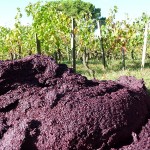
Photo by davity dave: http://upload.wikimedia.org/wikipedia/commons/thumb/3/33/Pomace_in_the_vineyard_after_pressing.jpg/800px-Pomace_in_the_vineyard_after_pressing.jpg

Photo by davity dave: http://upload.wikimedia.org/wikipedia/commons/thumb/3/33/Pomace_in_the_vineyard_after_pressing.jpg/800px-Pomace_in_the_vineyard_after_pressing.jpg

wine industries (to name just a few). It is important to note, that many of the applications studied have primarily been in research only, and the widespread use of grape pomace in the real world is still well below where it could be.

To examine the effect of grape pomace addition to rose wines, the authors collected grape marc from a local juice processing facility in Spain and further processed it by dehydrating it and then grinding it up into a fine powder. The dehydrated marc (50g/L) was then added to two different white wines: one young white of Airén and one oak barrel fermented white of Airén. Maceration took place over 3 days. In proper scientific methodology, these same wines were tested without the addition of the dehydrated grape marc to serve as controls. The finished rosé wines were then stored for either 1 or 3 months at 18oC, with the following then measured and analyzed: color, phenolic composition, and volatile composition.

Highlighted Results

• At time 0, the color intensity was the same for both grape marc treated and control rosé wines.
• Grape marc treatment wines had increased levels of anthocyanins, gallic acid, (+)-catechin, caffeic acid, (-)-epicatechin, coumaric acid, quercetin, and E-resveratrol.
• Dehydrated grape marc treatment resulted in increased concentrations of linalool (3x higher than its odor threshold), geranyl acetone, and β-ionone, all of which contribute to floral characteristics in rosé wines.
• Compared with control wines, rosé wines treated with dehydrated grape marc showed a reduction in E-nerolidol and isoamyl acetate.
• Compounds contributing to wood aromas, specifically whiskylactones, were not affected by the addition of dehydrated grape marc to rosé wines.
• Volatile compound composition remained stable in treated rosé wines after three months.
• Total polyphenols increased significantly in rosé wines treated with dehydrated grape marc compared with controls (5x greater, actually).
• Color in the rosé wines treated with dehydrated grape marc remained stable over the three month period.
o This preservation was attributed to the increase levels of antioxidants in the treated wines, thus resulting in the stabilization of anthocyanin content over time.

Conclusions

The results of this study showed, according to the authors, that dehydrated grape marc may have great potential for being used as an additive in wines. Particularly, adding dehydrated grape marc during the rosé winemaking process could help stabilize the color of rosé as it ages (at least through 3 months…) and also significantly increase the beneficial antioxidants and polyphenols present in the finished wine. According to the author, the increase in antioxidants as a result of the added dehydrated grape marc could lead to protection against early oxidation in rosé wines.

Overall, I think this study has very interesting and significant applications to winemaking. Using dehydrated grape marc in wine production (particularly rosé wine production) could improve color stability over time as well as improve the aromatic profile of the finished wine. Additionally, adding grape marc to wines

Photo by Designovum http://farm5.staticflickr.com/4031/4706139681_c9894d1b97.jpg

Photo by Designovum http://farm5.staticflickr.com/4031/4706139681_c9894d1b97.jpg

could significantly improve the overall “healthiness” of the wine by increasing the health-beneficial polyphenols and antioxidant compounds. However, one thing I would like to see is a sensory analysis of these wines that have been treated with dehydrated grape marc, to ensure that the compounds found in the wines are reflected in the aromatic and sensory characteristics of the finished wine.

I’d love to hear what you all think of this study and this topic. Please feel free to leave your comments!

Source: Pedroza, M.A., Carmona, M., Salinas, M.R., and Zalacain, A. 2011. Use of Dehydrated Waste Grape Skins as a Natural Additive for Producing Rose Wines: Study of Extraction Conditions and Evolution. Journal of Agricultural and Food Chemistry 59: 10976-10986.

The Effect of Light and Temperature Exposure on Wine Color Development: The Role of Bottle Color and Weight

In these days of increasing focus on efficiency and sustainability, wineries are frequently looking for ways to improve and to lower their overall carbon footprint.  In this blog, we’ve talked about ways that can happen in the vineyard in regards to organic and biodynamic practices and also in regards to wastes and recycling and how wineries can utilize and reuse industry waste to create new products.  Another way wineries are trying to reduce their carbon footprint is to reduce the amount of glass used in their wine bottles.

Bottles made with less glassshould lower the energy costs associated with the bottle production, as well as reduce the costs of recycling the bottles when no longer needed.  Lower weight bottles would also lighten the loads being transported from winery to retail outlet, which would theoretically reduce the

Photo by Robert S. Donovan: http://farm4.staticflickr.com/3027/3106902017_a1938eeebb.jpg

amount of gasoline needed to perform the transport, reducing energy costs and emissions over time.

In addition to bottle weight, bottle color has been coming under some scrutiny as well, in particular the darker colored bottles which tend to require more energy to produce and recycle than lighter colored bottles.  There has been some work looking at the stability of wine using lighter colored bottles, however, the information known regarding lighter colored bottles in concert with lighter weight on wine stability is few and far between.  Lighter colored bottles may reduce the stability of the wine within them, and lighter weight bottles may result in a faster increase in the temperature of the wine than a thicker, more protective bottle.

Wine is frequently exposed to damaging light when in retail settings and when improperly stored at an individuals’ home, which is something that is often taken into consideration when choosing the bottle color for wine.  It is the short wavelength radiation in particular that light gives off that can cause damage to the wine, in regards to sensory characteristics, color, and overall stability.  There have been many studies examining this type of damage on wine stability, however, very little has been done to look at the actual pigment production of the wine and light impact.  In general, pigments undergo oxidative reactions and damage when exposed to short wavelength radiation, which result in an overall degradation of the wine over time.

Previous studies have shown that clear glass provides little to no protection against the oxidation of some compounds in wine (specifically tartaric acid), while darker bottles such as antique green glass did provide some, but not complete, protection against this oxidation.  The results of these studies indicate that bottle color may be a very important factor influencing the degradation of wine caused by light exposure.  Even though these studies suggest that darker

Photo by Bayhaus: http://farm3.staticflickr.com/2728/4354549192_cf378c9466.jpg

bottles may protect against harmful light exposure, other studies have found that darker bottles actually increase the temperature of the wine at a faster rate than lighter colored bottles, which could have just as damaging an effect than light exposure.

The study presented today aimed to tease apart these temperature and light effects and how both effect the pigment development in white wine.  Specifically, instead of using whole bottles, the researchers used fragments of each glass and used them as filters in between the wine which was kept at a constant temperature and the light source.

Methods

Chardonnay bag-in-box was commercially purchased for this study.  The wine was enriched with either (+)-catechin or (-)-epicatechin at 100mg/L.

Wine bottles used were the following colors: Flint (clear), Arctic Blue, French Green, and Antique Green.  Bottles for each color were both traditional weight (heavy) and newer lightweight.

Irradiation Set-Up:

  • Wine samples were placed in a cuvette made of quartz, closed with a Teflon stopper, and placed in a UV/Vis Spectrophotometer and held steady at 45oC.
  • A high-pressure Xenon arc lamp was positioned 145mm away from the wine sample with the light pointed directly into a window on the cuvette.  This distance resulted in a total light intensity on the wine samples (without bottle protection) of 0.60W.
  • Small pieces of glass from the wine bottles were used as filters and placed directly in front of the cuvette holding the wine.  This was done to simulate the wine being inside the bottle without introducing the temperature effect wine experiences when enclosed in the bottle.
  • Several types of radiation and/or color filters were used in this experiment and fell under the following wavelengths: visible radiation (>400nm), ultraviolet radiation (300-400nm), yellow light filter (>520nm), red light filter (>620nm), and orange light filter (>540nm).

Results

  • To tease out the effects of temperature on pigment development, Chardonnay wine with (-)-epicatechin added was placed in the spectrophotometer in complete darkness for 6 hours and at temperatures ranging from 25oC to 60oC.
    • There was a small increase in absorbance at 480nm starting at 45oC and becoming even greater at 50oC and 60oC.
    • Temperatures of 50oC and 60oC were accompanied by detectable sensory changes as well as noticeable color changes.
    • For the remainder of the experiments focusing on light, the 45oC temperature was used since this was the first temperature where notable damage to the wine occurred, and also is similar to conditions of a bottle of wine being left in the truck of a car for several hours or a bottle being placed in direct sunlight on a very hot day.
  • To examine the impact of light on pigment development, Chardonnay wine with (-)-epicatechin added was placed in the spectrophotometer and exposed to the full wavelength of the light (i.e. no filters used) for 6 hours.
    • There was a significant increase in absorbance in the visible light region of the spectrum as well as an associated color change to the wine.
    • Wine composition was significantly more altered when exposed to low wavelengths in the visible and ultraviolet regions than any other wavelength.
      • Minor changes were noted using red, orange, and yellow filters, but were generally not thought of as significant.
  • To determine if low wavelength radiation was more important than higher temperatures on wine stability, Chardonnay wine with (-)-epicatechin added was placed in the spectrophotometer either in complete darkness or exposed to UV light at either 45oC or 25oC for 360 minutes
    • At 45oC, the absorbance at 480nm for the wine samples exposed to UV light was 0.061, while the absorbance at 480nm for the wine samples kept in complete darkness was significantly less at 0.005.  The same trend was noted for 25oC; however, the difference between darkness and light exposure was significantly less.
      • These results indicate that higher temperatures lead to faster rates reaction, but not to reaction products that have different absorbance characteristics.
  • All these results suggest that low wavelength radiation is extremely important in pigment production of white wine.

Bottle Color and Weight and Pigment Development

  • There was a small impact of bottle weight on light transmission characteristics.
  • Chardonnay with (-)-epicatechin added was placed in the spectrophotometer and irradiated with light <400nm at 45oC and protected using the various glass filters.
    • More color developed in wine protected by lighter bottles than heavier bottles.
      • The greatest development in color was with the Flint (clear) bottle, followed by the French Green bottle, then the Antique Green bottle.
  • Even though the Antique Green bottle resulted in the least color development in wine, it should be noted that it still did not completely protect against the irradiation and thereby does not completely protect against the chemical changes brought on by this light exposure.
  • The effect of bottle weight on color development in white wine samples was only minor, accounting only for less than 10% of the total change in the samples.

Side note:  This study also examined the effect of added riboflavin on pigment enhancement in white wine, however, due to space considerations; I will not be presenting those data in this post).  If you’re curious about it, I can always do a follow-up post on that sub-topic.  Just ask!

Conclusions

The results of this study indicate that while the combination high temperatures and low wavelength and UV light exposure can have devastating effects on wine color and stability, light exposure alone can also elicit color changes in wine.  Also, while not even the darkest colored glass completely protected against color change damage due to light exposure, the darkest bottles did protect

Photo by vitalsine: http://farm5.staticflickr.com/4148/5415989089_700f510288.jpg

against more than the clear bottles.  In terms of glass color, wine color development was most affected by Flint (clear) glass, followed by Arctic Blue, French Green, and finally Arctic Green glass.

The authors also claimed that based on their results, wine bottle weight only has a minor impact on color development in white wine.  Since bottle weight does not appear to affect wine color development to a great degree, commercial wineries that focus on mass production of large quantities of “drink now” wines may find it beneficial to switch to lighter weight bottles (if they have not already done so).  Switching to lighter weight bottles would likely result in lower production and recycling costs, as well as a lowered carbon footprint, all the while maintaining a relatively constant level of wine color stability, with only minor changes possibly occurring under extreme light and temperature exposure conditions.

Though red wines were not studied in these experiments, it’s possible that red wines may be stored in lighter bottles and still maintain wine color stability.  Since red wines are better able to resist color changes due to their significantly higher levels of anthocyanins (and other pigment-enhancing chemical compounds), it is possible that these minor color changes noted for white wines would be even more minuscule or even nonexistent in red wines.  Of course, this study would need to be repeated with red wines to be certain, but I predict we’d see even less of a color change by using red wines.

Regardless of what type of bottle the wine is stored in, one should always practice “safe wine storage” techniques and keep bottles in a relatively light-free and temperature-controlled space.  If one is planning on storing wines for a long period of time, a wine cellar or wine refrigerator is ideal.  However, many times neither of these is possible, so it is important to try and keep wines in the darkest and coolest place possible (maybe the back corner of a dark closet).

Source: Dias, D.A., Smith, T.A., Ghiggino, K.P., and Scollary, G.R. 2012. The role of light, temperature, and wine bottle colour on pigment enhancement in white wine. Food Chemistry 135: 2924-2941.

I’d love to hear what you all think of this study.  Does this study raise further questions for you?  Do you have any first-hand experience to anything discussed in the study?  Please leave your comments and join in the discussion!