Tag Archives: yeast

Getting to Know Your Friendly Neighborhood Yeast: The Many Benefits of Schizosaccharomyces in Winemaking in a Changing World


—————————————————————————————————-

Welcome to The Academic Wino!  If you are new here, please read the “About Me” page to find out more about myself and the blog. If you would like to receive free updates on articles like this by email, then sign up here or you can subscribe to the RSS feed. Also, check us out on TwitterFacebookGoogle+, and or Pinterest. Thanks for visiting!

—————————————————————————————————-

Traditionally, the yeast strain most commonly used in winemaking is Saccharomyces cerevisiae. However, with more and more desire to create a truly unique wine and to also keep up with the changing market (and changing climate), winemakers are looking for more alternatives to the traditional approaches in order to create something different than all the rest. One way to achieve this uniqueness is to utilize new strains of yeast in order to keep ahead of the game and remain competitive in today’s market.

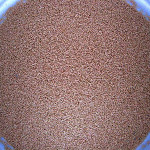
Image source: http://commons.wikimedia.org/wiki/File:Dry_yeast.jpg (PUBLIC DOMAIN)

Image source: http://commons.wikimedia.org/wiki/File:Dry_yeast.jpg (PUBLIC DOMAIN)

Specifically in the review paper summarized today (see full citation of the source below), some are now looking into using non-Saccharomyces yeast strains to produce wines with more unique characteristics. Particularly, species of the genus Schizosaccharomyces are known to reduce the malic acid content in wines and have started to generate research interest.

Schizosaccharomyces yeasts are used frequently in the production of rum and cocoa liquors in Madagascar, and have been previously thought of as spoilage yeasts in wine. In the past, these yeasts have been isolated from fermentation vessels where the fermentation process was stuck or stopped, or from wines with significant “off” aromas, however, up until now it hadn’t actually been determined if these yeasts were the source of these issues, or if they just happened to be in the “wrong place at the wrong time”.

Recent studies have shown that mixtures or use in sequential fermentations could actually improve the complexity of wines and improve the aromatic profile of the wine. Though not the yeast Schizosaccharomyces, currently, there is a commercial kit available that utilizing as sequential inoculation of the yeast strains Torulaspora delbrueckii and Saccharomyces cerevisiae.

It is thought that by using Schizosaccharomyces strains of yeasts during malolactic fermentation, the “green apple” aroma could be significantly reduced (“green apple” is often caused by malic acid, which is effectively reduced by Schizosaccharomyces). Schizosaccharomyces has also been shown to reduce gluconic acid and ethyl carbamate levels, which would increase the overall quality of the finished wine. Gluconic acid is known to be produced after grapes are attacked by various fungi, including Botrytis or Aspergillus, therefore employing Schizosaccharomyces could help “save” wines made from grapes attacked by these organisms.

Taxonomic research from the 1960s classified four species belonging to the Schizosaccharomyces genus, though more recently this number has been

Schizosaccharomyces pombe:  By David O Morgan (The Cell Cycle. Principles of Control.) [Attribution], via Wikimedia Commons

Schizosaccharomyces pombe: By David O Morgan (The Cell Cycle. Principles of Control.) [Attribution], via Wikimedia Commons

reduced to three. The three species currently known to be part of the Schizosaccharomyces genus are: 1) S. japonicus; 2) S. octosporus; and 3) S. pombre. These yeasts are native to climates ranging from temperate to very hot.

In terms of fermentation, Schizosaccharomyces yeasts can produce wines with alcohol degrees ranging from 10o to 12.6o when in anaerobic conditions, and 13o to 15o when in slightly aerobic conditions. During malolactic fermentation, Schizosaccharomyces yeasts can metabolize malic acid and produce ethanol and carbon dioxide. Malic acid, along with tartaric acid, constitute between 70% and 90% of the wine’s total acidity which can have a significant effect on the aromatic profile of the wine. Winemakers often aim to remove as much of the malic acid as possible, particularly from red wines in colder climates where malic acid levels are much higher than they are in warmer climates. Research has shown that Schizosaccharomyces yeast strains are probably the best yeasts for reducing malic acid content, and found that they can reduce malic acid levels by between 75% and 100% (most other strains can only reduce malic acid levels by 20-25%).

Warning: things are about to get hard core organic chemistry here, so you may want to look away if that isn’t your cup of tea (or should I say glass of wine?)….

One of the things that makes Schizosaccharomyces yeasts so potentially desirable is the mechanism by which it reduces malic acid and then transitions to alcoholic fermentation almost in concert with this process. In very basic terms, for every one molecule of malic acid, one molecule of alcohol and two molecules of carbon dioxide are produced. Getting more specific, this is basically what is occurring in the wine when Schizosaccharomyces is employed:

1. Malic acid is broken down into pyruvic acid when in the presence of Manganese2+ and Manganese3+ ions.
2. The pyruvic acid then goes into the alcoholic fermentation process.
a. Pyruvic acid gets decarboxylated resulting in acetaldehyde while then gets further reduced to ethanol.

When in anaerobic conditions, breaking down 2.33g/L of malic acid by the above process yields 0.1% v/v alcohol. Currently, S. pombre is available commercially for this purpose.

Traditionally, the organisms used during malolactic fermentation (or anytime where malic acid is reduced) have been Oenococcus oeni and Lactobacillus plantarum. Both of these organisms are lactic acid bacteria, and are known to produce undesirable by-products during malolactic fermentation, including the production of biogenic amines. Employing Schizosaccharomyces yeasts gets around this issue, as they do not result in the production of the undesired biogenic amines.

Another question that comes up in terms of the use of new yeasts strains in winemaking is how will they behave when in an “aging on the lees” situation? In simple terms, lees are basically the dead yeasts and other molecules that have deposited or precipitated into the wine during the after fermentation. Many winemakers choose to age their wine on the lees, as even though the cells are

By Agne27 (Own work) [CC-BY-SA-3.0 (http://creativecommons.org/licenses/by-sa/3.0)], via Wikimedia Commons

By Agne27 (Own work) [CC-BY-SA-3.0 (http://creativecommons.org/licenses/by-sa/3.0)], via Wikimedia Commons

technically dead, the cellular components interact with the wine to create more complexity in the aromatic profile of the wine and often times increase the quality of the finished wine. Recent research has shown that the cell wall composition of Schizosaccharomyces is complex and show great potential for improving the quality of the finished wine, including the stability of the wine’s color.

Finally, in addition to reducing malic acid levels, gluconic acid levels, and ethyl carbamate levels, and also improving the stability of wine color, Schizosaccharomyces yeasts strains have been shown to produce lower levels of alcohol than traditional Saccharomyces yeasts strains. With increasing temperatures to due climate change, many vineyards are seeing changes in grape ripening, with some reaching maturity earlier and earlier, resulting in wines with higher and higher alcohol content. Using Schizosaccharomyces yeast strains may help combat this “by-product” of climate change, as the alcohol levels produced by the yeast are lower than their Saccharomyces counterpart when presented with the same starting material.

The authors of the study highlight some issues, with one being that the methods for isolating other Schizosaccharomyces yeast strains have yet to be developed. Media and other methods should be developed in order to test these other strains to determine their usability in the winemaking process.

I think these yeasts show great promise for use in winemaking today, as winemaking of the future molded by a changing climate. Certainly more research would need to be done on these strains to get a better sense of how exactly the aromatic profiles are changed, however, so far the research to date has shown Schizosaccharomyces may be a positive addition to the winemaker’s “toolbox”.

I’d love to hear what you all this of this topic! Have you any experience with this yeast? Even if you haven’t, please feel free to comment!

Source: Suárez-Lepe, J.A., Palomero, F., Benito, S., Calderón, F., and Morata, A. 2012. Oenological versatility of Schizosaccharomyces spp. European Food Research and Technology 235: 375-383.

Thank Bird Droppings for Terroir?: The Role of Migratory Birds in the Spread of Wine Yeasts


Saccharomyces cerevisiae is one of the most important yeasts in winemaking, the distribution of which is widespread and as a result the origin of which is unknown.  What is known is that S. cerevisiae is not an airborne species and therefore requires something else to move it from place to place.  Recent research has found that insects, including bees and wasps, are one such vector for S. cerevisiae, but it does not explain all movement of this yeast in nature.

In addition to insects, migratory birds have also been studied for their abilities to transfer microorganisms that can infiltrate the human population.  To date, most studies have focused on bacterial transfer by migratory birds, with very little focused on yeasts.

Migratory birds are well known for travelling great distances.  They embark on a round-trip journey in the spring and again in the fall; starting at their nesting location, travelling great distances to follow the flow of food resources, and

By H. K. Job [Public domain], via Wikimedia Commons

eventually returning back to their nesting location.  At times, the birds will need to stop at resting areas if they have deleted their fat stores to a point where they require more before being able to fly further distances.

The purpose of today’s study was to examine the potential of migratory birds in transporting yeasts at great distances (as opposed to the shorter distances – 10km – traveled by insect vectors); to identify the kinds of yeasts present; and to determine how long after ingestion by the birds are the yeasts dispersed into the environment (i.e. when did the birds, ahem…eliminate them….).

Methods

Experimental sites were located at known migratory bird stopover points within Sicily during the spring and autumn seasons.  This location chosen would capture yeast transporting information from migratory birds travelling from Africa to Europe.

At the stopover point, birds were captured near woody areas just as they were landing.  A total of 349 birds were captured.  After they were captured, birds were ringed/tagged, identified by species, and measured for subcutaneous fat amount (SFA).  Note: when SFA values are between 0 and 1, the fat stores are too low to continue and the bird must stop to refuel.

Yeasts were isolated from the birds’ cloacae (a fancy term for the place waste, urine, and reproductive fluids are eliminated from…).  Yeasts were identified using genetic analysis.

By Korall (Own work) [GFDL (http://www.gnu.org/copyleft/fdl.html) or CC-BY-3.0 (http://creativecommons.org/licenses/by/3.0)], via Wikimedia Commons

 Results

  • Yeasts were found in 32.66% of the birds captured.
  • The following bird families were found to have the most yeasts present in their cloacae:
    • Muscicapidae
    • Passeridease
    • Turdidae
    • Fringillidae.
  • Genetic analysis identified 125 types of yeasts.  Yeasts identified in bird cloacae included the following:
    • Aureobasidium pullulans; Candida albicans; Candida glabrata; Candida inconspicua; Candida spp.; Candida stellimalicola; Cryptococcus aureus; Cryptococcus carnescens; Cryptococcus magnus; Debaryomyces hansenii; Hanseniaspora guillrmondii; Metschnikowia pulcherrima; Pichia kudriavzevii; Pichia terricola; Pseudozyma aphidis; Rhodotorula mucilaginosa; Saccharomyces cerevisiae; Sporisorium penniseti
  • The yeastspecies most frequently found in migratory bird cloacae were:
    • H. guillrmondii – 17.6%
    • C. albicans – 16%
    • S. cerevisiae – 14.4%
    • A. pullulans – 12%
  • 72 of the 125 yeast isolates found were associated with known wine-related yeasts.  These yeasts include the following:
    • A. pullulans; D. hansenii; H. guillrmondii; P. kudriavzevii; P. terricola; M. pulcherrima; R. mucilaginosa; and S. cerevisiae.
  • The following bird species were found to have the most yeast biodiversity in their cloacae:
    • Garden warbler and subalpine warbler
  • S. cerevisiae was found most often in the following bird species:
    • Garden warbler, icterine warbler, redstar, whitethroat, subalpine warbler, winchat, and spotted flycatcher.
  • For birds with SFA values between 0 and 1 (i.e. time for the birds to stop and refuel), 58.4% of the total yeasts and 63.89% of the wine-related yeasts were isolated.
    • The most common wine-related yeasts collected from birds with SFA values between 0 and 1 were A. pullulans at 66.66%, and S. cerevisiae at 66.67%.
  • 18 isolates of S. cerevisiae were found.
    • Of these, 6 strains were identified.
    • 9 of the isolates found were located on Lampedusa island.  From these, 3 strains were identified.
    • 8 of the isolates found were located on Ustica island.  From these, 2 strains were identified.
      • The strains found on Lampedusa island were different from the strains found on Ustica island.
      • As a result of this, the authors hypothesize that the birds landing on Lampedusa are coming from a different starting point than the birds landing on Ustica.
  • The average amount of time for the dispersion of yeast by birds was about 12 hours after initial ingestion.
    • This time allows a distance of about 300-350km to be travelled by the birds.

Conclusions

The results of this study show that migratory birds are important players in the distribution and biodiversity of yeasts (both wine yeasts and non-wine yeasts) in the environment in the region of Sicily and that the yeasts were able to survive the entire trip from start to rest stop in the bird’s gastric system.  To determine if similar results are found in other regions of the world, the study should be repeated in other migratory bird habitat areas throughout the globe.

The authors also found that the yeast strains in a particular location were more similar to one another than the yeast strains found in a location further away.  They suggest this may support the idea that migratory birds contribute to the terroir of an area, since the yeasts they spread in the area are genetically

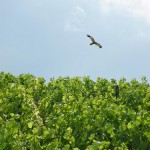
Photo by barockschloss: http://farm8.staticflickr.com/7265/7560941750_e279f0cf00.jpg

different from yeasts spread by other birds in a different area, which would then produce slightly different wine in both locations.  If the same birds are travelling back and forth to the same locations, theoretically they are dispersing the same yeasts to a particular area over and over again, thus contributing to the uniqueness / terroir of the area.

The authors did not mention this, but I think these results also highlight some of the reasons why conserving migratory bird habitat is very important.  Of course, there are many other important reasons why migratory bird habitats should be conserved, most important of which is to ensure their survival, but also to maintain biodiversity of the entire ecosystem they inhabit.

Conserving migratory bird habitat would also effectively allow the maintenance of part of the system that defines terroir, which is further evidence of the complicated nature of ecosystems.  It shows that harming this one part of the system (i.e. migratory bird habitats) would have profound consequences for not only biodiversity and migratory bird health survival, but also potentially for the uniqueness that defines each individual wine region throughout the world.

I’d love to hear what you all think!  Please feel free to your comments and discussions.

Source: Francesca, N., Canale, D.E., Settanni, L., and Moschetti, G. 2012. Dissemination of wine-related yeasts by migratory birds. Environmental Microbiology Reports 4(1): 105-112.

The Role of the Social Wasp in Yeast Ecology: Thank Your Local Wasp for the Complexity of Your Wine

Not too long ago, I read a post online discussing the relationship between social wasps and fermentation (ultimately) in wine.  The first thing that I thought, being the ecologist that I am, was “Wow, this is really cool! I need to read the source article and present it on my blog!”  My own Masters research focused on nutrition in bees (actually, my exact thesis was “Ecological and Evolutionary Shifts in Pollen Chemistry and Their Implications for Pollinators”), so finding an article related to not only wine but distantly-related wasps as well was extremely exciting for me (I know, I know, I am a huge nerd).

The basis of the research I will present to you today, which was recently published in the Proceeding of the National Academy of Science (PNAS), is that it is still unclear how the yeast, S. cerevisiae (the “wine yeast”) actually spreads around different environments.  In fact, studies have shown that before the grapes have matured, there almost no S. cerevisiae present, however approximately 25% of ripe grapes that have been damaged have these cells present.

It is known that S. cerevisiae is not transferred from place to place via the air; thereby some other mechanisms must be in place in order to explain its movement from winery to winery and environment to environment.  Some studies have suggested that migratory birds may place a role in this movement; however, since it has been shown that yeast cells do not survive longer than 12 hours in bird guts, it’s unlikely that birds would be a major player in this process.  As a result of this, it is suggested that perhaps insects play a role in the movement of yeasts from environment to environment.

Some studies have suggested that social wasps may be a vector for this movement of yeasts from one place to the next, since it has been shown that bees and wasps harbor yeasts in their hives in the fall and throughout the winter.  The authors of this study suggest that social wasps may be an ideal vector for this movement of yeast as a result of their relatively complex life cycle.  Nests are established in the spring by females, who recently emerged from overwintering (“hibernating”, if you will).  The female then feed their young by regurgitating, which the authors suggest is a possible mechanism for transferring yeasts from one generation to the next.   Wasp populations are also known to peak around the same time as grape maturation, and it is known that wasps do feed on the grapes themselves.  Some wasps are even equipped with mouth parts that are specifically designed to pierce tough surfaces, potentially such as the skins of grapes.

The two main questions that the authors of this study asked were: 1) Can S. cerevisiae cells complete an annual life cycle through transgenerational transfer in social wasps?; and 2) Do social wasps harbor specific yeast strains in their bodies, or do they move different strains about different environments depending upon what is present and where?

What did they find?

Methods: I’m sparing you the nitty gritty details of the methods, as many of them are extremely technical in nature.  I will say that the sample size was ample for proper statistical analysis, and upon brief review, everything sounds good to me!  In general, the guts of wasps were harvested and examined for the presence of different yeasts, and also technical genetic analyses were performed to identify the yeasts and other organisms present in these guts.  If you want to know specific details, please ask me and I’ll do my best to try and find the answer for you!

  • 17 S. cerevisiae strains were found in the guts of 61 wasps (4% of the microbial gut community).
  • The frequency of the species of yeasts changed depending upon the season.
  • Saccharomycodes species of yeasts (including S. cerevisiae) were found to have the strongest relationship between time of collection and yeast presence, specifically when the grapes were ripe.
  • In contrast to other species whose presence fluctuated depending upon season, S. cerevisiae strains were almost always present in the guts of wasps.

What about these S. cerevisiae strains found in wasp guts?

  • 10 of the strains found were related to wine strains, 3 were related to bread strains, 1 was related to a mix of African beer, palm wine, and laboratory strains, and 1 was related to African palm wine strains.
    • The strains isolated from the wasp guts belonged primarily to strains related to those from European grapes and wines.
    • The strains of yeast used in wine fermentation at a local winery (in Italy) were found to be genetically different than the yeast strains found in the guts of wasps in nearby vineyards.
      • This suggests that wasps may promote yeast biodiversity.
      • S. cerevisiae and other yeasts were found in the digestive tract of larvae and newborn workers.
        • This suggests wasps are able to “pass down” naturally collected yeast strains to the next generation by way of regurgitation of food.

What do these results mean, and why are they important?

It has been well established that grapes can undergo natural fermentation, even without inoculation of S. cerevisiae in the winery/laboratory.  This suggests that there must be yeast present on the grapes in order to achieve this, however, since there is no yeast present on unripe grapes, how do they establish a yeast colony to perform this natural fermentation?  According to this paper, the answer may very well come from the wasps.  Since S. cerevisiae is continually present in the guts of wasps, and wasps feed on grapes when they have reached a point of ripeness, it is logical to surmise that the act of the wasps piercing the grapes to feed results in a transfer of natural yeasts from gut to grape, thereby facilitating the natural fermentation process in the grape.

Basically, without wasps, natural fermentation cannot start in grapes!

This study also found that overwintering (“hibernating”) females carried yeast cells in their guts and then passed them along to their young in the spring, the process by which is theoretically a continually perpetuating process generation after generation.

In regards to yeast genetics, the study did not find any yeast strains that are native to animal species in the guts of wasps.  In fact, the yeast strains the genetic analysis of the yeast strains found in gut wasps reveal that the strains are directly related to wine, grapes, bread, and oak yeast strains.

Finally, the results of this study found that the yeast strains found in the guts of wasps, grapes, and winery of a particular vineyard are very similar to strains coming from other environmental and/or geographical locations.  This indicates that social wasps may play a large role in maintaining the genetic and ecological diversity of yeasts.  This result is extremely important in regards to conservation efforts, as the conservation of this genetic diversity of yeasts has potential importance within the whole wine industry as well as other fermented product industries.

The authors suggest that any change to the environment that results in the destruction or degradation of yeast genetic diversity may have a large negative impact on the overall quality of wine or other fermented products.  To maintain genetic diversity in yeasts and thus increase the complexity and quality of wines, we must make concerted efforts to maintain the diversity of social wasps, and to protect their habitats to the best of our ability.

Overall, I thought this was a really fascinating study, and completely opened my eyes to a “new” part of viticulture and enology that I was not otherwise in tune with.  We’ve known that grapes start their own natural fermentation process before beginning the artificial fermentation process in the winery, which contributes to the overall complexity and quality of the finished wine.  What I didn’t know was how this natural yeast even occurred on the grapes to begin with.  I just assumed the yeasts were just always there, and was unaware that the grapes are pretty much “yeastless” until they have ripened.

This study has opened my eyes to the fact that insects, specifically social wasps, may play a huge role in the initial inoculation of natural yeasts into the grape, which jump starts the fermentation process prior to fermentation in the winery which results in an overall increase in wine complexity and possibly quality.  Looks like we have the wasp to thank for much of the complexity in our wines, and that’s pretty amazing if you ask me!

I’d love to hear what you all think about this topic!  Please feel free to leave your comments!

Source: Steffani, I., Dapporto, L., Legras, J-L., Calabretta, A., Di Paola, M., De Filippo, C., Viola, R., Capretti, r., Capretti, P., Polsinelli, M., Turillazzi, S., and Cavalieri, D. 2012. Role of social wasps in Saccharomyces cerevisiae ecology and evolution. Proceedings of the National Academy of Sciences (Microbiology). Online before print.  DOI 10.1073/pnas.1208362109

Cellulose Polymers Shown to Reduce “Brett” Character in Wines

Ethylphenols are compounds that are known to be present in wines and other alcoholic beverages, and often produce “off” flavors such as pharmaceutical or animal-like (e.g. “horse sweat” or leather tones), and are considered to be responsible for “Brett character” in wine.  Ethylphenols are formed in wine during the fermentation process, and involve the transformation of cinnamic, courmaric, and ferulic acids, by Brettanomyces/Dekkera spp yeasts, though sometimes Lactobacillus spp and Pichia guilliermondii facilitate the transformation as well.

There are winemaking techniques that can be employed to reduce this “Brett character” in wine; however, those involve increasing SO2, in addition to other less desirable methods, since the modern preference in wine is to decrease the usage of SO2 in wine and to increase pH.  As a result of these practices, “Brett character” in wine has steadily increased, causing economic damage to many corners of the wine industry.

http://www.chemse.com/images/
bitmaps/1/0011/00116738.png

Several other methods have been examined for reducing ethylphenol content in wine, including reverse osmosis and adsorption, sorption on yeast lees and cell walls, and also molecularly imprinted polymers.  One technique more recently examined for reducing ethylphenol content in wine, and the one in which the study presented to you examines, is the use of carbohydrate cellulose, the most abundant polymer in nature.  Structurally, glucose units are attached together to create a long chain, which allows it the ability to form hydrogen bonds with other chains, creating a cellulose fiber which give it mechanical strength and chemical stability, while still allowing it to hydrogen bond with other molecules.

The brief study presented today aimed to examine the ability of different esterified cellulose polymers to reduce levels of 4-ethylphenol and 4-ethylguaiacol in “Brett-infected” wines.

Methods

The four polymers tested for effectiveness in reducing 4-ethylphenol and 4-ethylguaiacol in wine were: 1) cellulose acetate; 2) cellulose acetate propionate; 3) cellulose acetate butyrate; and 4) cellulose propionate.

For all wine samples, the following were measured: alcohol, reducing sugars, total acidity, total dry extract, volatile acidity, color intensity, and hue.  Proanthocyanidins, catechins, proanthocyanidins that are reactive to vanillin, total anthocyanins, and ethylphenols were also measured for each sample.  The polymers’ ability to adsorb ethylphenols was also analyzed.

Experiments were conducted using a sound and volatile phenol-free red wine that was fortified with the standard solutions in order to obtain samples with specific levels of 4-ethylphenol and 4-ethylguaiacol: 0.5, 1.0, and 2.0mg/L (separately).

After the most effective polymer for reducing 4-ethylphenol and 4-ethylguaiacol was found via the aforementioned experimentation, efficiency was further measured in 10 red wines with alcohol levels varying from 12% to 13.8%, residual sugars less than 2.9g/L, total acidity between 5.8 and 4.6g/L, and maximum volatile acidity of 1.49g/L.

Sensory analysis was performed by 12-16 expert wine judges, and was presented in random order.  Overall acceptability and preferences were recorded.

Results

Effectiveness of Individual Polymers

  •       All polymers showed similar abilities to reduce levels of 4-ethylphenol and 4-ethylguaiacol in wine.

o   Most effective: cellulose acetate propionate and cellulose propionate, with average reduction values at 38% and 37%, respectively.

o   Middle performer:  cellulose acetate butyrate, with average reduction values of 32% and 29%.

o   Least effective: cellulose acetate, with average reduction values of 24% for both phenols.

§  Due to these effectiveness results, cellulose acetate propionate was chosen for the remainder of tests in this study.

Dose

  •        Level of reduction increased with increasing dose of the polymer, though slowed down around doses of 4g/L to 6g/L.

o   Highest levels of reduction were found at dose of 20g/L, with around 70% reduction in 4-ethylphenol and 4-ethylguaiacol.

o   Based on the results, reduction ability is independent of the initial concentration of the phenol (doesn’t matter how much is present, the polymer will reduce the levels of it).

Contact Time

  •       Reduction over 60 minutes was similar for both 4-ethylphenol and 4-ethylguaiacol, hitting a plateau at about 15 minutes into contact with the polymer.
  •       The initial level of phenol concentration did not affect the percentage reduction by the polymer.

Side Effects

  •       After treatment with the polymer, all wines showed significant decreases in the levels of 4-ethylphenol and 4-ethylguaiacol compared to control wines that were not treated with the polymer.

o   Average reductions of 4-ethylphenol and 4-ethylguaiacol were 31% and 32% (min 25%-27% and max 41%-40%), respectively.

  •       In regards to phenolic composition and color of wines, there were significant reductions in color intensity and total anthocyanins.

o   According to the authors, these reductions are technologically irrelevant, since average reductions were relatively low at 4.9% and 6.6%, respectively, and would not be noticeable to consumers.

  •       Sensory analysis indicated that all wines treated with the polymer were significantly different and more preferable to wines not treated.

Regeneration and Re-Use of Polymer

  •       In economic terms, it’s always more beneficial to have a product that can be used more than once while still retaining its abilities to function.

o   Washing the polymers in a 100mL solution of 99% ethanol or with an aqueous solution (NaOH, pH 12) and stirring constantly at 60rpm for 10 minutes proved to be effective.

o   Washing the polymers allowed the fibers to maintain their ability to reduce levels of 4-ethylphenol and 4-ethylguaiacol, even after 20 consecutive washings, without showing any damage to the polymer.

Conclusions

The results of this brief study are promising in that it appears that using cellulose acetate propionate polymers (or any similar polymer with a propyl group) is effective in decreasing the levels of 4-ethylphenol and 4-ethylguaiacol in wine, which are known to impart negative sensory effects (“Brett character”) on finished wine.  This polymer was able to effectively reduce levels of these phenols in wine, while also allowing the possibility of washing and reusing the polymer, in order to be not only technologically efficient, but also economically efficient.

This study provides a launching pad for further study in engineering similar polymer treatments for reducing “Brett character” in wine, or other situations where 4-ethylphenol and 4-ethylguaiacol are elevated (i.e. in smoke tainted wines).

I’d love to hear what you all think of this brief study.  Please feel free to level your comments below (no html tags that are advertising in nature allowed)!

Source: Larcher, R., Puecher, C., Rohregger, S., Malacarne, M., and Nicolini, G. 2012. 4-Ethylphenol and 4-ethylguaiacol depletion in wine using esterified cellulose. Food Chemistry 132: 2126-2130.

DOI: 10.1016/j.foodchem.2011.12.012


I am not a health professional, nor do I pretend to be. Please consult your doctor before altering your alcohol consumption habits. Do not consume alcohol if you are under the age of 21. Do not drink and drive. Enjoy responsibly!