Monthly Archives: January 2013

Is Soil Dryness Responsible for Early Grape Ripening in Australia?


Climate change, be it brought on by anthropomorphic sources or the natural cycle of the earth (I’m not trying to start that debate), is continuing to be touted as having a significant influence on agriculture and also viticulture worldwide.  Scientists have been predicting that growing and ripening seasons are likely to change in some places, while some (if not all, eventually) will find that the variety of grapes traditionally grown in their region will no longer survive there and other varieties of grapes will have to be planted in order to keep up with the changing environment and climate.

In Australia, studies have found that many grapes varieties in 11 of 12 grape growing regions have been ripening earlier in time periods between 35 and 115 years.  It was noted that these early ripening years were correlated with increases in temperature.  One study in particular by Webb et al (2012) surmised that the earlier ripening in these regions was quite possibly due to temperature increases, soil drying, and/or changes in vineyard management techniques.

By Amanda Slater (originally posted to Flickr as Barossa Valley. SA) [CC-BY-SA-2.0 (http://creativecommons.org/licenses/by-sa/2.0)], via Wikimedia Commons

By Amanda Slater (originally posted to Flickr as Barossa Valley. SA) [CC-BY-SA-2.0 (http://creativecommons.org/licenses/by-sa/2.0)], via Wikimedia Commons

The author of the study presented today (White 2013) claims that there are several issues with the conclusions that Webb et al (2012) came up with.  First, he claimed that the data Webb et al (2012) used was for areas of land around 2500 hectares, whereas the vineyards they were analyzing were significantly smaller at 0.2 to 16 hectares.  The “behavior” of any given piece of land can be radically different even at relatively close distances.  Assuming the environmental information ascertained from a 2500 hectare plot is similar to a random tiny vineyard of no more than 16 hectares in size could be dangerously inaccurate, resulting in missed data or other important hydrological and geographical information unique to that particular vineyard or area.

White (2013) also noted that the soil data used by Webb et al (2012) was for the entire continent of Australia and not for any one particular vineyard site.  Again, similar to the concept described above, the soil in one particular area may be radically different from the soil in another, thus using the average for an entire continent may lead to inaccurate results.

Next, White (2013) noted that the water data used by Webb et al (2012) did not include data from regions by which some of the study vineyards were located.  This may have resulted in some loss of data and loss of result accuracy.

Finally, the last beef that White (2013) had with the study by Webb et al (2012) was that they only used growing season rainfall totals, whereas White argued that the more appropriate variable would be the annual rainfall total.  Just because the vines are dormant in the winter does not mean that the rainfall occurring at that time has no influence on the growth and development of the vine the following spring and summer.

Focusing on Soil Dryness

One of the claims Webb et al (2012) made is that earlier ripening could be due to increased soil dryness.  As a result of the aforementioned flaws in the study design, White (2013) sought to examine this claim further, to either confirm or refute the hypothesis based on more accurate data.

Soil moisture can be simply defined as the balance “between rainfall and actual evapotranspiration, with a variable small surplus in winter going to drainage” (White, 2013).  In other words, the soil will be moist or dry depending upon how much rain it got, plus the amount of moisture that is lost through evapotranspiration (think moisture lost due to heat to the atmosphere) with a small amount draining into the water table far below the surface.  As air temperatures increase, potential evapotranspiration increases.  In other words, as air temperature increases, more water is lost from the plant to the atmosphere.

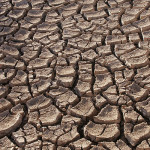
By Tomas Castelazo (Own work) [GFDL (http://www.gnu.org/copyleft/fdl.html) or CC-BY-3.0 (http://creativecommons.org/licenses/by/3.0)], via Wikimedia Commons

By Tomas Castelazo (Own work) [GFDL (http://www.gnu.org/copyleft/fdl.html) or CC-BY-3.0 (http://creativecommons.org/licenses/by/3.0)], via Wikimedia Commons

It is important to note that as temperatures and carbon dioxide increase, plants have a mechanism to conserve their water by closing their stomatal pours on the leaves.  By closing the stomata, the amount of water that is lost by the plant to the atmosphere decreases and remains within the plant and within the soil around the plant for survival.

So in reality, as White (2013) noted, for most vegetation in areas that are known to have low rainfall or suffer from near drought-like conditions, the decrease in water loss by the plant is directly affected by increased temperatures and increased carbon dioxide, thus counteracting the potential loss of water to the atmosphere had these stomatal closing mechanisms not been in place.  Hydrological research also found that catchment runoff (i.e. runoff from the higher elevations to the lower elevations)  increases with increasing carbon dioxide, thus supporting the idea that as temperatures and carbon dioxide increase, water is not lost into the atmosphere but is in fact retained in the plant and in the soil around the plant.

Due to the results of this research in plant physiology and catchment hydrology as mentioned just previously, White (2013) concluded that annual rainfall may be a good surrogate for soil moisture when the measurements of soil moisture are not readily available.  The overall goal of the study was to determine if trends in annual rainfall confirmed or refuted the theory that soil drying has an effect on earlier ripening in grapes based on the conclusions made by Webb et al (2012).

Briefly, the annual rainfall data and the grape ripening data from 5 different grape growing regions in Australia and over an 11 year moving average were analyzed using a linear mathematical model.

Conclusions

The results of the study found that 3 out of 5 grape growing regions showed positive annual rainfall trends (i.e. increased annual rainfall over time), while 2 out of 5 regions showed negative annual rainfall trends (i.e. decreased annual rainfall over time).  Only one of each was statistically significant.  According to White (2013) the model results are consistent with the data collected from those same regions in Australia during those same time periods.

Since there was a significant increase in annual rainfall during this 11 year period, White (2013) said it was not possible that soil drying would be contributing to the early ripening found at vineyards throughout the region.  In fact, if anything, the soil was getting wetter while the grapes were ripening earlier!

At the site that did see a significant decrease in annual rainfall, there was actually no change in grape ripening found in previous studies.  So, if Webb et al (2012) were correct in their assumption, this site should have seen either no change in annual rainfall plus no change in ripening date, or a decrease in rainfall plus an earlier ripening date.  Since neither of these scenarios played out, White (2013) ascertained that soil dryness was not contributing to earlier ripening in the grapes of Australia.

Based on these results, White (2013) expressed confidence that soil dryness did not influence the date of ripening for grape varieties in Australia.  In fact, it is likely that there are other factors involved that are significantly affecting this date, with the more likely culprits, according to White (2013), being vineyard management practices and increased air temperatures.  According to White (2013), vineyard management practices had changed around this time period, which is something that should be significantly considered as a major player in earlier grape ripening.

Personally, I don’t lay the blame on any one factor in particular.  I think many different factors act in concert to speed up the ripening process of these grapes, and thereby more complex mathematical models taking more of these factors into consideration should be tested.

I’d love to hear what you all think!  Please feel free to leave your comments!

Source: White, R.E. 2013. Has soil drying contributed to earlier grape ripening in wine regions of southern Australia? Australian Journal of Grape and Wine Research 19 (1): 123-127.

Book Review: Reading between the Wines; by Terry Theise

Out of all of the wine books that I have reviewed so far (which, to be honest, isn’t that many yet), Reading between the Wines by Terry Theise has to be my favorite.  Typically when I’m reading through a book that I’ve slated to review (and yes, I read every single page of every book that I review), I either use a highlighter or “dog ear” a page when I’ve stumbled across something particularly noteworthy or something I’d like to mention in the review.  When reading through Reading between the Wines, I literally dog eared every other page in all of its 183 pages.

Photo credit: http://www.ucpress.edu/img/covers/isbn13/9780520265332.jpg

Photo credit: http://www.ucpress.edu/img/covers/isbn13/9780520265332.jpg

Reading between the Wines by Terry Theise is a wonderfully well-written work of art that gifted me with a smile from the moment I opened the cover to when I put it down for the night.  Theise intermingles intelligent prose on wine and side-splitting humor in a way that has one not only learning great knowledge from a seasoned importer but also trying not to make oneself look crazy when one has burst out laughing while laying on a crowded beach next to complete strangers catching some rays (I may or may not be speaking from experience).

“Don’t worry what you are ‘supposed’ to feel [about wine]…Just daydream and release your imagination.  Believe me, it’s more fun than trying to grab a wine, to nail the poor bastard, to dissect it in order to show how cool your palate is. What a pitiable waste!  It’s like ignoring a rainbow so you can balance your checkbook.

In Reading between the Wines, Terry Theise discusses “befriending your palate” in the first chapter and seamlessly moves into focusing on what he believes matters in regards to tasting and enjoying wine and what doesn’t. He stresses the importance of tasting the wine and listening what speaks to you and not what you think you’re supposed to taste.  Further on into the book, Theise discusses the concept of quality, and questions what do they mean exactly when they say this is a quality wine (and be they, I mean the “wine experts”)?

“…there are occasions when something more pagan is called for, and that’s when I summon my guiltiest of wine pleasures: Scheurebe. Scheurebe, often shortened to ‘Scheu’, is Riesling just after is read the Kama Sutra.  Put another way, Scheu is what Riesling would be if Riesling were a transvestite. If Riesling expresses all that is Noble and Good, Scheu offers all that is Dirty and Fun. It is Riesling’s evil, horny twin.”

The Academic Wino enjoying Reading between the Wines on a sunny beach in Mexico!

The Academic Wino enjoying Reading between the Wines on a sunny beach in Mexico!

Even further into the book, Theise takes us along with him on his many journeys to his clients in Germany and Austria, and really shows us his stuff when he starts talking about his favorite wines: Riesling and when in a particularly playful mood, Scheurebe.  Theise goes on for several splendidly descriptive pages about Reisling as well as Scheurebe: why he loves them as well as their viticultural and vinicultural characteristics, qualities, and quirks.  Of course, Theise knows more about wine than just these two grapes/wines, and beautifully expresses his knowledge of wine throughout the course of the book.

One final notable part of Reading between the Wines comes when he’s discussing the point system.  Though at times Theise respectfully disagrees with the whole 100 point system made famous by Robert Parker, he expresses great respect and esteem for Mr. Parker and how perhaps his scoring system perfectly illustrates Mr. Parker’s personal taste preferences for wines.  Of course, Theise discusses how complex wine is in regards to personal preferences, and also how incredibly difficult it is to put a score on a wine that while you may not be able to appropriately express what flavor nuances are present, it moves you so much that you are brought to tears.

There is so much more to this book that I can even begin to fathom summing up in one short blog post.  I highly recommend purchasing Reading between the Wines by Terry Theise and adding it to your wine book library.  If you want to feel the true beauty and mystery that is wine, while at the same time getting in some great laughs fueled by smart humor, I recommend you order this book today by clicking the image below!


The Effect of Micro-Oxygenation on Wine Quality and Consumer Preferences


Modern winemaking has discovered many different techniques and technologies to improve upon the quality of wine.  One example is the use of micro-oxygenation during the red winemaking process.  Simply put, micro-oxygenation of red wine allows a wine to be released to consumers at a young age while possessing characteristics of a wine that has been oak aged for many months.

Micro-oxygenation works by the addition of oxygen into red wine at a controlled rate and flow to stabilize color and improve astringency and aromatic components of the final wine.  One difficulty with this technique is that each grape variety behaves differently when exposed to micro-oxygenation, thereby making it much more difficult to know exactly how much oxygen and how quickly the oxygen should be injected into the wine.

By Quinn Dombrowski (originally posted to Flickr as Wine) [CC-BY-SA-2.0 (http://creativecommons.org/licenses/by-sa/2.0)], via Wikimedia Commons

By Quinn Dombrowski (originally posted to Flickr as Wine) [CC-BY-SA-2.0 (http://creativecommons.org/licenses/by-sa/2.0)], via Wikimedia Commons

It is common knowledge among winemakers and other in the wine industry that adding oxygen affects those chemical and sensory components of a wine.  General changes include changes to phenolics, sulfur compounds, and oxygen consumption.  If the wine is exposed to too much oxygen, several problems can occur, including the oxygenation of phenolic compounds, increases in astringency, color, mouthfeel, and bacteria populations.

Finding the right amount of oxygen to add to red wine could have important quality and economic benefits for a winery, in that if the “right” amount of oxygen is added, wine quality would improve which would theoretically increase the consumer “liking” of the wine and ultimately increase consumer purchasing of said wine.

The goal of the study presented today was to determine how micro-oxygenation of red wine at different rates affects the sensory characteristics of the wine (specifically, Cabernet Sauvignon) and also how micro-oxygenation of Cabernet Sauvignon affects consumer preference.

Methods

Cabernet Sauvignon wine was made using grapes picked in 2007 from a vineyard in Mornington Peninsula in Australia.  Micro-oxygenation was applied after alcoholic fermentation was complete but prior to starting malolactic fermentation.

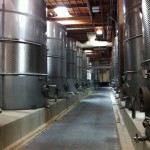
Two 5000L stainless steel tanks were filled with wine, with one tank receiving a micro-oxygenation treatment of 25mL oxygen per liter per month and the other tank receiving a micro-oxygenation treatment of 50mL oxygen per liter per

Photo credit: I, Tomas er [GFDL (http://www.gnu.org/copyleft/fdl.html), CC-BY-SA-3.0 (http://creativecommons.org/licenses/by-sa/3.0/) or FAL], via Wikimedia Commons

Photo credit: I, Tomas er [GFDL (http://www.gnu.org/copyleft/fdl.html), CC-BY-SA-3.0 (http://creativecommons.org/licenses/by-sa/3.0/) or FAL], via Wikimedia Commons

month.  One 500L stainless steel tank was filled with wine and used as the control (no micro-oxygenation treatment).  After micro-oxygenation treatment, malolactic fermentation was allowed to commence in all wines.

Micro-oxygenation was completed using a “Microdue” device.  In lieu of space, I will refrain from going into the details of how this device works, but if you’d like to know, just ask in the comments and I’d be happy to describe it there!

Wines were tested before and after micro-oxygenation treatment for standard enological parameters including: alcohol content, turbidity, pH, total acidity, volatile acidity, sulfur dioxide, color intensity, hue, degrees of red pigments, SO2-resistant pigments, total red pigments, and total polyphenols.  All analyses were done in triplicate.

During the winemaking process, sensory analysis was performed by three winemakers.

After the winemaking process, wines were evaluated by 35 panelists: 30 of them (16 men and 14 women) were students studying winemaking and sensory evaluation at Charles Stuart University in New South Wales, Australia; 4 of them were winemakers; and 1 of them was a wine critic expert.

Each panelist received four wines: a control, two of the 25mL micro-oxygenation treatment, and one of the 50mL micro-oxygenation treatments.  Panelists evaluated the wine for color, olfactory attributes, and mouth feel characteristics.

Wine was presented to the panelists in transparent glasses randomly and blindly.

Consumer preference tests were performed in the winery.  Customers, visitors, and winery staff were recruited to participate in the consumer preference tests, for a total of 51 participants (21 men and 30 women between the ages of 21 and 60 years).  According to the authors, none of the participants were “qualified wine tasters”.  Wines were presented to the participants in the same manner as were presented to the panelists during the sensory analysis.

Results

Before Malolactic Fermentation:

  • At the beginning of the micro-oxygenation treatment, there were no chemical differences between the control wine and the treatment wines.
  • Throughout the micro-oxygenation process, color intensity significantly increased in both treatments compared with the untreated control.
  • Olfactory intensity and mouth feel complexity increased in micro-oxygenated wines compared with the control, and peaked after 3 days of treatment.
  • After 6 days of treatment, “reductiveness” and astringency decreased in micro-oxygenated wines compared with the control.
  • The 50mL treatment showed increased vegetal and bitterness character and decreased “reductiveness” and fruit freshness compared to the 25mL treatment.

After Malolactic Fermentation:

  • After micro-oxygenation treatments, pH, volatile acidity, and titratable acidity were similar between the treatment and the control wines.
  • Differences occurred in regards to color intensity, total red pigments, and total phenolics, which were all higher in control wines.
  • Wine hue was increased in micro-oxygenated wines.
    • This suggests greater oxygen exposure on wine can have a browning effect on the red pigments (degree of red pigments was similar in all wines).
  • SO2-resistant pigments (those that improve color stability) increased in micro-oxygenated wines, and showed highest levels in the 50mL treatment.
    • This confirms the idea that micro-oxygenation helps to stabilize wines.

Sensory Analysis:

  • There was a significant judge effect (i.e. certain judges scored markedly different than other judges), so calculations were performed to standardize the results.
  • There were significant differences in regards to sensory characteristics of all wines.
  • Fruit character was negatively correlated with higher scores, and was most prominently noted in the control wines.
  • The 50mL treatment was most noted for complexity and roundness on the palate.
  • The 25mL treatment was most noted for volume and fruit freshness.

Consumer Preference Analysis:

  • 40% of participants preferred the 25mL micro-oxygenated wine treatment.
  • 31% of participants preferred the 50mL micro-oxygenated wine treatment.
  • 29% of participants preferred the control wine.
  • Participants most preferred those wines with high levels of complexity and roundness.
  • Participants least preferred those wines with high levels of flavor intensity, fruitiness, and fruit freshness.
  • Those characteristics that were seen positively to participants were most associated with micro-oxygenated wines, whereas those characteristics that were seen negatively to participants were most associated with control wines.
  • Overall consumer preference was ranked as: 1) 25mL micro-oxygenation treatment; 2) 50mL micro-oxygenation treatment; and 3) control wine.
  • The relationship between chemical parameters and consumer preference was statistically significant.
    • This suggests consumer preference could be predicted based upon the chemical composition of any given wine (though take with a grain of salt, since only Australian Cabernet Sauvignon was tested).

Conclusions

According to the results of this study, the Cabernet Sauvignon wine treated with micro-oxygenation at a moderate level of 25mL per liter per month for 6 days was the most preferred wine for consumers at an Australian winery.  Now, before every winemaker goes out and treats their red wine with 25mL per liter per month of oxygen for 6 days, one must understand that this micro-oxygenation treatment worked for the Australian Cabernet Sauvignon in this study, but may not work for any particular red wine.  It is important to note that the chemistry is different for every red wine; thereby every red wine may be affected differently to the same micro-oxygenation treatment.

According to the authors, it is important that during the micro-oxygenation process, acetaldehyde, SO2, volatile acidity, temperature, and taste be monitored in order to determine how micro-oxygenation will be most effective for any one particular wine.  It would be interesting and beneficial to see this study repeated using multiple types of red wines, however, it is still important to monitor the progress in any micro-oxygenation process, due to the many variations from batch to batch that may not have been controlled for in this or any similar experiment.

What is clear from this study is that short-term micro-oxygenation does improve the sensory characteristics of a wine, and also improve consumer preference of a red wine.  The authors suggest that micro-oxygenation could be

Photo by StateofIsrael: http://farm9.staticflickr.com/8465/8140902367_a8b170c2aa.jpg

Photo by StateofIsrael: http://farm9.staticflickr.com/8465/8140902367_a8b170c2aa.jpg

a good alternative to oak aging if the winery wishes to release the wine to the public sooner than later.  Note: I believe what they mean here in regards to oak aging is in relation to the TIME and not the actual complexity imparted by the oak into the wine.  Ideally, they should have included an oak aging control to make this statement.

I would be interested in seeing this study repeated with more types of red wine, as well as a study examining more micro-oxygenation treatments.  How much is too much?  How little is not enough?  It would be interesting to get an idea of a possible range to the benefit of micro-oxygenation, in order for winemakers to have a “zone” to hone in on during their own winemaking practices.

I’d love to hear what you all think! Please feel free to leave comments or questions!

Source: Parpinello, G.P., Plumejeau, F., Maury, C., and Versari, A. 2012. Effect of micro-oxygenation on sensory characteristics and consumer preference of Cabernet Sauvignon wine. Journal of the Science of Food and Agriculture 92: 1238-1244.

Wine Technology of the Future: Wine Bag Carrier


“Wine Technology of the Future” is a series on The Academic Wino that features new inventions and patents that attempt to make your wine experience easier and more enjoyable.  Previously on this series, we’ve introduced the “self aerating wine bottle”; the “corkscrew with integral intelligent thermometer”; “wine dispensing and preservation device”; and most recently the “multi-stream wine aerating device”.  Today’s invention is the “Wine Bag Carrier” invented by Jerry Griffith from Loudon, TN.  The patent was filed on March 16th, 2012 and was published on October 11th, 2012.

According to the inventor, this wine bag carrier was invented as an alternative to the current bag-in-box wine packaging.  Specifically first, the author noted that the cardboard box that holds the plastic bag of wine inside is bulky and the same size regardless of whether or not the bag inside was full or empty.  He cites that this is an issue for those lacking refrigerator space.  Second, the author cites the wine bag carrier was invented to act as a literal carrier of wine from place to place.  The bag could be worn on one’s shoulders for convenient travel and use in a variety of places.

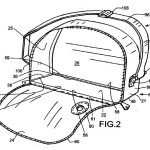
Figure 2 from US Patent 0255971

Figure 2 from US Patent 0255971

The patent’s design indicates that the bag is insulated, thereby allowing the carrier to be transported out and about and still maintain the coolness of the wine inside.  Just think—you can be our own personal travelling bar whenever you wished!  The design of the bag is also such that as the wine is consumed, the sides of the bag may compress (unlike a cardboard box) allowing a greater utilization of space in one’s refrigerator.  By compressing the bag, getting the last little bit of wine at the bottom of the bag is much easier to remove than it is when it is contained in the incompressible cardboard box.

I’m not going to lie; this invention is really straight forward and simple.  It’s not a fancy complicated aerator or wine preservation device: it’s a bag.  Simple concepts sometimes make great designs!

The wine bag carrier is designed to be insulated, with a bottom and two insulated sides.  On one of the sides, there is an opening designed to fit the tap of the bag containing the wine.  The inventor noted that the size of the bag is large enough to fit the standard wine-in-box-sized plastic wine bag.  The bag is also outfitted with a messenger bag-style strap that one can easily wear around one’s shoulders.  In addition, the bag is equip with a tap that protrudes from the side of the bag for easy pouring and is protected when not in use by a circular flange (i.e. a little cap).

Figures 4 and 5 from US Patent 0255971

Figures 4 and 5 from US Patent 0255971

What do you do when you’ve finished the bag of wine?  The wine bag carrier is designed to unzip from one size in order to remove the empty bag and replace it with a full bag of wine.  One would think having this cloth wine bag carrier would result in a decrease in waste due to not having the cardboard box housing the bag, however, since stores don’t sell the plastic bags of wine separate from the cardboard boxes, one would have to purchase a box of wine and then remove the bag from the cardboard to place in the cloth wine bag carrier.  The cardboard box is then still waste and the cloth wine bag carrier hasn’t reduced the waste at all.  If one were to sell the plastic bag of wine without the cardboard box, then the amount of waste produced could be reduced.

This could be a fun accessory and conversation piece for parties, picnics, sporting events, or any other get together that involves people getting together to enjoy a bit of the grape and each others’ company.  In all honesty, it’s probably not something I would purchase for myself, but I think it certainly has its’ place in the economy.  This product reminds me of the product already on the market, the “Menu Baggy Winecoat” (click for a description), though the wine bag carrier looks to be a little easier to carry due to its strap across the shoulders/back instead of the clutch-like handle on the Winecoat.

What do you all think of this invention?  Is it something you could see yourself purchasing and using?  Please feel free to leave your comments!

Patent Source: United States Patent Application Publication Number: US 2012/0255971 A1; http://patents.com/us-20120255971.html