Monthly Archives: October 2012

The Influence of Oak Chips on Aromatic Quality of Wine

The use of oak in wine fermentation and aging is a very common practice that has an overall positive influence on the flavor and aroma of wine, as well as its complexity and overall quality.  Specifically, oak transfers many volatile and phenolic compounds into the wine, which individually and as a whole contributes to its complexity.  Aging in oak barrels also adds an additional level of complexity as due to the porous nature of the vessel; oxygen is able to slowly infiltrate the wine resulting in a reduction in astringency, stabilization of color, and reduction in certain aromatic characteristics.

Though fermentation and aging in oak barrels is desirable for many wineries, sometimes it is just not feasible due to many factors including financial

Photo by Bernt Rostad: http://farm4.staticflickr.com/3457/3246033875_f9556cf61b.jpg

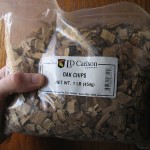
constraints (oak barrels can be very expensive compared to stainless steel tanks), space limitations, or the need to purchase new barrels on a relatively frequent basis compared to stainless steel tanks in order to achieve the desired effect on the finished wine.  These issues present the need to utilize less expensive alternatives; specifically, oak chips.  Oak chips may be added to wine fermenting in stainless steel tanks, and have been found to impart similar characteristics into the finished wine as an oak barrel.

There are many factors that influence which volatile compounds are extracted from oak into wine, and how much of each compound is extracted, including (but not limited to) the length of time the wine is in contact with the oak, the geographic origin of the wood, the wood seasoning, and the toasting of the wood.  The type of wine (i.e., varietal or blend) can also have a major influence on the volatile extraction of the oak wood.  Volatiles most commonly extracted from oak wood that have a significant impact on wine aroma, flavor, and quality are: lactones, volatile phenols, and phenolic aldehydes.

In regards to the specific volatiles from oak that influence wine aroma and flavor, the following are most commonly found:

  • Furfurals (dried fruits)
  • Guaiacol (burnt tones)
  • Whisky lactone (woody and coconut)
  • Eugenol (cloves, smoke, spice)
  • 4-ethylphenol (barnyard, bandaid, mousy – Brettanomyces)
  • 4-ethylguaiacol (cloves, smoke, spice, etc)
  • Vanillin (vanilla tones)
  • Syringaldehyde (vanilla)

Photo by inspector_81: http://farm6.staticflickr.com/5165/5218552773_478a515be5.jpg

The goal of the study presented today was to examine the differences (if any) in volatile aromatic compounds of wine after using oak chips from different origins and under different toasting conditions.


Methods

Four wines were used in this experiment:

1) varietal Cabernet Sauvignon

2) varietal Blaufränkisch

3) red blend

4) white blend

Oak chips used in this experiment were:

1)      American oak

  • Medium toasting
  • High toasting

2)      German oak

  • No toasting
  • Medium toasting
  • Premium toasting

3)      French oak

  • Medium toasting
  • Medium-plus toasting
  • High toasting

Nine 1-liter glass bottles of each wine closed with crown cork were the vessels used in this experiment.  One of the bottles served as the no oak control, while the other 8 contained 1g/dm3 of each type of oak chip.  Oak chips were kept in the bottles for 30 days in the dark at 4oC. Bottles were shaken (not stirred….ha ha) twice a week to aid in the oak volatile extraction.

Volatile compounds were measured and analyzed using GC-MS techniques.

Results

Furfurals

  • Furfural concentrations varied the greatest out of all of the volatiles found in oak chip treated wines.
    • Furfural and 5-methylfurfural concentrations increased in all oak chip-treated wines.
    • The highest increase of furfural was detected in red wine samples treated with French oak chips with high levels of toasting.
    • The highest increase of 5-methylfurfural was found in wines treated with American oak chips under medium toasting, and French oak chips under high toasting.
    • The smallest increase and/or decrease in furfurals was found in wine samples treated with untoasted German oak chips.

Lactones

  • Trans-whiskeylactone increased in all wine samples treated with oak chips.
    • Cis-whiskeylactone levels were too small for statistical analysis.
    • The highest increase of trans-whiskeylactone was found in wines treated with medium toasted American oak chips.
    • The lowest increases of whiskeylactones were found in wine samples treated with high or premium toasted oak chips.

Eugenol

  • Levels of eugenol increased in all wines treated with oak chips with the exception of Cabernet Sauvignon.
    • Cabernet Sauvignon wines treated with untoasted and premium toasted German oak chips saw decreases in eugenol levels.
    • Eugenol increased in wines made from American oak chips with medium toast.
  • Trans-isoeugenol levels were highest in blended wine samples with French and American oak chips with medium and high toast.

Guaiacol

  • Levels of guaiacol were mostly affected by toasting level.
    • Highest levels of guaiacol were found in wine samples treated with high toasted oak chips, regardless of the origin of the wood.
    • Untoasted oak chips had no effect on guaiacol and 4-ethylguaiacol in wine samples.

Ethylphenol

  • Oak chips had no impact on 4-ethylphenol levels in wine samples.

What does this all mean?

According to the results of this study, which contradict the results of some other studies, the authors were not able to determine the origin of the oak chips used in a wine sample based on the volatile composition.  The largest influencer of volatile composition in the wine samples appeared to be the toasting levels.  Furfural, guaiacol, and whiskeylactones were influenced by the degree of toasting, while furfural and guaiacol increased with toasting intensity.

Though geographic origin of the oak chips did not have a significant influence on volatile composition of sample wines, the authors claimed that the highest

Photo by Franco Folini: http://farm1.staticflickr.com/113/294928909_01ab1f5696.jpg

increase in desirable volatile compounds in wine were found in wines made from French oak chips with high levels of toasting.  I’m a little perplexed by this statement, as when something is not significantly different, one cannot say with confidence that one treatment was superior to another.  It’s possible that the levels of these volatiles in wines treated with high toasted French oak chips trended toward having more desirable levels of volatiles than all other treatments, but other than this general statement in the conclusions, it was not immediately clear to me how this was true based on the reported results.

I’m also not entirely convinced that the results of this study are representative of a real world scenario.  First of all, the oak chips were placed directly into the bottle and left for 30 days.  Never would this method ever take place in the real world, with the addition of oak chips occurring at some point during the aging process while still in stainless steel tanks.  I suppose the shaking of the bottles was supposed to imitate the micro-oxygenation process in the tanks, but without evidence that this is an appropriate method substitution, I’m not convinced the wine is being exposed to the same amount of oxygen that it would be while aging in the tank.

I believe the conditions of the wine samples in this experiment are markedly different than samples that are kept in stainless steel tanks with micro-oxygenation.  This sort of variation would likely have a significant effect on the volatile composition of the finished wine, thus making the results of this study not repeatable in real world situations, and certainly not comparable to the volatile composition of wines made in steel tanks with micro-oxygenation.   I believe this is part of the reason why the authors were not able to detect differences in geographical origins of oak chips based on the volatile composition of the wine when other studies using more realistic methods could.

I don’t mean to sound all negative.  Clearly this study showed that oak chips and toasting do have influence on the volatile composition of wine, though again, I am not convinced the exact levels and trends are completely accurate based on the methods employed.  I think the study is a good start, but it needs to be repeated under more realistic aging conditions.

What do you all think of this study?  Do you agree or disagree with my thoughts on the study methods?  Do you see any other issues with the study that you’d like to discuss?  Maybe you loved the study—feel free to share that, too!  Please leave your comments and join in the discussion!

Source: Návojská, J., Brandes, W., Nauer, S., Eder, R., and Frančková, H. 2012. Influence of different oak chips on aroma compounds in wine. Journal of Microbiology, Biotechnology and Food Sciences 1(4): 957-971.

What Motivates You to Drink?: Comparing Reasons For Drinking with Problem Drinking in Australian Adults

In July of last year, The Academic Wino covered a paper that examined the perceived healthiness of wine, and whether or not that perception led to an increase in wine consumption frequency and an increase in willingness to pay for a bottle of wine.  The authors found that if subjects believed wine to be healthy, it did in fact increase the frequency of consumption of wine and increased consumers’ willingness to pay per bottle of red wine.  One study found that 39%-88% of people in Western countries believe alcohol to be health, particularly when it comes to wine.

The same authors are back again to expand on this finding:  what about other motives for drinking?  Is the perceived healthiness of wine more important when it comes to frequency of consumption or is taste a more important motivator?

Photo by isante_magazine: http://farm5.staticflickr.com/4086/5057195715_74f63d6cca.jpg

Specifically, the authors sought to examine a variety of motives for drinking and correlate them with drinking behaviors in an adult population, which up until now has largely been studied only in younger populations such as college students.

The study utilized what is known as the “Drinking Motives model”, the purpose of which is to highlight both positive factors (social and mood motives) and negative factors (coping and conformity motives).  Some studies have found these motives to correlate with “problem drinking” (not clearly defined as alcoholism), though that has not been the result in other studies.  It is also not clear whether or not these motives for drinking change as an individual ages, or if these motives remain consistent throughout an individuals’ life.  Some researchers speculate that older people will “grow out” of these motives and evolve different motives for consumption, but there has been little to no evidence presented thus far.

In wine preference research, it is often found that taste is a primary driver of consumption behavior.  One study found that younger consumers tend to drink sweeter mixed drinks, while older consumers drink more wines and/or beer.  The authors note that one problem with this study is that the “older” consumers were only between the ages of 24-30, which in the grand scheme of things is still relatively young.

In regards to social cues, campaigns are often focused on reducing the levels of alcohol consumed in order to reduce the potential threat of overconsumption and all the negative associations that follow the behavior.  In fact, some believe that by promoting alcohol as healthy, this could lead to overconsumption.  It is not clear whether this belief is true, and whether or not wine consumption follows the same patterns as other types of alcohol consumption.

Photo by The Academic Wino: November 2008.

The authors of the study presented today aimed to address these questions by examining a variety of motives for drinking in older adults, and whether or not these motives were in any way associated with problem drinking.

Methods

Participants (older than 18 years of age) were recruited into the study by way of an Australian national telephone survey.  A wide variety of individuals coming from many backgrounds were selected, filling quotas for race, sex, income, state, and postcode.  Those participating were told the study was focused on alcoholic beverages and that questions revolved around alcohol preference, consumption patterns, and other factors that are related to drinking.

The phone survey lasted from 20 to 25 minutes, and included questions related to adult’s motives for drinking (ex. taste and health motives) and possible issues related to problem drinking using the CAGE questionnaire (Cut-down, Annoyed, Guilt, Eye-opener).

The reasons for drinking in this study reflected those outlined in the Cooper’s Drinking Motives model, a model that which states the use of alcohol is driven by the desire to reduce negative feelings and increase positive feelings about consuming the beverage.  For this study, reasons for drinking focused on responses to the following:

  • “I drink X beverage because…”
    • “…it makes me feel good.”
    • “…it reduces my level of anxiety.”
    • “…it makes me more outgoing.”
    • “…most of my friends drink it.”
    • “…I like the taste.”
    • “…I believe it is healthy for me.”

For determining possible problem drinking, the CAGE questionnaire as mentioned above was employed.  This questionnaire is based on four questions:

  • “Have you ever felt the need to cut down on drinking?”
  • “Have you ever been annoyed by others criticizing your drinking?”
  • “Have you ever felt guilty about your drinking?”
  • “Have you felt you’ve needed a drink first thing in the morning to steady your nerves or get rid of a hangover?”

The authors note the CAGE questionnaire does not allow for diagnosing alcoholism, and merely characterizes some individuals as “problem drinkers”.

Participants were categorized as being “wine drinkers”, “beer drinkers”, “spirit drinkers”, or “premixed drink drinkers” if they drank that one type of beverage 90% or more of the time.

The goals of the study were to 1) determine the motives behind why participants drink; 2) how do CAGE scores relate to the reasons cited for drinking; 3) how do CAGE scores relate to the type of beverage consumed; and 4) how do beverage type and motive for drinking predict CAGE scores?

Results

Demographics

  • 1229 Australians participated in the phone survey with a mean age of 50.13 years (S.D. 16.14).
  • Income was highly correlated with age, and was not looked at further in this study.
  • 55% of participants were female.
    • Women were more likely to drink wine than beer.
    • Men drank similar amounts of beer and wine.
  • For those preferring a single beverage type, 67% were categorized as wine drinkers.
    • 50% of the total participant pool did not prefer one particular type of beverage most of the time.

Motives

  • 86% of participants reported that taste was the biggest motivatorfor drinking.
    • This result was found for all preferred types of alcohol.
  • “Drinking to cope” (i.e. reducing anxiety) and “drinking to enhance well being” (i.e. it feels good) were other common motives reported by participants.

Motives & Problem Drinking

  • CAGE scores were significantly different for those reporting internal motives of “enhancing well being” (i.e. feeling good) and “coping” (i.e. reducing anxiety).
    • The stronger the motives influence on an individuals’ drinking, the higher the individuals’ CAGE score.
  • CAGE scores were significantly different for those reporting external motives of “social” (i.e. more outgoing).
    • The more social/outgoing, the higher the CAGE score.
  • CAGE scores were not influenced by the external motive of “conforming to a friends’ behavior”.
  • “Taste” had no influence on CAGE scores.
  • “Health” had a negative influence on CAGE scores.
    • Those who reported drinking for health reasons had lower CAGE scores than those not reporting this motive for drinking.
  • CAGE scores were significantly different for wine and beer drinkers.
    • Beer drinkers had significantly higher CAGE scores than wine drinkers.
    • Spirit drinkers and premixed drink drinkers were not included in this analysis, since their subgroup was too small for statistical analysis.
  • Controlling for beverage type, men were more likely to have higher CAGE scores than women, and younger drinkers were more likely to have higher CAGE scores than older drinkers (the latter was not significant, but was trending).

What does this all mean?

To sum up, taste was the most important motivator for drinking in this study of Australian adults, with 86% of participants responding in this way.  Drinking for health reasons was also a motivator for 24% of participants, who claimed they drink because they perceive the beverage to be good for them.  Though some studies have found differences in motivators for younger drinkers, this study did not seem to find these differences, with no statistical differences found between younger and older drinkers when it came to specific motivations for drinking.

In regards to problem drinking, this study found that the desire to change internal states (i.e. wanting to feel good, cope with something, or reduce anxiety) puts individuals more at risk for problem drinking than those influenced by external factors (i.e. social context or peer pressure).  These relationships were found to be independent of age and preferred beverage, and for the most part, sex.  In other words, it didn’t matter what age participants were or what their preferred beverage type was, they still cited the same motives and scored the same CAGE scores depending upon which motives were cited.

Taste as a motivator was found to not be related to problem drinking, and health was found to be negatively associated with problem drinking.  These results seem to indicate that drinking for these positive reasons result in non-overindulgence.  Though age was not a factor when considering the internal and external motivators described in the previous paragraph, age was a factor when it came to the motive of health.  Specifically, older participants cited health as a reason for drinking more often than younger participants.  This is not surprising, considering older individuals tend to have more health problems than younger individuals, thus the desire to focus more on consuming foods and beverages that are beneficial for one’s health.

The authors stress that to those worried that promoting certain types of alcohol as “good for your health”, such as red wine, there should be no concern that this type of advertising will result in overindulgence, according to the results of this study.  In fact, those consuming alcohol because they believe it to be good for their health appear to do so in a more responsible manner.

One thing to keep in mind from this study is that the results are only specific to Australian drinkers.  It is quite possible that the same study performed in a

Photo by Evil Erin: http://farm4.staticflickr.com/3049/3081308438_b1848656d2.jpg

different region would present different results.  Different cultures have different motivators for drinking, and I would not be surprised if we saw different results in another place (i.e. the United States).

Another limitation to this study is that it only included a small handful of motivators for drinking, and did not include one potentially important motivator for younger drinkers: drinking to get drunk.  This motivator is seen in a positive light in the minds of some young people, despite the negative consequences that can occur after the fact, thereby may be an important factor to consider in this type of analysis.

What do you all think of this topic?  What other limitations do you see (if any) with this study?  Are the authors missing any other big motivators that you think may change the reported outcome? Please leave your comments and participate in the discussion!

Source: Moran, C.C., and Saliba, A.J. 2012. Reasons for drinking wine and other beverages – comparison across motives in older adults. International Journal of Wine Research 4: 25-32.

Call for Guest Bloggers / Writers

Hello, readers!

I am writing this brief post to call out to all those interested in writing or blogging to consider submitting a guest post for The Academic Wino!

My long-term goal for this blog is to post daily with all the research, science, and generally knowledge related to wine the interwebs can handle!  However, my current life situation only allows me to post a couple of times per week!  That’s where you come in….

I’m looking for guest writers/bloggers to help fill in the holes throughout the week that I can not currently fill for one reason or another.  I accept a wide

Photo by mpclemens: http://farm4.staticflickr.com/3181/2692469539_bdcea8c064.jpg

variety of topics, as long as they are related to wine (or grapes) and tied to academics in one way, shape, or form.

What was your favorite subject in high school or college?  In what way can you tie that subject in with wine?  Once you come up with an idea, shoot me the pitch and there’s a good chance you could end up with a post on The Academic Wino!

You don’t have to be a wine writer or wine blogger to write for me, but your article does need to be related to wine or grapes in some way.

All articles must been well researched, well written, well edited, and 100%  unique (cannot be found on any other site).

This is NOT a call for staff writers, as unfortunately, I can’t pay anyone right now.  I’m looking for someone to contribute a post or two every so often (or however many time they want, understanding that it’s unpaid).

If you are interested in writing guest posts for The Academic Wino, please contact me at:  becca@academicwino.com

I’m looking forward to reading your ideas!

Cheers!

I reserve the right to reject any article or any links.  I have a relatively strict advertising policy, so I will be keeping a hawks’ eye out for those.  Personal blogs and online CVs/portfolios are typically don’t fall under the advertising policy, but I reserve the right to deny any links I deem inappropriate.

Also, you will not be paid for these posts, sorry!


Using A Plants’ Own Natural Defenses to Protect Against Powdery Mildew and Increase Polyphenol Levels in Grapes and Wine

The use of commercial fungicides is commonplace in conventionally managed vineyards, often utilizing sulfur or synthetically produced formulations.  With the use of these fungicides there comes an associated health risk, both to the environment and to those animals or people that consume the fruit produced from a treated grapevine.  As a result of the increased concern over the health of the environment, particularly in this age of changing climate, there is an increased desire and pressure to move to a more organically managed style of

Photo by CIAT International Center for Tropical Agriculture: http://farm5.staticflickr.com/4140/4875332597_48221ef963.jpg

viticulture, including distancing from the conventional chemical fungicide approach to more environmentally-friendly bio-based alternatives.

One bio-based alternative in particular, chitosan, has been considered to be a potential more natural alternative to sulfur-based conventional fungicides and has been shown to be effective in other plant models.  Chitosan is present on the cell walls of many types of fungi and chitosan receptors are known to be present in the cells of many plant species.  If chitosan comes into contact with the chitosan receptors on the plant, the plants own natural defenses are activated, resulting in the natural protection of the plant against the foreign attacker.

In addition to the plant’s own natural defensive pathways ability to protect against an attack elicited by chitosan activation, it has been shown that chitosan treatments do not reduce crop yield in many plant species, suggesting that plant metabolism is not compromised by this type of treatment.

Powdery mildew (Erysiphe necator Schwein or Uncinula necator Schwein) is a common disease in grapevines that affect grape yield and quality.  Briefly, what happens is that mildew spores overwintering in the dead plant litter are released in the spring and infect the new grapevine host.  Secondary infections occur later and infect the skin layer of the leaves and fruit.  Ultimately, this infection leads to overall decreases in berry yield and berry quality, which subsequently leads to decreased wine quality.

Controlling powdery mildew in plants is typically managed by conventional chemical fungicides, though more organic approaches are being implemented every year.  Using chitosan to induce natural plant defenses has been shown to not only defend against plant pathogens, but also increase certain polyphenolic compounds in the plant.  This treatment results in the increased quality and antioxidant capacity of the foods created or produced from chitosan-treated plants.

Photo by wallygrom: http://farm7.staticflickr.com/6073/6159640497_6e87d6ff2c.jpg

The study presented today, which was published in 2011 and therefore may not be new for some of you, aimed to test the effectiveness of a new chitosan-based formulation on the grapevine against powdery mildew infection, as well as the analysis of the total polyphenol content of the grapes and resulting wine.

Methods

Kendal Cops (KC) was the chitosan-based formulation used in this study, and was based on a 4% solution of chitosan with 1.5% Cu2+ and 0.5% Mn2+.  Different dilutions of KC were tested, as well as mixtures of KC and conventional fungicides, and conventional fungicides alone.  Conventional fungicides used in the experiment were penconazole and methyldinocap.

Experiments were performed at an experimental vineyard in Chieti, Italy, the grapevines of which were planted in 1999.  The experimental vineyard was located in a place that is predisposed to severe powdery mildew infections (Piazzano d’Atessa).  Grapevines planted were the Montepulciano d’Abruzzo cultivar.

Negative controls were left as untreated vines, and positive controls were those treated only with chemical fungicides.  The experiment was set up as a complete randomized block design with 4 replicates and 10 vines per block.

Plants were sprayed every 7 days using a spray lance to avoid spray drift, from the beginning of the susceptibility of the grapes to powdery mildew infection to the end of the veraison period (i.e. once the grapes completely changed colors).

Powdery mildew infection symptoms were monitored weekly on the leaves and grape clusters by visual inspection.  Disease incidence (i.e. percentage of infected leaves or clusters) and disease severity (on a scale of 0-5) were measured.  Using these data, percentage of infection was calculated.

Experimental wines were produced using standard enological methods at the Viticultural Research Center of Conegliano.

Total phenolic content and antiradical/antioxidant activity were analyzed on grape clusters (isolating the skins, flesh, and seeds) as well as the experimental wines.

Results

  • In untreated controls, powdery mildew incidence was 98% in the leaves and 100% in the grape clusters.
  • All plants containing KC (chitosan-based formulation) were effectively controlled against powdery mildew without causing any phytotoxicity to the plant or the grapes.
  • The KC formulation with the highest concentration (10mL/L) was most effective against powdery mildew, with comparable protection levels compared to the fungicide control.
    • For example, on August 1st, disease severity was 87.5% in untreated control, whereas disease severity was only 2.39% in the more highly concentrated chitosan-based formulation (KC)and 0.92% in the fungicide-treated plants.
      • KC (high dose) and fungicide disease severity levels were not significantly different from one another.
      • All other doses of KC as well as combinations of KC and fungicides were not significantly different than the fungicide control, but were significantly more effective than the untreated control.
  • The highest polyphenol content was found in the skin, then the seeds, and then finally the grape flesh.
  • For grapevines treated with KC (chitosan), polyphenol levels in grape skins increased by 19% and levels in the grape seed since increased by 22.5%, compared to the control skins (not treated).
  • For grapevines treated with conventional fungicides, polyphenol levels in grape skins decreased by 19% in the skins and decreased by 10% in the seeds compared with the untreated control.
  • For wines, those made from grapes that were treated with KC (chitosan) had significantly higher levels of polyphenols than conventional wines (increase of 7%).
  • The highest concentration of polyphenols was found in the untreated control wine.
  • Antiradical activity was lowest for plants treated with KC.
  • There was a negative correlation between antiradical activity and polyphenol levels in the experimental wines.

What does this all mean?

In summary, the results of this study showed that the organic chitosan-based formulation KC was just as effective against powdery mildew at a concentration of 10mL/L as the conventional fungicide,without eliciting any negative phytotoxicity side effects.  Also, treatment with KC resulted in an overall

http://images.cdn.fotopedia.com/flickr-3496808324-hd.jpg

increase in polyphenols in the grape skins, seeds, and pulp, which is indicative of higher quality grapes and subsequently higher quality wines.

Even though the authors do describe some of the other work on with other alternatives to conventional fungicides, I would have liked instead for them to compare these other alternatives directly against KC, to determine if one was more effective than the other.  Based on some of the comments made by the authors of inefficiency and phytotoxicity in some of these other alternative formulations, KC may be the most efficient and least harmful for the environment as a whole.

I would also be curious to have seen a sensory analysis performed on these experimental wines.  Yes, the polyphenol content changed in wines treated with KC versus wines not treated with KC (or treated with conventional fungicides), but how do these wines differ in regards to their sensory characteristics?  Are they better?  Worse?  Depends?

Exactly which polyphenols saw concentration changes?  This study only looked at total polyphenols, but it would be interesting to see how individual polyphenols changed with this alternative fungicide treatment.  Do only certain polyphenols increase in concentration?  Or is it all polyphenols increasing all together?

Is this chitosan formulation effective against powdery mildew in all grape cultivars?  How about in different growing regions?

Overall, I think this is a very interesting study that provides a promising alternative to conventional fungicides that is very efficient at combating against powdery mildew infection, kind to the environment, and also potentially resulting in products that may be even better for you that if the grapes were not treated at all.  Using chitosan-based formulations employ the pathways of the plants’ own natural defenses, thus resulting in a truly organic and extremely effective tool for managing powdery mildew infections in the grapevine.

I’d love to hear your thoughts on this topic.  Please feel free to start a discussion!

Source: Iriti, M., Vitalini, S., Di Tommaso, G., D’Amico, S., Borgo, M., and Faoro, F. 2011. New chitosan formulation prevents grapevine powdery mildew infection and improves polyphenol content and free radical scavenging activity of grape and wine. Australian Journal of Grape and Wine Research 17: 263-269.