Monthly Archives: March 2013

Who’s Your Daddy?: Muscat


—————————————————————————————————-

Welcome to The Academic Wino! If you are new here, please read the “About Me” page to find out more about myself and the blog. If you would like to receive free updates on articles like this by email, then sign up here or you can subscribe to the RSS feed. Also, check us out on TwitterFacebookGoogle+, and or Pinterest. Thanks for visiting!

—————————————————————————————————-

The “Who’s Your Daddy” series takes a very brief look at the parentage of grapes, in order to get a better understanding of where particular varietals come from and how they are genetically related to one another.  So far, we’ve covered: Cabernet Sauvignon, Chardonnay, Gamay, Merlot, Nebbiolo, Petite Sirah, Petit Verdot, Pinotage, Pošip bijeli, Sangiovese, Syrah, Tempranillo, and Torrentés riojano. Feel free to click on any one of the varietal names to read all about their parentage.

The subject of today’s “Who’s Your Daddy” post is the Muscat grape, which comes by special request from a reader!

Now, I don’t really know a lot about Muscat, other than general flavors associated with it, so I was quite surprised to find out there are about a billion different synonyms for this grape, and I’m not quite sure if they are actually the same grape under a bunch of names, or if they are really many different varieties of grape that aren’t that closely related to one another.  Just typing “muscat” into Wikipedia (I know, I know, not the best source, but it’s always a decent starting point), I was met with a wall of text describing the many names Muscat is known for.  In fact, here’s a screen shot of the different names for Muscat:

Source: wikipedia

Source: wikipedia

Of course, it would take me forever to go through every single one of those to figure out what’s what, so for this simple post, I did a literature search for “genetic origins of muscat” and stumbled across an article from 2008 by Schneider et al examining the genetic origins of the Muscat fleur d’oranger variety (you can find the name somewhere in the mess of text in the image above).  I’m working under the assumption that all Muscat grapes are very closely related, and that the parentage found for Muscat fleur d’oranger is the same for many of the other Muscat variety grapes (feel free to correct me if I’m wrong!).

The Muscat grape is thought to be a very ancient grape, and possibly one of the first grapes to be domesticated.  According to sources, there are over 100 Muscat varieties, which makes sense from an evolutionary stand point—if it is a really old variety, it’s likely that over time Muscat grapes would diverge slightly in their genetic make-up depending upon where they were brought to grow and what environmental conditions they were forced to adapt to.  This resulted in many different varieties, ranging from various aromas and flavors and colors from white to dark.

Muscat grape varieties are grown all over the world in all different growing conditions, as each variation of the grape has adapted itself to different environmental areas.  Wines made from Muscat grapes are extremely popular, with “Moscato” in the United States picking up tremendous steam in the past few years.  Often a very fruity and floral wine (vague, I know, sorry), it often is made with a bit of residual sugar, and at times levels high enough to be classified as “dessert wines”.  In addition to table wines and dessert wines, Moscato wine can also be made into a sparkling form, which has had a lot of success particularly in the United States.  For more great reading on Moscato, check out this article from the Wine Spectator published a little over a year ago. 

So, Who’s Your Daddy, Muscat?

The particular variety of grape examined in the 2008 paper I mentioned above examined the Muscat fleur d’oranger variety. According to the paper, this variety has “muscat flavor and a particular note of orange blossom”.  Based on genetic and ampelography trace data, the parental genetic origin of Muscat fleur d’oranger is:

Chasselas…..

Chasselas_Blanc_The_Academic_Wino


…..and….


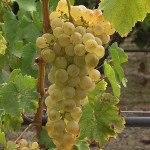
By Viala et Vermorel (Ampélographie) [Public domain], via Wikimedia Commons

By Viala et Vermorel (Ampélographie) [Public domain], via Wikimedia Commons

Muscat a petits grains blanc (Muscat blanc)!

There you have it!  I’m not certain I addressed the questions my reader who requested the grape wanted answered, but alas, the Muscat grape appears to have a very complicated history with there being over 100 varieties and/or names now, and we’re not even close to genetically analyzing every single one of them!

If you have other grapes you’d like to learn the origin of, please feel free to ask! I can’t promise there is any information regarding your particular grape of interest, but I can certainly try to look!  Please feel free to comment!

Examining Variations in Grape Phenolic Maturity and Ripeness at Harvest and How It Influences Wine Quality


—————————————————————————————————-

Welcome to The Academic Wino! If you are new here, please read the “About Me” page to find out more about myself and the blog. If you would like to receive free updates on articles like this by email, then sign up here or you can subscribe to the RSS feed. Also, check us out on Twitter, Facebook, Google+, and or Pinterest. Thanks for visiting!

—————————————————————————————————-

It is well known among grape growers and winemakers that the phenolic maturity of the grapes at harvest significantly impacts the overall quality of the finished wine. Specifically, the aroma, flavor, mouth feel, and astringency (to name a few) are all tied in with the composition of phenolic compounds in grapes and wine, thus are strongly influenced by grape ripeness or a lack thereof. Studies have found that certain phenolics in the skins of unripe grapes are less extractable and certain phenolics in the seeds of unripe grapes are more extractable than those in the skins and seeds of fully matured grapes, thus resulting in altered flavor and aroma of the finished wine.

The current demand from consumers in terms of ideal red wine characteristics are wines with a dark red color, full body, soft tannins, and ripe fruit flavors and aromas. In order to create wines with these types of characteristics, winemakers need to use fully ripened grapes, specifically those grapes that have reached “phenolic maturity”. It is because of this that there has been a lot of work done looking for a method or system to test grapes in the field to determine their ideal harvest date when phenolic maturity has been reached. There has been some progress in this field of research, however, according to the authors of today’s paper, these methods rely on the average values of a sample of grapes in the vineyard, and don’t take into account the variability of the phenolic maturity of grapes within that sample. A large variability in grape phenolic maturities could spell trouble for a winemaker attempting to create the “ideal wine” for consumers.

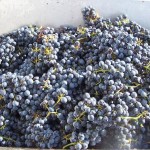
Agne27 at the English language Wikipedia [GFDL (http://www.gnu.org/copyleft/fdl.html) or CC-BY-SA-3.0 (http://creativecommons.org/licenses/by-sa/3.0/)], from Wikimedia Commons

Agne27 at the English language Wikipedia [GFDL (http://www.gnu.org/copyleft/fdl.html) or CC-BY-SA-3.0 (http://creativecommons.org/licenses/by-sa/3.0/)], from Wikimedia Commons

When grapes ripen throughout the season, each and every grape does not ripen at the exact same rate. A lot of factors go into this variability, from weather to vineyard management practices and even to the specific location on the cluster. As a result of this variability in ripening rates, there is the potential for there to be a large variability in phenolic maturities of the grapes at harvest, even when the average values indicate it’s about time to pick. According to the authors of today’s study, no one has ever looked at this variability (in other words, heterogeneity) of phenolic maturities in grapes, nor has it ever actually been quantified.

Thus, the goal of the study presented today was to evaluate the variability or heterogeneity of the degree of grape ripeness (degree of phenolic maturity) and how this variability affects wine quality and phenolic composition.

Methods

Grapes used for this study were Cabernet Sauvignon from experimental vineyards at Constantí owned by the Rovira i Virgili University in Spain. Grapes were studied during the 2007 and 2008 vintages and were harvested from the two central rows in this experimental vineyard.

600 grapes were collected randomly at 1, 3, 5, and 7 weeks after veraison (i.e. when the grapes start to change color) and analyzed. Sugar content, titratable acidity, pH, weight, and ripening heterogeneity of a portion of those grapes were measured.

Grapes were harvested 7 weeks after veraison for winemaking purposes and were separated into three different groups based on their densities. Grapes were then crushed, and then underwent typical red winemaking procedures (including a 14 day maceration period). After bottling, wines were stored at 15oC until ready for analysis.

The following were measured for grapes: sugar content, probable alcohol degree, titratable acidity, and pH; and the following were measured for the finished wines: ethanol content, titratable acidity, and pH. Also measured were: color intensity, lightness, chroma, hue, red-greenness, yellow-blueness, total color difference, total anthocyanin content, flavanol content (including catechins and oligomeric proanthocyanidins), total phenolic index, and astringency index.

A sensory analysis was performed on all wines by a panel of 10 “expert enologists” from Rovira i Virgili University after a 6 week storage period after bottling. Dark tasting glasses were used so the appearance of the wine color did not have any influence on the panel’s scores. Wines were compared in pairs, with the pairs being made up of two of the following: low density wine, medium density wine, and high density wine. The panel was asked to determine if they could tell a difference between the two samples and also what their favorite sample was and why.

Results

• As expected, during the growing season, sugar content, probable alcohol degree, pH, and berry weight increased, while titratable acidity decreased.
• The 2007 vintage grapes reached a greater phenolic maturity than the 2008 vintage grapes, though both years were considered “normal” years.
• Significant heterogeneity in phenolic composition and maturity of grapes was noticed from the start of the sampling period all the way through harvest.
o According to the authors, this means that are likely many unripe grapes mixed in at harvest prior to the winemaking process, which could increase bitterness and astringency due to lower sugar content, higher acidity, lower anthocyanin levels, and higher seed tannin levels, ultimately lower the quality of the finished wine.
o They suggest that these results indicate a significant influence of grape heterogeneity on phenolic composition of wine.
• As grape density increased, ethanol content and pH of wines increased, and titratable acidity decreased.
• Grape density significantly affected wine color.
o Higher density grapes resulted in wines with higher color intensity, chroma, and red-greenness as well as lower lightness levels.
o Hue and yellow-blueness levels were not consistent from year to year.
• The sensory panel was able to tell the different in wine color of wines from different grape densities just by using the naked eye.
o According to the authors, these results indicate that grape heterogeneity significantly impacts wine color.
• Grape density significantly influenced the anthocyanin content in the wines.
o As grape density increased, anthocyanin content increased (for both free and combined with flavanol forms)
o The authors noted that the presence of unripe grapes (i.e. less dense) at harvest could significantly impact the anthocyanin content of the finished wine.
• As grape density increased, proanthocyanidin concentrations and astringency increased.
o Denser grapes resulted in greater proanthocyanidin levels, which according to the authors could result in greater tannin levels, indicating a greater ability for aging than less dense grapes with lower levels of proanthocyanidins.
• As grape density increased, (+)-catechin decreased and (-)-epigallocatechin increased.
• Grape density significantly influenced proanthocyanidin monomer and oligomer concentrations.
o As grape density increased, monomers and dimers increased.
• Only 50% of the sensory panel could tell the difference between the medium and high density wines, while 100% of the panel could tell the difference between the low and high density wines.
o Overall preference was unanimous for the higher density wines, which the panel indicated had greater fruit and floral notes, as well as having better balance, lower acidity, and less bitterness than low density wines.

Conclusions

According to the results of the study and the author’s interpretations, grape ripeness heterogeneity has significantly more influence on finished wine quality than initially thought. Specifically, less ripe grapes (i.e. indicated by the lower density grapes in the study) can significantly influence the phenolic composition of the finished wine, and ultimately the overall quality of that wine. Basically, lower density grapes (i.e. less ripe grapes) lower the ethanol content, pH, anthocyanin concentrations, color intensity, total phenolic index, and proanthocyanidin concentrations, as well as increase the titratable acidity of the finished wine, resulting in an overall lower quality wine. By mixing in these lower density grapes in with the higher density grapes, the overall quality of the finished wine will most certainly be lowered some.

Agne27 at the English language Wikipedia [GFDL (http://www.gnu.org/copyleft/fdl.html) or CC-BY-SA-3.0 (http://creativecommons.org/licenses/by-sa/3.0/)], from Wikimedia Commons

Agne27 at the English language Wikipedia [GFDL (http://www.gnu.org/copyleft/fdl.html) or CC-BY-SA-3.0 (http://creativecommons.org/licenses/by-sa/3.0/)], from Wikimedia Commons

While only half of the sensory panel could differentiate between the medium and high density wines based on taste alone, 100% of the panel could tell the difference between the low and high density wines, indicating that grape ripeness heterogeneity is an extremely important factor in determining overall wine quality. Even though not all the panelists could tell the difference between the medium and high density wines based on taste alone, they were able to tell the difference based on color, so adding those two factors together could potentially decrease the overall acceptability and likelihood of purchase of even medium density (or not as many unripe grapes) wines (this was not tested—just my theory).

According to the authors, more research on grape phenolic maturity heterogeneity is needed, as well as methods or protocols for filtering out these less ripe grapes either in the field or just prior to the winemaking process. While the average phenolic maturity of the grapes may indicate it’s time to harvest, the fact that the grape to grape variability or heterogeneity is so vast indicates that there will likely be some lowering of quality if those grapes are mixed in with those truly ripe grapes.

Perhaps a method to quickly sort lower density grapes away from the higher density grapes would be most effective at reducing the heterogeneity of phenolic maturity of the grapes destined for making wine, be it through mechanical or digital means. My first thought was some sort of equipment or attachment to existing equipment that allows for density sorting in a similar manner that was done in this experiment. Those grapes with higher density would sink to the bottom of the machine, while those with less density would stay afloat, thus allowing someone to either scoop out the less dense grapes or have them funneled separately to a different container.

Overall, I thought this was an interesting study and certainly one that deserves follow up investigations based on its important findings. The entire concept of grape phenolic maturity variation and heterogeneity deserves more research, as well as applicable methods for sorting out these less ripe grapes either prior to harvest or just prior to the winemaking process in order to improve the chances of making a higher quality wine.

What do you all think of this study? Do you already employ methods for sorting out these less ripe grapes prior to winemaking? Please feel free to share your thoughts and/or experiences!

Source: Kontudakis, N., Esteruelas, M., Fort, F., Canals, J., De Freitas, V., and Zamora, F. 2011. Influence of the heterogeneity of grape phenolic maturity on wine composition and quality. Food Chemistry 124: 767-774.

Wine Technology of the Future: System and Method for Pairing Food with Wine


—————————————————————————————————-

Welcome to The Academic Wino! If you are new here, please read the “About Me” page to find out more about myself and the blog. If you would like to receive free updates on articles like this by email, then sign up here or you can subscribe to the RSS feed. Also, check us out on Twitter, Facebook, Google+, and or Pinterest. Thanks for visiting!

—————————————————————————————————-

“Wine Technology of the Future” is a series on The Academic Wino that features new inventions and patents that attempt to make your wine experience easier and more enjoyable. Previously on this series, we’ve introduced the “self aerating wine bottle”; the “corkscrew with integral intelligent thermometer”; “wine dispensing and preservation device”; “multi-stream wine aerating device”; and most recently the “wine bag carrier”. Today’s invention is the “system and method for pairing food with wine”, invented by Eric S. Arsenault from Ann Arbor, Michigan. The patent was filed on May 24th, 2011, and was published on January 29th, 2013.

There has been a sort of tradition in the past few decades that certain wines must be paired with certain types of foods. For example: it is often said that one should serve red wine with red meat and white wine with fish. Of course, these “traditions” are relatively new with respect to the entire history of wine, as up until the most recent past all styles of wines were served during every course of the meal, and were chosen by a diner based upon the type of wine they wanted to drink, and not what someone told them they should drink based on the dish. As an aside: Tim Hanni has done a lot of research as well as published a book discussing the very concept of pairing wine “to the diner and not the dinner”, which is highly recommended reading for everyone (even if you’re a staunch critic of the concept!). Click here to read my review of that book.

…but I digress!…

Yours and my opinion of the concept of wine and food pairings aside, this “system and method for pairing food with wine” device is basically a computer system that lets you input the type of food you are planning to each, and presents to the user a recommendation of the type of wine they should consume with that dish based on an extensive database with wine information, as well as food information based on a menu from a restaurant.

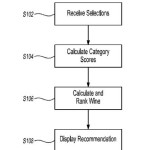
Figure 3 from US Patent 8364545

Figure 3 from US Patent 8364545

Basically, what happens is that the customer sits down at a table in a restaurant and is given a tablet with the menu choices listed. The customer then selects what he/she would like to eat, and then the tablet “talks” to the main computer database via a wireless system (located someplace else inside the restaurant) and it comes back with a wine with the best “Pairing Compatibility Score”. It is assumed that the customer will then go ahead and order that particular wine, since according to the computer, it is the best wine to pair with that particular dish on the menu.

I have a couple of problems with the device: 1) what happens when the customer doesn’t like the kind of wine the computer recommends? Maybe they try it again and they get another unsatisfactory answer. What are they supposed to do now? Give up and drink cocktails? This goes back to the pairing to the “diner and not the dinner” idea that Tim Hanni has frequently preached, which stresses that one should really pick the wine that they like and not what someone tells them is the appropriate choice. Everyone has different tastes and sensitivities, so a device catering to only one type of taster is anything but efficient and an otherwise good idea.

Now, if this device were to determine the type of taster that was choosing their meals BEFORE calculating a “Pairing Compatiblity Score” and selecting the appropriate wine, that could potentially be much more effective and less likely to alienate those people who have different taste preferences that the designer of the machine. In fact, the author did mention later on in the patent that this could be an option programmed into the device, which I think should be first and foremost an absolute requirement, and not simply an afterthought that “maybe this could be an option” (of course, now I’m just being picky…).

My second problem with this device is that it’s kind of pointless and a waste of money. OK, maybe that’s a little too harsh, but really: the patent author talks about how wine is so complicated and that basically NO ONE is qualified to select the appropriate wine unless they are a certified sommelier (I’m serious: that’s how it reads). The author says that since paying a sommelier can be expensive, investing in this machine is the only option a restaurant has in order to select an appropriate bottle of wine for every diner. Whatever happened to basic wine training? Seriously, sure, wine can be complicated, but choosing wine for dinner doesn’t have to be and shouldn’t have to be for that matter. Just give the waiters and waitresses a basic training and wine and maybe not spend a small fortune to make the wine novice feel even more like a failure when it comes to their own ability to choose wine.

In regards to technology, this “system and method for pairing food with wine” is a neat little computer program that can calculate the “perfect” wine and food pairing based on very detailed information about the selection from the menu and the wines in the cellar. For gadgets sake, it is kind of cool and would be fun to play with. However, if I were a restaurant owner, I don’t think I would spend my money on something like this when some basic wine training for the staff could be just as effective.

What do you all think of this device? Am I crazy to think it’s kind of unnecessary? Have I gone off the deep end? Would you invest in this type of device if you owned a restaurant? What if they made an at-home version? Would you buy it? Please feel free to comment!

Source: United States Patent 8364545: “System and method for pairing food with wine”. Accessed online 3/19/13 http://www.freepatentsonline.com/8364545.html

Wine Literature Review Lightning Round: 4th Edition


—————————————————————————————————-

Welcome to The Academic Wino! If you are new here, please read the “About Me” page to find out more about myself and the blog. If you would like to receive free updates on articles like this by email, then sign up here or you can subscribe to the RSS feed. Also, check us out on Twitter, Facebook, Google+, and or Pinterest. Thanks for visiting!

—————————————————————————————————-

Normally, I save this series for Fridays, however, I was surprised by a marriage proposal (of which I said yes!) by my now-fiancé this weekend and didn’t end up having time to write anything else :)   Enjoy this post a few days early!

There’s no way one single person (even if that person is The Academic Wino!) can possibly review every single piece of peer reviewed literature related to wine that is published every day. This series presents multiple new papers (within the past year or so) in one post by briefly summarizing the research and linking to the source in order for you to pursue further if you’re interested. If there is enough interest, be it through comments or emails, I can review any of the papers introduced to you in this post in a more critical assessment.

WINEMAKING

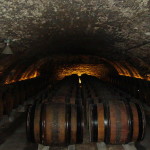
“An assessment of using ground thermal inertia as passive thermal technique in the wine industry around the world”. This article, published in 2012, aimed to use a mathematical modeling approach to confirm the benefits of using underground cellars for aging wine, and to promote the use of this type of cellar when constructing new wineries. Basically, the model employed during this analysis used thermal inertia (i.e. how temperature moves in a given medium or space) of the ground in order to provide protection to the wines during the aging process. The characteristics of these underground cellars allow for good ventilation as well as good temperature control for the wines during the aging process.

By Philip Larson (originally posted to Flickr as DSC02022) [CC-BY-SA-2.0 (http://creativecommons.org/licenses/by-sa/2.0)], via Wikimedia Commons

By Philip Larson (originally posted to Flickr as DSC02022) [CC-BY-SA-2.0 (http://creativecommons.org/licenses/by-sa/2.0)], via Wikimedia Commons

According to the model results, the inputs of which were based on real underground wine cellars in Spain, the ideal temperature for storing wine is easily reached inside these underground cellars without the need for supplemental air conditioning. Eliminating the need for air conditioning is beneficial for multiple reasons, one being the savings on one’s electric bill, while the other being a savings for the environment in regards to a reduced carbon footprint. Finally, according to the authors of this study, the model the used in this analysis could be helpful for those designing or constructing new wine cellars, which based on the specific measurements and layout planned, could estimate the indoor temperature of the cellar and possibly allow for infrastructure changes if need be prior to completion of the facility if the temperature based on current specs was not up to acceptable standards.

Source: Mazarrón, F.R., Cid-Falceto, J., and Cañas, I. 2012. An assessment of using ground thermal inertia as passive thermal technique in the wine industry around the world. Applied Thermal Engineering 33-34: 54-61.

VITICULTURE

“Floral, spicy and herbaceous active odorants in Gran Negro grapes from shoulders and tips into the cluster, and comparison with Brancellao and Mouratón varieties”. This paper, published in 2012, aimed to examine the aromatic characteristics of Gran Negro grapes, and to specifically test if grapes from different parts of the cluster (shoulders and tips) would yield different aromatic compounds that could be taken advantage of when trying to create a unique wine in a highly competitive market. GC-MS spectroscopy was used to determine the aromatic chemical profile of the grapes from both the shoulders and the tips of the clusters.

The results of the study showed significant variation in aromatic compounds of grapes, depending upon where in the cluster the grape was located. For those grapes located at the tip of the cluster, volatile phenols and aromatic alcohols were 2 and 15 times higher in the flesh of the grape than in the skins, respectively, whereas for those grapes located at the shoulder of the cluster, volatile phenols were 2 times higher in the skins of the grapes compared with the flesh. Also, aldehydes and C6 alcohols were 4 and 3 times higher in the skin than in the flesh for those grapes located at the tips of the clusters. C6 alcohols were found to be 40% lower in the tips than in the shoulders.

Overall, this study showed that there is significant variation in the volatile composition of grapes, depending upon where in the cluster the grape is located, which could allow winemakers to create even more unique wines which could give them a market advantage in this competitive industry.

Source: Noguerol-Pato, R., Gónzalez-Barreiro, C., Cancho-Grande, B., Martínez, M.C., Santiago, J.L., and Simal-Gándara, J. 2012. Floral, spicy and herbaceous active odorants in Gran Negro grapes from shoulders and tips into the cluster, and comparison with Brancellao and Mouratón varieties. Food Chemistry 135: 2771-2782.

“RECYCLING”/ENVIRONMENTAL SCIENCE

“Wine grape pomace as antioxidant dietary fiber for enhancing nutritional value and improving storability of yogurt and salad dressing”. Grape pomace has already been shown to improve the shelf life and/or nutritional quality of many food products, including chicken, hotdogs, and green tea. This study, published in 2013, aimed to examine if grape pomace added to yogurt and salad dressing could be beneficial in this same manner, and whether or not consumers would actually enjoy the taste of these products after the pomace was added. Dried grape pomace powder was added to yogurt, Italian salad dressing, and Thousand Island salad dressing and stored for 3 weeks at 4oC.

By Tricia (Flickr: saladdressing) [CC-BY-SA-2.0 (http://creativecommons.org/licenses/by-sa/2.0)], via Wikimedia Commons

By Tricia (Flickr: saladdressing) [CC-BY-SA-2.0 (http://creativecommons.org/licenses/by-sa/2.0)], via Wikimedia Commons

Results showed that adding grape pomace to all samples resulted in a 35-65% reduction in peroxide values, indicating the potential benefit of grape pomace as a preservative in all three products. The samples also showed dietary fiber levels of 0.94-3.6%; total phenolic content of 958-1340 mg gallic acid equivalent/kg product; and DPPH scavenging activity (i.e. antioxidant capacity) of 710-936 mg ascorbic acid equivalent/kg product. Sensory analysis revealed the products with grape pomace added were nearly universally accepted as “likable”. Overall, the study results indicated that grape pomace could be a good additive to yogurt and salad dressing in order to prolong shelf life and improve the nutritional content of the products.

Source: Tseng, A., and Zhao, Y. 2013. Wine grape pomace as antioxidant dietary fiber for enhancing nutritional value and improving storability of yogurt and salad dressing. Food Chemistry 138: 356-365.

I’d love to hear what you all think about any or all of these topics!  Please feel free to leave comments!