Category Archives: Genetics

Who’s Your Daddy?: Muscat


—————————————————————————————————-

Welcome to The Academic Wino! If you are new here, please read the “About Me” page to find out more about myself and the blog. If you would like to receive free updates on articles like this by email, then sign up here or you can subscribe to the RSS feed. Also, check us out on TwitterFacebookGoogle+, and or Pinterest. Thanks for visiting!

—————————————————————————————————-

The “Who’s Your Daddy” series takes a very brief look at the parentage of grapes, in order to get a better understanding of where particular varietals come from and how they are genetically related to one another.  So far, we’ve covered: Cabernet Sauvignon, Chardonnay, Gamay, Merlot, Nebbiolo, Petite Sirah, Petit Verdot, Pinotage, Pošip bijeli, Sangiovese, Syrah, Tempranillo, and Torrentés riojano. Feel free to click on any one of the varietal names to read all about their parentage.

The subject of today’s “Who’s Your Daddy” post is the Muscat grape, which comes by special request from a reader!

Now, I don’t really know a lot about Muscat, other than general flavors associated with it, so I was quite surprised to find out there are about a billion different synonyms for this grape, and I’m not quite sure if they are actually the same grape under a bunch of names, or if they are really many different varieties of grape that aren’t that closely related to one another.  Just typing “muscat” into Wikipedia (I know, I know, not the best source, but it’s always a decent starting point), I was met with a wall of text describing the many names Muscat is known for.  In fact, here’s a screen shot of the different names for Muscat:

Source: wikipedia

Source: wikipedia

Of course, it would take me forever to go through every single one of those to figure out what’s what, so for this simple post, I did a literature search for “genetic origins of muscat” and stumbled across an article from 2008 by Schneider et al examining the genetic origins of the Muscat fleur d’oranger variety (you can find the name somewhere in the mess of text in the image above).  I’m working under the assumption that all Muscat grapes are very closely related, and that the parentage found for Muscat fleur d’oranger is the same for many of the other Muscat variety grapes (feel free to correct me if I’m wrong!).

The Muscat grape is thought to be a very ancient grape, and possibly one of the first grapes to be domesticated.  According to sources, there are over 100 Muscat varieties, which makes sense from an evolutionary stand point—if it is a really old variety, it’s likely that over time Muscat grapes would diverge slightly in their genetic make-up depending upon where they were brought to grow and what environmental conditions they were forced to adapt to.  This resulted in many different varieties, ranging from various aromas and flavors and colors from white to dark.

Muscat grape varieties are grown all over the world in all different growing conditions, as each variation of the grape has adapted itself to different environmental areas.  Wines made from Muscat grapes are extremely popular, with “Moscato” in the United States picking up tremendous steam in the past few years.  Often a very fruity and floral wine (vague, I know, sorry), it often is made with a bit of residual sugar, and at times levels high enough to be classified as “dessert wines”.  In addition to table wines and dessert wines, Moscato wine can also be made into a sparkling form, which has had a lot of success particularly in the United States.  For more great reading on Moscato, check out this article from the Wine Spectator published a little over a year ago. 

So, Who’s Your Daddy, Muscat?

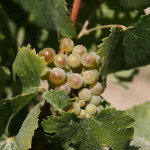
The particular variety of grape examined in the 2008 paper I mentioned above examined the Muscat fleur d’oranger variety. According to the paper, this variety has “muscat flavor and a particular note of orange blossom”.  Based on genetic and ampelography trace data, the parental genetic origin of Muscat fleur d’oranger is:

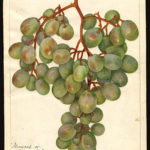
Chasselas…..

Chasselas_Blanc_The_Academic_Wino


…..and….


By Viala et Vermorel (Ampélographie) [Public domain], via Wikimedia Commons

By Viala et Vermorel (Ampélographie) [Public domain], via Wikimedia Commons

Muscat a petits grains blanc (Muscat blanc)!

There you have it!  I’m not certain I addressed the questions my reader who requested the grape wanted answered, but alas, the Muscat grape appears to have a very complicated history with there being over 100 varieties and/or names now, and we’re not even close to genetically analyzing every single one of them!

If you have other grapes you’d like to learn the origin of, please feel free to ask! I can’t promise there is any information regarding your particular grape of interest, but I can certainly try to look!  Please feel free to comment!

Who’s Your Daddy?: Pošip bijeli


The “Who’s Your Daddy” series takes a very brief look at the parentage of grapes, in order to get a better understanding of where particular varietals come from and how they are genetically related to one another.  So far, we’ve covered: Cabernet Sauvignon, Chardonnay, Gamay, Merlot, Nebbiolo, Petite Sirah, Petit Verdot, Pinotage, Sangiovese, Syrah, Tempranillo, and Torrentés riojano. Feel free to click on any one of the varietal names to read all about their parentage.

The subject of today’s “Who’s Your Daddy” post is the native Croatian grape, Pošip bijeli (usually simply refered to as Pošip).

Source: http://www.vinarija-posip-cara.hr/wp-content/gallery/carski-vinogradi/thumbs/thumbs_posip-700.jpg

Source: http://www.vinarija-posip-cara.hr/wp-content/gallery/carski-vinogradi/thumbs/thumbs_posip-700.jpg

Pošip bijeli is grown almost exclusively on the Dalmatian coast as well as the Croatian island of Korčula and Otok Hvar.  The area is characterized as having a mild Mediterranean climate, with average temperatures in January of 9.8oC (49.6oF) and in July of 26.9oC (80.4oF).  Geographically, the area is known for its hills, as well as the Dinaric Alps mountain range.  Some of the hills have very steep slopes with very little rainfall, which provides an ideal microclimate for wine grapes.  Even within this small area, there are several different microclimates which suit different grape varieties very well, one of which is the Pošip grape.

Soils in this area are primarily sandy soils, thereby creating a protection of the grape vines from the devastating Phylloxera pest; infamous for destroying vineyards all over the globe throughout history; since it cannot survive in sandy soils.  This allows the use of native rootstock on all vines, rather than requiring the grafting of Phylloxera-resistant American rootstock onto the vines.  In 1967, Pošip attained “protected geographical origin” status, and remains one of the few in Croatia to have such a designation.

I should note:  I have never actually tasted Pošip wines, so all of the aromatic and flavor descriptions that follow are based on what others have taken away from the wine.  If you feel as though I am missing some key aromatics or flavors, feel free to list them in the comments section!

Pošip wines are golden yellow in color, and sometimes with a slight green tinge.  These wines are often full-bodied, and with alcohol levels on average between 13% and 14.5%.  Intensity of flavors may vary from vintage to vintage, but often possess characteristics of dried apricots and figs.  Pošip wines can be both blended and in varietal form.  These wines are very popular among Croatian wine consumers, and are thought to be some of the best wines created in the region.

So, Who’s Your Daddy, Pošip bijeli?

In 2002, a collaboration between a group at the University of California Davis and the University of Zagreb in Croatia performed DNA fingerprinting analysis on Pošip bijeli which resulted in the positive identification of both parents of the grape vine.  Both parents of Pošip bijeli are native Croatian, and it is thought that the cross was completely random in a vineyard someplace in the area.

By Anto (talk) 14:37, 7 October 2009 (UTC) (Own work) [CC-BY-SA-3.0 (http://creativecommons.org/licenses/by-sa/3.0)], via Wikimedia Commons

By Anto (talk) 14:37, 7 October 2009 (UTC) (Own work) [CC-BY-SA-3.0 (http://creativecommons.org/licenses/by-sa/3.0)], via Wikimedia Commons

So, without further ado, I present to you the parents of the native Croatian grape, Pošip bijeli!

Pošip bijeli is a genetic cross between:

Zlatarica blatska bijeli….


…and…


….Bratkovina bijeli!

There you have it! The genetic origins and a little bit of history of the Pošip bijeli grape!

I hope you enjoyed this little history lesson, and hope you find yourself tasting the wines made from these grapes in the near future!

Cheers!

Source for the DNA analysis: Piljac, J., Maletić, E., Kontić, J.K., Dangl, G.S., Pejić, I., Miros Ević, N., and Meredith, C.P. 2002. The parentage of Pos ip bijeli, a major white wine cultivar of Croatia. Vitis 41(2): 83-87.

Who’s Your Daddy?: Torrentés riojano


The “Who’s Your Daddy” series takes a brief look at the parentage of grapes, in order to get a better understanding of where particular varietals come from and how they are genetically related to one another.  So far, we’ve covered: Cabernet Sauvignon, Chardonnay, Gamay, Merlot, Nebbiolo, Petite Sirah, Petit Verdot, Pinotage, Sangiovese, Syrah, and Tempranillo. Feel free to click on any one of the varietal names to read all about their parentage.

The subject of today’s “Who’s Your Daddy” post is the Argentinian grape, Torrontés riojano.

By Djzonda (Own work) [CC-BY-SA-3.0 (http://creativecommons.org/licenses/by-sa/3.0)], via Wikimedia Commons

By Djzonda (Own work) [CC-BY-SA-3.0 (http://creativecommons.org/licenses/by-sa/3.0)], via Wikimedia Commons

History

Up until DNA testing on Torrentés riojano was completed in 2003, it was thought that Torrentés riojano from Argentina was the same grape as the Torrentés from Spain.  After the genetic analysis, however, it was found that these two varieties are actually not related at all and are two genetically distinct grapes.  Torrentés riojano is considered to be the only variety that is 100% native Argentinian, and is becoming more and more popular not only in Argentina, but in countries all over the globe.

According to the Wines of Argentina website, the first known cultivation of Torrentés has been traced all the way back to the Spanish Conquerors in the 1500s and it has been going strong ever since.  Torrentés riojano is thought to be the most widely planted white grape in Argentina. According to the Altura Argentina Wine Tourism website, there are approximately 8,180 hectares of Torrentés riojano planted in Argentina, though it is not abundantly clear when this statistic was last updated.

Viticulture

It has been said that the best environmental conditions for optimal Torrentés riojano growth is in cool, dry places that have high temperature differentials (large differences between night and daytime temperatures).  Torrentés riojano tends to do well at high altitudes as well.  Locations with good air flow are also good characteristics of a quality Torrentés riojano site.  The grapes themselves are quite large and are present on the vine in loose clusters.

Sensory Characteristics

As an aside: I haven’t had the pleasure of tasting Torrentés riojano myself, so the flavors and aromas described next are based on other people’s tasting notes.  Please feel free to add if there is something I’ve missed.

Torrentés riojano wines are light bodied and possess a pale gold with light green hue coloring.  In regards to aroma, Torrentés riojano wines are very aromatic, possessing strong aromatic tones and some citrus aromas as well.  Some say Torrentés riojano wines share very similar characteristics to Viognier wines, with the strong aromatic aroma in addition to citrus and peach.  Specific floral notes that some have noted on the nose of Torrentés riojano include geranium, orange blossom, and jasmine.

On the palate, Torrentés riojano wines are typically very dry, light, have balanced acidity, and mineral on the finish. Torrentés riojano wines are not usually aged in oak barrels after fermentation, and are often meant to be consumed at a young age.  From the descriptions of Torrentés riojano wines that I’ve read, it sounds as though if you like Viognier and you like Pinot Grigio (for those that like a little minerality), Torron Torrentés tes riojano may be a great varietal to try next!

So, Who’s Your Daddy, Torrentés riojano?

I’ve kept you waiting long enough (or maybe you just skipped to the end)!  After DNA fingerprinting and analysis in 2003 researchers at the Universidad Nacional de Cuyo in Mendoza, Argentina and at the University of California Davis unveiled the parentage of the Torrentés riojano grape.

Without further ado, I give you the genetic parents of Torrentés riojano:


Muscat of Alexandria….

By Viala et Vermorel (Ampélographie) [Public domain], via Wikimedia Commons

By Viala et Vermorel (Ampélographie) [Public domain], via Wikimedia Commons

 ….and….


….Criolla chica

Source: http://www.pflanzen-im-web.de/pflanzen/pflanzen-suche/Obstgehoelze/Weinrebe-Criolla-Chica-Vitis-vinifera.php#

Source: http://www.pflanzen-im-web.de/pflanzen/pflanzen-suche/Obstgehoelze/Weinrebe-Criolla-Chica-Vitis-vinifera.php#


I hope you’ve enjoyed this brief foray into the origins of the Torrentés riojano grape! If you have any questions or other information to add that I’ve missed, please feel free to leave your comments!

Cheers!

Sources:

Agüero, C.B., Rodríguez, J.G., Martínez, L.E., Dangl, G.S., and Meredith, C.P. 2003. Identity and Parentage of Torrontés Cultivars in Argentina. American Journal of Enology and Viticulture 54 (4): 318-321.

http://www.winesofargentina.org/argentina/variedades/blancas/torrontes/  Accessed 12/11/2012

http://www.argentinawinetourism.com/wine_tourism_argentina/03-argentina_wine_varieties/10-torrontes_argentina.htm  Accessed 12/11/2012

http://www.anuvawines.com/i/white-wine-varietals/torrontes/  Accessed 12/11/2012


Who’s Your Daddy?: Tempranillo

The “Who’s Your Daddy” series takes a brief look at the parentage of grapes, in order to get a better understanding of where particular varietals come from and how they are genetically related to one another.  So far, we’ve covered: Cabernet Sauvignon, Syrah, Chardonnay, Petit Verdot, Sangiovese, Nebbiolo, Pinotage, Gamay, Petite Sirah, and Merlot.  Feel free to click on any one of the varietal names to read all about their parentage.

http://i.images.cdn.fotopedia.com/flickr-2559447601-hd/Tokyo_and_Vicinity/Places_of_Interest/Museums__Galleries/Miraikan/DNA.jpg

The subject of today’s “Who’s Your Daddy” post is Tempranillo, a grape that for some reason always makes me roll my r’s a little bit longer than I probably should!

History

The name “Tempranillo” is well accepted to be derived from the word “temprano”, meaning early, which is likely related to the early ripening of the grape.  The word “Tempranillo” was recorded only sporatically through its early history, but it’s thought that the grape has been around at least since the 13th century and perhaps earlier.  Tempranillo hails originally from Spain, and has been the predominant grape in wines from both Rioja and Ribera del Duero.  In fact, Tempranillo is mostly grown in Spain, though you will find Tempranillo vineyards in other small corners of the world, including the United States, South America, South Africa, New Zealand, Australia, Argentina, and a few others.

After spending potentially hundreds of years in Spain, the grape may made its way to (*Edit: South) America some time during the 17th century by the Spanish Conquistadors.  More than likely, the Conquistadors brought the vines over by seed, which allowed the grape to slowly establish itself in places that were more hospitable to the conditions needed for optimal growth.  Tempranillo finally reached the west coast of the United States by the early 1900s, though it took some time for it to popularize and establish due to its “disagreement” with the growing conditions of the area and its desired viticultural requirements.

Viticulture

For ideal ripening and development, Tempranillo vines prefer hot days and cool nights, a combination that is not found in every viticultural growing area.  *Edit: A great comment left by Earl at the end of this post reminded me that another very important characteristic of Tempranillo viticulture is that it has a short growing season.

Tempranillo does best in calcareous clay soils, though also does well in soils rich in iron, chalk, and limestone.  As with many grapes, sloping terrain is beneficial for drainage, and it tends to do well at higher altitudes.

Tempranillo is prone to attack by a variety of pests and diseases, since it does not have immunity to any sort of ailment.  Though the thick dark skin provides some protection again disease, the very tight cluster formation is very attractive for critters than want to set up camp and go to town on the grapes and grapevines.

Sensory Characteristics

Tempranillo is often used in blends (think Rioja, etc), though is thought to be the solid backbone of these blends to provide color and unique flavor contributions to the finished wine.  Anthocyanin levels in Tempranillo grapes are very high, which explain the deep red color of the wine.

In younger Tempranillo wines, the grapes of which were grown in cooler climates, the aromatic profile tends to consist of red fruit flavors, including strawberries, black currants, and cherries.  On the other hand, in older wines, the grapes of which were grown in hotter climates, the aromatic profile is reminiscent of prunes, chocolate, and tobacco.  Tempranillo also often has a characteristic “earthy minerality” to its flavor profile.

In regards to structure, Tempranillo wines tend to be low in acidity, with moderate to high levels of tannin and moderate levels of alcohol.  As a result of these characteristics, Tempranillo has a generally smooth mouthfeel, as well as rich aromas and flavors.  Finally, Tempranillo is known to do very well in oak, as the vanilla and coconut characteristics of the oak complement the fruit and minerality components of the Tempranillo wine very well.

So, Tempranillo….”Who’s your daddy?”…

We know where Tempranillo came from originally, however, which grapes gave rise to the Tempranillo grape to begin with?

Researchers at the CSIC Universidad de La Rioja, Gobierno de La Rioja and the Instituto Madrileño de Investigación y Desarrollo Rural, Agrario y Alimentario (IMIDRA) recently uncovered the genetic origins of Tempranillo by genotyping analysis for SNP and microsatellite markers in grapevine germplasm collections and published their work just one month ago in the American Journal of Enology and Viticulture.

Without further ado, I present to you the genetic parents of Tempranillo:

Albillo Mayor…..

http://img.interempresas.net/fotos/749483.jpeg


…and…


Tempranillo grapes: http://www.wineaccess.com/graphics/grapeimages/tempranillo.jpg


…..Benedicto!


Neither of these grapes is particularly well known in the United States, though Albillo Mayor is still well-established in the Iberian Peninsula of Spain.  Benedicto, on the other hand, is rarely cultivated today and is not very well known even in the historical record.

There you have it!  If you’d like to learn about the parentage of another grape variety, simply leave a comment below and I’ll see what I can dig up!  Note: there are many grape varieties with unknown parentage still, but I’ll try my best to find data that may suggest particular relationships and origins.  This type of genetic research is ongoing, so even if I can’t find information on a particular grape of your choosing today, that may change in the future!

Cheers!

(Citation for the genetics research article: Ibáñez, J., Muñoz-Organero, G., Zinelabidine, L.H., de Andrés, M.T., Cabello, F., and Martínez-Zapater, J.M. 2012. Genetic origin of the grapevine cultivar Tempranillo. American Journal of Enology and Viticulture. ajev.2012.12012 published ahead of print August 17, 2012.)

(Source for article citing possible introduction of Tempranillo seeds to South America: http://www.ejbiotechnology.info/content/vol6/issue3/full/11/index.html)