Monthly Archives: November 2012

Detecting Brettanomyces in Wine: A Novel Approach Using qPCR


Brettanomyces bruxellensis (also known as Dekkera bruxellensis), or what the wine community lovingly calls “Brett”, is a huge cause of economic decline in the wine business as a result of the yeasts’ ability to decrease the quality of wine on a grand scale, though this fact remains very controversial in the industry.  While many believe that Brett is bad for wine quality, producing ethyl phenols that increase the incidence of “off” aromas in wine (including “barnyard”, “Band-Aid”, “phenolic”, etc), there are few others that believe that Brett character is critical in giving wine individual flavor characteristics and expression of terroir.

Chemically, Brettanomycesyeasts possess hydroxylcinnamate decarboxylase activity and vinylphenol reductase activity, both of which function to convert hydroxylcinnamic acids into the ethyl phenols responsible for “off” aromas and

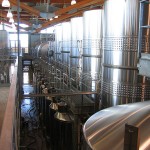
By Maxdesbacchus (Own work) [GFDL (http://www.gnu.org/copyleft/fdl.html) or CC-BY-SA-3.0-2.5-2.0-1.0 (http://creativecommons.org/licenses/by-sa/3.0)], via Wikimedia Commons

flavors.  In addition, Brettanomycesyeasts are known to be highly polymorphic and have increased mutation rates, making controlling their populations more problematic.

In regards to ethyl phenols, which are produced by the Brett yeasts, the sensory threshold is very low, thus even low levels of these compounds in the wine result in detectable “off” flavors and aromas that often result in a marked decrease in wine quality.  Though the Brett character is often off-putting to some, others find the flavors and aromas desirable and indicative of terroir, which makes the presence of Brettanomyces in wine controversial to say the least.

From a microbiology stand point, monitoring Brettanomyces can be problematic, as the yeast can be difficult to distinguish strain diversity in a population of Brett using current analytical methods, it has a relatively slow growth rate, and it is very difficult to isolate from media and other yeasts.  Another very important and problematic characteristic of Brett is that it can enter what is known as a “viable but not cultivable” state after the addition of sulfur dioxide to the wine.  In other words, Brett is unable to grow under the high free sulfur dioxide conditions, but can continue to grow at a later time after the wine has had some time to evolve.

Unfortunately, Brett detection protocols are sometimes performed during this stage of “viable but not cultivable”, which results in a false negative reading.  To say it another way, the cellar worker is “tricked” into thinking that the winery is sterile, however the Brett is merely just “laying low” and remaining temporarily undetectable using traditional detection methods.  The current methods for measuring Brett are not sensitive enough to detect the yeast when in this stage, thus running the risk of the wine developing Brett character later on when the yeasts “wake up”, so to speak.

A recent study by Tofalo et al (2012) aimed to find a different method for measuring Brettanomyces yeasts in wine, in hopes that a more sensitive method can be utilized and employed in wineries all over the world, potentially saving wineries a financial headache later on.  Specifically, the method tested in this

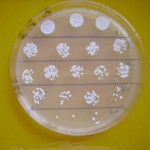
By Kevin Tong, UC Davis College of Engineering (Ghausi Hall Labs) [CC-BY-2.0 (http://creativecommons.org/licenses/by/2.0)], via Wikimedia Commons

study was a combination approach of qPCR and culture counts, the latter which is the more traditional Brett detection method.  While culture/plating counts can only detect those cells that are cultivatable (thus missing the “viable but not cultivatable” Brettcells), whereas qPCR uses DNA to quantify the number of yeast cells present regardless of their viability or “cultivatabilty” statuses.

Methods (very very briefly)

30 red wine samples were collected from vineyards in central Italy (specifically, the Abruzzo region).  5 of these samples were from organically managed vineyards, while the other 25 samples were from conventionally managed vineyards.  All wine samples were positive for Brettanomyces bruxellensis.

Wine samples were diluted in a serial dilution and plated onto an enrichment medium (designed to isolate Brett).  Yeast colonies were counted after 12 days of 25oC incubation.

DNA was extracted from the yeast colonies using previously performed methods.

qPCR was performed on the DNA samples.

All samples at all stages were performed in triplicate.

Different DNA extraction kits were compared in order to determine which resulted in the highest quality DNA for qPCR analysis.

Results

  • Brettanomyces was not detected in 20 of the 30 wine samples using the plating count method, even though these wines were previously confirmed to be Brett positive.
    • 16 of these samples were from conventional vineyards, and 4 were from organic vineyards.
  • The DNA extraction kit that provided the highest quality DNA for qPCR analysis was the DNAPowerSoil Isolation Kit.  This was the only kit used for further analysis.
    • According to the authors, the results of this kit were “fast, simple, and efficient”.
  • Using qPCR, Brettanomyceswas detected in 22 of the 30 wine samples (as opposed to only 10 of 30 using the plating count method).
    • Concentrations of Brett ranged from 10 to 104 CFU/mL, with organic wine samples harboring the lower concentrations of the bunch.
    • According to the authors, these results indicate that Brett is detectable at levels of at least 10 CFU/mL.

Conclusions

The results of this study indicate that using qPCR instead of traditional plating or culture count methods is superior in regards to detecting Brettanomyces in wine.  The authors noted that qPCR was able to identify 12 more wine samples to be Brett positive than the plating count method could detect.

It is important to note that 8 of the wines still did not give positive results in either the plating method or the qPCR method, indicating that there are more complicated factors “clouding up” the detection of Brett in the samples, questioning whether or not there are potentially even more sensitive assays available that what had been tested in this study.  The authors noted it is very

By Quinn Dombrowski (originally posted to Flickr as Wine) [CC-BY-SA-2.0 (http://creativecommons.org/licenses/by-sa/2.0)], via Wikimedia Commons

difficult to completely isolate Brett from other yeasts, bacteria, or other cells, so it is possible that the cultures of these 8 samples were not completely “clean” and contained other organisms that effectively “hid” the Brettfrom the qPCR.

The authors also noted that different strains of Brettanomyces have different abilities to produce ethyl phenols, thus simply counting the numbers of Brett cells in the wine may or may not be indicative of wine spoilage.  Specifically, a strain of Brett that does not produce much ethyl phenol could potentially be present in very high concentrations and still not spoil the wine, while another strain of Brett that has the ability to produce exorbitant levels of ethyl phenol only needs to be present in small numbers before spoiling the wine it inhabits.

In summary, while there is still room for improvement, this study showed that qPCR may be a more effective way to monitor Brett levels in wine, and may be a good practice for wineries to adopt in their Brettanomyces management protocols.  Certainly, more research needs to be done (i.e. would this method be just as effective in white wines?), but this study provides a more sensitive alternative to the traditional Brett detection methods that could be financially beneficial to wineries.

Source:  Tofalo, R., Schirone, M., Corsetti, A., and Suzzi, G. 2012. Detection of Brettanomyces spp. in Red Wines Using Real-Time PCR. Journal of Food Science 77 (9): M545-M549.

Book Review: A Vineyard in Napa by Doug Shafer with Andy Demsky


Want your wine-related book reviewed?  Send me an email:  becca@academicwino.com! I’d love to read it!

There are many motivated individuals who have high hopes and grand dreams of owning a successful and world-renowned vineyard.  Some of these individuals go on to fulfill their dreams, while others run into strife and failure.  The difference between the two is that the successful people are able to persevere during the most difficult times, and make sometimes very difficult decisions in the face of peril that could make or break the future of the winery.

A Vineyard in Napa by Doug Shafer with Andy Demsky tells the story of one family who made the decision to head out to Napa and start a vineyard, the success of which was a huge unknown in their eyes for a long time.  Written by Doug Shafer, the son of John Shafer, the patriarch of Shafer Vineyards, this book tells the “life story” of the vineyard and how it evolved over the years.

Photo credit: University of California Press: http://www.ucpress.edu/img/covers/isbn13/9780520272361.jpg

A Vineyard in Napa starts off with the introduction of John Shafer, a war veteran from the suburbs of Chicago who was ready to make a career change mid-life; and a descriptive illustration of his life before Napa and the dynamics of the family Shafer.  The book is written in such a way that one gets the feeling that they really know the Shafer family, and effectively inspires the reader to “root for” the Shafer family throughout every step of the journey, from piling in the family station wagon on the move to Napa to establishing and growing the business which has continued to remain as a family business.

A Vineyard in Napa captivates the reader in such a way that you feel the desire to continue reading to find out how the Shafer’s handled impending doom and how they overcame many trials and tribulations.  Even though this book is about one vineyard, it is written in such a way that the reader really gets a sense of how establishing a growing a vineyard in Napa in the past 40-50 years was for anyone involved in the business.  There were a lot of problems and struggles along the way, from phylloxera infestations to wildfires and to AVA boundary line drawing, and this book eloquently describes stories of how the Shafer’s and other vineyards in the area survived (or failed in some cases).

Napa Valley: By Brocken Inaglory (Own work) [CC-BY-SA-3.0 (http://creativecommons.org/licenses/by-sa/3.0) or GFDL (http://www.gnu.org/copyleft/fdl.html)], via Wikimedia Commons

Overall, I found this a wonderful book that provides a feeling of warmth and support for the evolution of Shafer Vineyards.  They may have had some very difficult moments in time, however, stories in this book illustrate how Shafer Vineyards was able to ultimately overcome these difficulties and triumph, all the while maintaining their intimacy and rock-solid family values.

If you enjoy American history, American history of wine to be specific, A Vineyard in Napa by Doug Shafer with Andy Demsky is one which you must add to your collection!

To purchase A Vineyard in Napa by Doug Shafer with Andy Demsky for yourself or as a gift to the Wine Lover in your life, please follow this link to Amazon.com. 

The Importance of Nitrogen Availability in Grape Must During Biodynamic Vinification

The following is a guest post written by Anty Fung.  Please read Anty’s full bio at the end of this post!

A Brief History of Biodymanics

Biodynamics is “the basic new way of thinking about the relationship between earth and soil to the formative forces of etheric, astral and ego activity of nature”.[1] Part of the Anthroposophist movement founded by Rudolf Steiner in 1924, biodynamic agriculture was first developed by Maria Thun and her team in Germany and Holland, and since then has gained increasing support from winemakers around the world.

In 1928, Demeter was established as a program certifying the practice of biodynamic agriculture. The cardinal rule of biodynamic agriculture is to respect the “cosmic creative and shaping forces” of nature and celestial bodies

Biodynamic Composting. Photo credit: By Mark Smith [CC-BY-2.0 (http://creativecommons.org/licenses/by/2.0)], via Wikimedia Commons

by closely observing the cosmic and lunar cycles.  Biodynamic agriculture also requires the use of nine biodynamic field and compost preparations in homeopathic proportions in order to maintain the flow of energy and vitality in the vineyard. Biodynamic agriculture is a relatively well-documented area aptly covered first by the “Agriculture Course”, a series of 8 lectures given by Dr. Steiner in 1924.

This post, however, sets out to deal with biodynamic vinification (a.k.a. biodynamic winemaking), an area highly relevant to biodynamic viticulture and yet it has only been formalized in June 2008 as an essential part of “Standards for Demeter/ Biodynamic Wine”.[2] Arguably, the standards required for fulfillment fell short of the expectations of France and Italy, both of which have their own disciplinary bodies to regulate and monitor whether biodynamic standards are strictly conformed by Demeter certified wineries in their countries. Nonetheless, the 2008 standards laid down a few rules for Demeter certified wineries on alcoholic fermentation, which were to be enforced from the 2008 vintage onward.  These standards include the following:

  1. Fermentation technique: Heating to speed up fermentation is permitted. Pasteurization is disallowed.
  2. Choice of yeast: Indigenous yeasts, pied de cuve (Demeter or organic), Demeter or organic yeast, GMO free commercial yeast are allowed.
  3. Yeast nutrients: Demeter/ organic yeast hulls are allowed. All other forms of nutrients require approval from respective organizations.[3]

Experiment

In 2011, a group of Italian researchers looked deeper into the chemistry behind biodynamic winemaking, specifically examining the evolution of indigenous yeasts during different spontaneous biodynamic alcoholic fermentation processes.

For that study, Trebbiano grapes grown along principles of biodynamic agriculture were picked from an Italian winery in Abruzzo, harvested by hand as is required by Demeter standards, and randomly placed into five different treatments after soft crushing.

The five different treatments were performed during this study: 1) “Low Nitrogen vinification”; 2) “Nitrogen vinification”; 3)“Nitrogen-thiamin vinification”; 4) “Nitrogen-oxygen vinification”; and 5) “Nitrogen-pied de cuvee vinification”. 

The team monitored the rate of decrease in must density to gauge the rate of alcoholic fermentation. The level of promptly assimilable nitrogen (PAN) was also measured, since the higher the level of PAN, the lower the risk of having a stuck fermentation. According to Bisson and Butzke, the level of PAN is crucial for yeast growth. The production of aromatic compounds, notably esters, is also largely dependent on the level of PAN available for assimilation by yeasts.[4]

Results

Photo credit: I, Tomas er [GFDL (http://www.gnu.org/copyleft/fdl.html), CC-BY-SA-3.0 (http://creativecommons.org/licenses/by-sa/3.0/) or FAL], via Wikimedia Commons

During the first four days of fermentation, the rate of decrease in must density was rather uniform among all five treatments. After Day 4, fermentation in the first three treatments slowed down due to scarce nitrogen availability in grape must (low PAN level) whilst the last two treatments continued due to an increase in PAN concentration of 200mg/L.


There is a synergy between nitrogen and oxygen[5], meaning that given an aerobic alcoholic fermentation environment, cellular permeability is maintained thus ensuring ease of nitrogen absorption whilst sugars are continuously utilized and converted to alcohol. The “Nitrogen-pied de cuvee vinification” treatment maintained a good rate of must density since the existence of Pied de cuvee gave the fermenting must time and opportunities to adapt to the process conditions. Pied de cuvee involves the cultivation of indigenous yeasts on skins of early harvested grapes and allow the same yeasts inoculate the fermentation.

As fermentation rates started to vary among different treatments from Day 4 onward,  diammonium phosphate and diammonium sulphate (1:1) salts were added in limited quantity to integrate nitrogen availability in grape must. Note: the use of diammonium phosphate is strictly prohibited according to the 2008 Demeter standards.  Nonetheless, the addition revived alcoholic fermentation and sugar consumption continued for all treatments except the “low-nitrogen vinification” treatment.

The number of days elapsed for density loss to reach 0% ranged from 14 to 16 days for the other five treatments, whilst that for treatment no. 1 lasted 11 days only. The results of this first part of the experiment illustrate the importance of nitrogen integration in grape must during biodynamic vinification.

The second part of the experiment looked at the level of lactic acid bacteria and acetic acid bacteria which can be found at the end of alcoholic fermentation. The levels of these two bacteria are generally predictable when one uses commercial starter yeasts, which produce low levels of sulphur dioxide. Uncertainty kicks in when indigenous yeasts are used, as the level of sulphur dioxide produced varies. This is important because the higher the level of sulphur dioxide, the lower the rate of malolactic fermentation due to suppressed lactic acid bacterial activity. Given a low pH, this process may be completely halted despite possible intentions of the winemaker to soften acidity.

The existence of acetic acid bacteria correlates with the level of volatile acidity in a wine. The level of sulphur dioxide and acetic acid bacteria are in negative correlation. Among all five treatments, the “nitrogen-thiamin vinification” treatment recorded the highest level of lactic acid and acetic acid bacteria. On the other end, the “low-nitrogen vinification” treatment recorded the lowest levels of lactic acid and acetic acid bacteria.  The researchers attributed this result to this particular treatment having the highest concentration of non-commercial starter yeasts (non Saccharomyces), which generated considerable amounts of sulphur dioxide.

Conclusion

A rather obvious conclusion drawn from this experiment on indigenous yeast activity under different biodynamic vinification mechanisms is that the role of nitrogen is essential to ensure a smooth and complete

Nitrogen: Lewis Diagram

fermentation of grape must. The synergy between nitrogen and oxygen may reduce the reliance on nitrogen addition during alcoholic fermentation.

Which Biodynamic Vinification Method is Best?

To attain a rounder malolactic fermentation-driven wine style using biodynamic vinification, the “nitrogen-oxygen” and “nitrogen-thiamin” vinification processes would be ideal. The researchers identify the results of “nitrogen-pied de cuvee” vinification process as the most interesting one due to the surprisingly low level of acetic acid detected in the results.  Finally, the “nitrogen vinfication” processes would come in handy for winemakers aiming for stable, aromatic wines with refreshing acidity.  Depending upon which style of wine the winemaker ultimately aims to produce, any one of these biodymanic vinification processes would work.

Sources:

  1. Cusack, C. M., & Norman, A. (2012). Handbook of new religions and cultural production. Leiden, Brill. Page 125
  2. P. Vastola, A. (2008) Biodynamic Wine: An economic and ethic choice. Università degli Studi della Basilicata, DITEC.
  3. Demeter International e.V. (2008) Standards for Demeter/ Biodynamic Wine. [online] Available at: http://organicstandard.com.ua/files/standards/en/demeter/st_wine_e08.pdf  [Accessed: 15 Nov 2012].
  4. Daniel GRANES, Edouard MEDINA, Lucile BLATEYRON, Céline ROMERO, Eric BRU, Christophe ROUX, Caroline BONNEFOND, Agnès PIPERNO, Myriam ROUANET, Thomas OUI (2007) ICV Harvest Flash Info. ICV Montpellier, France [online] Available at: http://www.icv.fr/documents/Bibliotheque/Biblio_flashs_infos/Flash_infos_22_Nitrogen_nutrition_yeasts.pdf [Accessed: 15 Nov 2012]
  5. R. Guzzon, G. Widmann, L. Settanni, M. Malacarne, N. Francesca, R. Larcher (2011) Evolution of Yeast Populations during Different Biodynamic Winemaking Processes. South African Journal of Enology and Viticulture, Vol. 32, No. 2. Page 242-250

Anty Fung currently works at AsianPalate.com where she contributes regularly to the food and wine trend sections. She has completed her WSET Advanced Certificate and is now pursuing WSET Level 4 Diploma. She bases in Hong Kong where she enjoys looking for hidden food joints and local delis to try out unconventional pairings whenever she is allowed to bring her own bottles (and glasses!). You can reach her at antyfung@gmail.com or via Facebook (Anty Fung).

Book Review: How to Love Wine: A Memoir and Manifesto; by Eric Asimov

“Does the world really need another book about wine?”

There are stacks and stacks of books out there that cover every aspect of wine: from travel books illustrating which wineries you should visit in a particular wine region to books that teach you how to taste wine and how to pair wine with food.  Eric’ Asimov’s new book; How to Love Wine: A Memoir and Manifesto; adds to the library of wine books by putting “wine anxiety” on the table, in an attempt to calm the fears and anxiety many Americans face when approached with the subject of wine.

How To Love Wine by Eric Asimov

Asimov attributes this “wine anxiety” with the pressure that is put upon consumers to be adept enough to “demystify” wine and to be able to identify the flavors and aroma or the wine, as well as the exact grape, producer, or vintage.  This puts huge pressure on the average consumer, and often due to the potential embarrassment of “getting it wrong”, many consumers avoid wine altogether.

“I believe that everybody who really likes wine at one time or another feels uncertain about it…It only becomes a problem if we imagine that our uncertainty is somehow isolated, and that if we really understood wine we’d always feel confident and assured, the way wine authorities are supposed to feel.  Me? I feel confident in my uncertainty.”

Asimov addresses the issue of wine anxiety in an almost autobiographical manner.  He steps back and approaches the problems with how many Americans are intimidated by wine by telling the his own personal story about how he fell in love with wine and how his love of wine evolved over time before eventually landing his current position as the Chief Wine Critic of the New York Times.

Eric Asimov

Asimov’s stories are written in a very down-to-earth style, and provide the readers with the assurance that even he, the expert, is at times stumped by wine and yet is perfectly content to let that happen.  His stories provide the beginner wine consumer with the assurance that there doesn’t need to be this absolutely mastery of everything wine, and that wine is a forever-hobby: there is always something to learn, and you should never feel inadequate for not knowing one particular fact over another.

“In the end…scores are a poor substitute for wisdom, a conclusion that, alas, offers two potentially unsatisfying alternatives.  On the one hand, you can continue to trust in scores, knowing you may miss out on many highly satisfying wines that are not the type that earn high scores.  On the other, you can begin the quest for understanding, which consists simply of thought and judgment applied to experience.”

Asimov, while understanding that he may make some people annoyed or even angry at his statements, tears apart the concept of the “tyranny of the tasting note”; a concept which illustrates how many tasting notes are “over specific”, “pernicious”, and a “waste of time”.  Though he understands that tasting notes may be necessary, they often are a source of fear and anxiety in beginner wine consumers who are worried or frustrated if they cannot taste what the notes claim the flavors in the wine to be.

Asimov also takes a stand against wine scores, which he describes as not giving enough information to the consumer and sometimes misleading to the consumer when a particular wine didn’t happen to be scored.  If the wine was not scored, or if the wine was giving a relatively low score, does it mean it’s a bad wine?  Asimov would say not necessarily—it all depends on who tastes the wine and their specific flavor preferences, and the context in which the wine is being consumed.  Is the consumer having a glass of wine with food by themselves or perhaps at a dinner party with friends and family?  According to Asimov, context is critical, and thus the scores which were based on tasting hundreds of wines all at once without food by one individual effectively mean nothing to the consumer purchasing the bottle of wine.

“Wine is not an easy subject to master, and anybody who insists otherwise is after your hard-earned money.  Luckily, mastery is not the goal; ease is what we’re after.”

Overall, I enjoyed How to Love Wine: A Memoir and Manifesto by Eric Asimov immensely.  It was very well written, and has huge entertainment value to anyone reading.  It provides a semi-autobiographical sketch of one man’s quest for wine knowledge, and assures the beginner that they shouldn’t feel anxiety or stress about wine.  Toward the end of the book, Asimov provides an excellent “how to learn wine” rubric for those seeking to learn more about wine, and provides comfort to those that may be hesitant about embarking on the journey.

Whether you are a beginner or a seasoned professional, this book is a wonderful addition to your wine book collection, and I highly recommend it for anyone who is even remotely interested in the mysterious joy that is wine.

To purchase How to Love Wine: A Memoir and Manifesto by Eric Asimov, you may find it on Amazon by clicking here.