Tag Archives: soil quality

Is Soil Dryness Responsible for Early Grape Ripening in Australia?


Climate change, be it brought on by anthropomorphic sources or the natural cycle of the earth (I’m not trying to start that debate), is continuing to be touted as having a significant influence on agriculture and also viticulture worldwide.  Scientists have been predicting that growing and ripening seasons are likely to change in some places, while some (if not all, eventually) will find that the variety of grapes traditionally grown in their region will no longer survive there and other varieties of grapes will have to be planted in order to keep up with the changing environment and climate.

In Australia, studies have found that many grapes varieties in 11 of 12 grape growing regions have been ripening earlier in time periods between 35 and 115 years.  It was noted that these early ripening years were correlated with increases in temperature.  One study in particular by Webb et al (2012) surmised that the earlier ripening in these regions was quite possibly due to temperature increases, soil drying, and/or changes in vineyard management techniques.

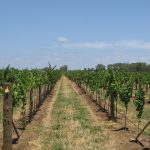
By Amanda Slater (originally posted to Flickr as Barossa Valley. SA) [CC-BY-SA-2.0 (http://creativecommons.org/licenses/by-sa/2.0)], via Wikimedia Commons

By Amanda Slater (originally posted to Flickr as Barossa Valley. SA) [CC-BY-SA-2.0 (http://creativecommons.org/licenses/by-sa/2.0)], via Wikimedia Commons

The author of the study presented today (White 2013) claims that there are several issues with the conclusions that Webb et al (2012) came up with.  First, he claimed that the data Webb et al (2012) used was for areas of land around 2500 hectares, whereas the vineyards they were analyzing were significantly smaller at 0.2 to 16 hectares.  The “behavior” of any given piece of land can be radically different even at relatively close distances.  Assuming the environmental information ascertained from a 2500 hectare plot is similar to a random tiny vineyard of no more than 16 hectares in size could be dangerously inaccurate, resulting in missed data or other important hydrological and geographical information unique to that particular vineyard or area.

White (2013) also noted that the soil data used by Webb et al (2012) was for the entire continent of Australia and not for any one particular vineyard site.  Again, similar to the concept described above, the soil in one particular area may be radically different from the soil in another, thus using the average for an entire continent may lead to inaccurate results.

Next, White (2013) noted that the water data used by Webb et al (2012) did not include data from regions by which some of the study vineyards were located.  This may have resulted in some loss of data and loss of result accuracy.

Finally, the last beef that White (2013) had with the study by Webb et al (2012) was that they only used growing season rainfall totals, whereas White argued that the more appropriate variable would be the annual rainfall total.  Just because the vines are dormant in the winter does not mean that the rainfall occurring at that time has no influence on the growth and development of the vine the following spring and summer.

Focusing on Soil Dryness

One of the claims Webb et al (2012) made is that earlier ripening could be due to increased soil dryness.  As a result of the aforementioned flaws in the study design, White (2013) sought to examine this claim further, to either confirm or refute the hypothesis based on more accurate data.

Soil moisture can be simply defined as the balance “between rainfall and actual evapotranspiration, with a variable small surplus in winter going to drainage” (White, 2013).  In other words, the soil will be moist or dry depending upon how much rain it got, plus the amount of moisture that is lost through evapotranspiration (think moisture lost due to heat to the atmosphere) with a small amount draining into the water table far below the surface.  As air temperatures increase, potential evapotranspiration increases.  In other words, as air temperature increases, more water is lost from the plant to the atmosphere.

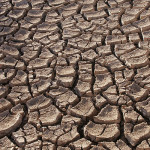
By Tomas Castelazo (Own work) [GFDL (http://www.gnu.org/copyleft/fdl.html) or CC-BY-3.0 (http://creativecommons.org/licenses/by/3.0)], via Wikimedia Commons

By Tomas Castelazo (Own work) [GFDL (http://www.gnu.org/copyleft/fdl.html) or CC-BY-3.0 (http://creativecommons.org/licenses/by/3.0)], via Wikimedia Commons

It is important to note that as temperatures and carbon dioxide increase, plants have a mechanism to conserve their water by closing their stomatal pours on the leaves.  By closing the stomata, the amount of water that is lost by the plant to the atmosphere decreases and remains within the plant and within the soil around the plant for survival.

So in reality, as White (2013) noted, for most vegetation in areas that are known to have low rainfall or suffer from near drought-like conditions, the decrease in water loss by the plant is directly affected by increased temperatures and increased carbon dioxide, thus counteracting the potential loss of water to the atmosphere had these stomatal closing mechanisms not been in place.  Hydrological research also found that catchment runoff (i.e. runoff from the higher elevations to the lower elevations)  increases with increasing carbon dioxide, thus supporting the idea that as temperatures and carbon dioxide increase, water is not lost into the atmosphere but is in fact retained in the plant and in the soil around the plant.

Due to the results of this research in plant physiology and catchment hydrology as mentioned just previously, White (2013) concluded that annual rainfall may be a good surrogate for soil moisture when the measurements of soil moisture are not readily available.  The overall goal of the study was to determine if trends in annual rainfall confirmed or refuted the theory that soil drying has an effect on earlier ripening in grapes based on the conclusions made by Webb et al (2012).

Briefly, the annual rainfall data and the grape ripening data from 5 different grape growing regions in Australia and over an 11 year moving average were analyzed using a linear mathematical model.

Conclusions

The results of the study found that 3 out of 5 grape growing regions showed positive annual rainfall trends (i.e. increased annual rainfall over time), while 2 out of 5 regions showed negative annual rainfall trends (i.e. decreased annual rainfall over time).  Only one of each was statistically significant.  According to White (2013) the model results are consistent with the data collected from those same regions in Australia during those same time periods.

Since there was a significant increase in annual rainfall during this 11 year period, White (2013) said it was not possible that soil drying would be contributing to the early ripening found at vineyards throughout the region.  In fact, if anything, the soil was getting wetter while the grapes were ripening earlier!

At the site that did see a significant decrease in annual rainfall, there was actually no change in grape ripening found in previous studies.  So, if Webb et al (2012) were correct in their assumption, this site should have seen either no change in annual rainfall plus no change in ripening date, or a decrease in rainfall plus an earlier ripening date.  Since neither of these scenarios played out, White (2013) ascertained that soil dryness was not contributing to earlier ripening in the grapes of Australia.

Based on these results, White (2013) expressed confidence that soil dryness did not influence the date of ripening for grape varieties in Australia.  In fact, it is likely that there are other factors involved that are significantly affecting this date, with the more likely culprits, according to White (2013), being vineyard management practices and increased air temperatures.  According to White (2013), vineyard management practices had changed around this time period, which is something that should be significantly considered as a major player in earlier grape ripening.

Personally, I don’t lay the blame on any one factor in particular.  I think many different factors act in concert to speed up the ripening process of these grapes, and thereby more complex mathematical models taking more of these factors into consideration should be tested.

I’d love to hear what you all think!  Please feel free to leave your comments!

Source: White, R.E. 2013. Has soil drying contributed to earlier grape ripening in wine regions of southern Australia? Australian Journal of Grape and Wine Research 19 (1): 123-127.

The Effect of Long-Term Organic Compost Treatment On Soil and Grape Quality

Composting has been shown to increase soil quality by increasing organic matter and altering concentrations of nitrogen and phosphorous, as well as changing bulk density, porosity, and water holding capacity.  These changes could be beneficial for soil conservation, particularly in soils that are degraded or damaged and prone to erosion.  Not only is composting beneficial for the soil, but the changes to the soil could also be very beneficial for those plants and animals/insects growing in it.

http://www.rodale.com/files/images/compost.jpg

In terms of wine, it is been well documented that soil characteristics play a role in the quality of the wine produced from the grapes growing in that soil.  Though the chemical composition of grapes is well known, very few studies have examined the effects of composting on this composition.  Therefore, the goal of the short study presented today was to examine the long-term effects of composting on the yield and quality of Chardonnay grapes grown in a Tuscan vineyard.

Methods

The experimental vineyard was located in Cesa (Italy) inside the Centro Sperimentale per l’Agricoltura e l’Innovazione – ARISA Toscana.  The climate is Mediterranean (dry subhumid) with an annual rainfall of 550mm.  Autumn is prone to heavy rainfall events, which can cause problems with soil erosion and soil nutrient loss.  The experimental vineyard belonged to the DOC region of Bianco Vergine di Valdichiana, with a slight slope of 2.5% and a NE exposure.  Soil type was a loamy soil rich in alluvial sediments with limited water reserve.

The grapes used for this experiment were Chardonnay (Entav-Inra 95 clone) vines that were grafted on SO4 in 1996 and cordon trained with a density of 2700 plants/ha.  Vineyard management practices included maintaining soil covered by grass between rows.  In 2001, the vineyard was split into three experimental plots and treated with different fertilization types.  Treatments were applied with the following:

  •         Treatment A: Control treatment with chemical fertilization (50kg N/hectare/year, 30kg P/hectare/year, 70kg K/hectare/year)
  •        Treatment B: Organic compost treatment with 15tons/hectare/year applied.
  •       Treatment C: Organic compost plus chemical fertilizer treatment with 15tons/hectare/year applied for the compost, and 25kg N/hectare/year, 15kg P/hectare/year, and 35kg K/hectare/year applied for the chemical fertilizers.

Compost was applied as mulch over inter-rows in the experimental plots.  The organic compost was derived mainly from source separated organic urban waste that was selectively collected.

For all treatments, topsoil samples (0.3m depth) were collected twice (N = 5 per treatment), at the beginning and end of the experiment and before the application of compost/fertilizers.  Composite soil samples were collected by combining two 60mm diameter soil auger cores that were taken in the middle of the inter-row.  Soil physiochemical parameters were measured on all soil samples.

Leaf area was calculated for all treatment plots.  Leaves were removed from half of a plant canopy (three plants per treatment) at veraison, and the following were measured three times throughout the season (May, July, and September): SPAD index, Net CO2 assimilation, and stomatal conductance.

Three grape clusters from each experimental sample vines were randomly collected and weighed.  For the berries, the following were measured: soluble solids concentration (oBrix), titratable acidity, pH, malic acid, and tartaric acid. 

Results

  •       Long-term use of compost to the vineyard (alone or with fertilizers) significantly (and positively) affected soil parameters.

o   There was a slight alkalinization of the soil.

o   There was a significant increase in organic matter in the soil with compost treatment.

§  From 2001 to 2009, organic matter increased 3.5x with the compost treatment, and 2.5x with the compost plus chemical fertilizer treatment.

§  At the end of the entire experiment, soil treated with compost alone had an organic matter content 2.5x higher than the soil treated with the chemical fertilizers alone.

o   There was the same trend for organic carbon content as organic matter (increase with compost treatment).

o   There was a significant increase in total nitrogen content with the compost treatment alone.

§  Total nitrogen was 2x higher in compost only soil compared to chemical fertilizer only soil.

o   Ammonium concentrations significantly increased in the compost treatment, while nitrate concentrations were significantly lower.

  •       Application of compost led to an increase in soil nitrogen, with a mineralizable and stable nitrogen pool and a decrease in soil nitrate levels compared to the chemical fertilizer treatments.
  •        Compost treatment did not significantly affect Chardonnay grapevine growth.

o   Leaf area values were nearly the same for all treatments.

o   There were no significant differences in leaf gas exchange parameters (i.e. net CO2 assimilation, stomatal conductance, and SPAD index).

§  Since CO2 assimilation and stomatal conductance are linked to photosynthesis, these results indicate that compost treatment did not affect photosynthetic performance of the grapevines.

§  There were significant decreases in CO2 assimilation and stomatal conductance at the end of the season, compared to earlier measurements (the same for all treatments), as well as a peak in SPAD index levels.

·         This result is due to the senescence of leaves and does not affect quantity/quality of the grapes.

o   Compost treatment did not have a significant influence on vine growth, nor were there differences between treatments in regards to plant physiological characteristics (CO2 assimilation, stomatal conductance, and SPAD index).

  •       Compost treatment gave varied results over time, depending upon the year/vintage.

o   The number of clusters per plant and the average berry weight were not affected by compost treatment and were not significantly different than the chemical fertilizer control EXCEPT in 2002, 2005, and 2006.

o   Cluster weight was significantly affected by compost treatment EXCEPT in 2003, 2004, and 2005 (no differences detected for those three years).

o   Compost treatment led to a higher production in 2002, 2005, 2007, and 2008 compared to the control chemical fertilizer treatment and a lower production in 2001 and 2006 compared to the control.

o   On average throughout the course of the entire experiment, there were minimal differences among treatments when considering grape production levels.

  •       The pH and oBrix of the grapes was not affected by compost treatment, except in 2006 when oBrix were higher in the compost treatment compared with the control.

Conclusions

Based on the results of this study, the benefits of organic composting are seen primarily in the soil itself, and not as much in the quality/quantity of the grapes produced from the vines planted therein.  The long-term treatment of organic compost to a vineyard can be beneficial for soil characteristics such as organic matter and nitrate content.   Though some years showed significant effects on grape quality, the average for the long-term treatment showed no differences in grape quality with compost-treated soils versus chemical fertilizer-treated soils.

One thing I would have liked to see is how the chemical composition of the grapes changed with organic compost treatment, and not simply berry weight.  Perhaps production remains the same regardless of treatment type, but does the chemical profile of the grape remain the same or change?  How would this affect the resulting wine?

Even though, according to this study, grape quality/quantity remained unchanged with the organic compost treatment, the sheer benefit to the soil itself is reason enough to justify potentially employing the treatment in routine viticultural management practices.  Of course, more work would need to be done.

I’d love to hear what you all think about this study/topic.  Feel free to leave your comments below (no html tags, please).

Source: Mugnai, S., Masi, E., Azzarello, E., and Mancuso, S. 2012. Influence of Long-Term Application of Green Waste Compost on Soil Characteristics and Growth, Yield and Quality of Grape (Vitis vinifera L.). Compost Science and Utilization 20(1): 29-33.
I am not a health professional, nor do I pretend to be. Please consult your doctor before altering your alcohol consumption habits. Do not consume alcohol if you are under the age of 21. Do not drink and drive. Enjoy responsibly!

Organic Viticulture Practices Lead to Increased Soil Quality Over Time Compared to Conventional Farming Methods

Organic farming has become increasing popular in all areas of agriculture, including the field of viticulture.  Between 2001 and 2008, the area of organically farm vineyards in France increased by 110%.  In organic viticulture, organic fertilizers and some non-synthetic pesticides are allowed, whereas in conventional farming, manufactured inorganic fertilizers and chemical/synthetic pesticides are frequently used.  In lieu of pesticides (though sometimes non-synthetic pesticides are used), organic farming utilizes tillage or grass-cutting for weed management.  It is because of these and some other differences, it is claimed that organic farming is better for the environment by reducing the intensity of disturbance on the soil.

http://www.kingestate.com/images/domaine/organic/organic.jpg

Organic farming aims to increase soil biological function by improving upon its physical, chemical, and biological properties; including water circulation and aeration, availability of nutrients, and biodiversity.  By improving upon these properties, soil quality is thus enhanced.  In viticulture, the following parameters are measured when determining soil quality: soil bulk density, pH, nutrient availability, organic matter content, and soil water holding capacity.  Soil scientists and viticulturists consider soil microorganisms to be very important indicators of soil health, as these microorganisms form very close relationships with their surroundings.

Microorganisms in the soil are important for many reasons, including the decomposition of organic matter, humus formation, nutrient cycling, and symbiotic relationships with other organisms in the soil.  Macroorganisms, such as nematodes and earthworms, are also important indicators of soil health, since they are present in all types of soil and frequently alter the physical properties of it, which indicates the fate of the organic matter of the soil. 

To date, there has been very little research on organic viticulture and its’ effects on soil function and health.  The study presented today aimed to measure the long-term effects of organic viticulture by physical and chemical indicators, as well as the availability of micronutrients, contaminants (such as copper), and bioindicators (such as nematodes and earthworms).

Methods

The experiment was conducted in May of 2009 in Cruscades (South of France, in the Languedoc-Roussillon region).  There were no slopes in any of the plots.  The soil was silt-clay (42 +/-2% silt, 36 +/-1% clay, 22 +/-2% sand).  The soil was calcerous, with a pH of 8.3.  The soil-water holding capacity was 20.6+/-0.5%(w/w).

The experiment was conducted on a 24 commercial wine grape vineyard with a mean area of 1.5ha.  Grape varieties included Cabernet Sauvignon, Carignan N, Chardonnay, Cinsault, Grenache N, Merlot, Mourvèdre, Pinot N, and Syrah.  The year of plantation ranged from 1932 to 2003.  Plantation density was between 3300 and 5000 vines per hectare.  Ten plots were managed conventionally, and all other were managed organically.

Five of the plots were managed organically since 2001 and certified in 2004, four plots were managed organically since 1997, and 5 plots were managed organically since 1991.  The conventional management practices were identical for each treatment before the switch to organic practices, and the organic practices were identical after the switch.  Four subplots per plot were sampled (5 vines per 4 inter-rows).  In total, there were 96 subplots sampled.

Sampling occurred in the spring, a few days after mild rain events.  For the earthworm sampling (between the 4th and 15th of May), soil water content was 14.7+/-0.3% (w/w).  For the soil sampling (between the 22nd and 28th of May), soil water content was 11.2+/-0.2% (w/w).

Soil and earthworms were sampled in the 0-15cm of topsoil of the center of the inter-row, with one soil and one earthworm sample per subplot.  Each soil sample contained four subsamples.  Soil samples were sieved at 1cm before biological analysis, and at 2mm before chemical and physical analysis.  Soil density was measured using the cylinder method.  For earthworm sampling, monoliths of soil of 45cmx45cm at 15cm depth were taken per subplot.  Earthworms were sampled using the hand-sorting method.

The following were measured for the physical and chemical analysis: bulk density, total organic carbon (TOC), total nitrogen (N), effective cation exchange capacity (CEC), phosphorous (P), potassium (K), and copper (Cu).  For the biological analysis, soil microbial biomass carbon (MB) was measured.  An average of 150 nematodes per sample were counted and identified and grouped into different trophic levels (plant feeders, bacterial feeders, fungal feeders, omnivores, and predators).  Earthworms were counted and weighed, and identified as adults or juveniles, and grouped into two different ecological levels (endogeics and anecics).

Results

Physical and Chemical

  •        Organic plots trended toward higher bulk density than conventional plots.

o   Only organically managed plots from 1997 had bulk densities significantly higher than conventional plots.

  •       TOC content significantly increased from the conventional plots to the organically managed plots from 1991 (32% increase).

o   There was a big increase between organically managed plots from 2001 and organically managed plots from 1997 (15% increase).

  •       Conventional plots and organically managed plots from 2001 had significantly lower N content than organically managed plots from 1997 and 1991.
  •        There was a large decrease in available P content between the conventional plots and organically managed plots from 2001 (58% decrease).
  •       There was an increase in available P content between organically managed plots from 2001 to 1997 (43% increase) and from 1997 to 1991 (65% increase).
  •       There was a significant increase in available K content from the conventional plots to the organically managed plots from 1991 (81% increase).
  •       There were no significant differences in Cu content in any of the plots; however the highest values of Cu were measured in the organically managed plots.
  •        Highest values of effective CEC (which were significant compared to other plots) were found in organically managed plots from 2001 and 1997.

Biological

  •       Organically managed plots from 1997 and 1991 had significantly higher microbial biomass carbon than conventional plots and organically managed plots from 2001 (34% higher).
  •        Nematode density was lowest for the conventional plots.

o   Nematode density was 45% higher in the organically managed plots from 2001 than the conventional plots.

o   Nematode density was 79% higher in organically managed plots from 1991 than conventional plots.

o   Plant-feeder density was 126% higher and 187% higher in organically managed plots from 2001 and 1991, respectively, compared to conventional plots.

o   There were no significant differences in any of the plots in regards to bacterial-feeder densities, though the lowest density was found in the conventional plots.

o   Fungal-feeder density increased from the conventional plots to the organically managed plots from 1991.

§  Fungal-feeder was significantly higher in organically managed plots from 2001 (43% higher) and from 1991 (97% higher) compared to conventional plots.

o   Combined densities of omnivores and predators was significantly higher in organically managed plots from 2001 (44% higher) than all other plots.

  •       The highest biomass of earthworms was found in the conventional plots.

Authors’ Interpretations of Results

According to the authors of this study, they found no significant differences before 11 years of organic farming for TOC (total organic carbon), N (total nitrogen), K (available potassium), soil microbial biomass, and fungal-feeding nematode density, though other soil quality indicators such as available phosphorous (P) content rapidly decreases after the conversion from conventional to organic methods.  The authors explained that some research attribute this result to an exhaustion of available phosphorus that was built up from conventional fertilizers rich in phosphorous.  Afterwards, they noted an increase in P and K over time with organic methods, which could be from microorganisms releasing organic acids that could convert to available P and K.  Since the authors found an increase in soil microbial biomass over 7 years of organic farming, this could explain why P and K were found to increase.

In organic farming, Cu is frequently used as an approved pesticide for downy mildew.  In this study, the authors did not find any differences in Cu concentrations between the conventional plots and the organic plots, which was not explained other than the collection method may not have been suitable to detect any differences. 

Organic farming also employs the use of more grass cover and other organic matter, which has frequently been shown to increase the population of earthworms in the soil.  However, in this experiment, the authors actually found a decrease in the number of earthworms in the soil when comparing organically farmed plots to conventionally farmed plots.  The authors attributed this discrepancy to the hand-collection method, as the larger earthworms were able to escape collection and retreat into deeper soil and thus not counted.  This result could also be attributed to the fact that organic farming methods often employ more tillage, which studies have shown to decrease the macroorganism populations in the soil.  Tillage results in greater soil compaction, due to the weight of the machinery used more often on the soil than in conventional practices.  This soil compaction results in lower populations of macroorganisms, and may partially explain the results found here.

In regards to soil organic matter, it is a very important component of the soil, and is often considered the most important aspect of soil management in farming.  This experiment showed that organically managed plots had higher levels of total organic carbon, which indicates high soil quality.  This result was partially attributed to the abundance of grass cover in the organically managed plots, which helped increase the overall total organic carbon levels.  This total organic carbon acts as a nutrient resource for microorganisms, which stimulates microbial growth and increases soil health and quality overall.

In conclusion, the authors of this study showed that there are clear differences in soil quality between conventional and organically managed vineyards over time (in a Mediterranean climate such as Southern France).  During the transition period between conventional and organically managed plots, there is a decrease in available resources, due to exhaustion of the excess nutrients that were created from synthetic fertilizers used under conventional farming practices.  Once the microbial community in the soil starts producing their own soil nutrients via metabolism byproducts and increased grass cover increases soil carbon supplies, microbial growth is stimulated and increases the quality of the soil overall.

Final Thoughts and blabberings….

One thing this study did not look at was how these soil differences affected the growth of the vines and quality of wines produced from the grapes of those vines.  That complementary experiment is key to tie in what is known about soil quality under organic practices and the resulting effect on the wine produced from organically grown grapes.  Since other studies have looked at this topic, it is possible to make inferences; however, there are almost always methodological differences between experiments that make interpretations of results more difficult.  I would like to have seen these authors take this experiment that one step further, and provide chemical analysis of the resulting grapes and finished wine from the vines grown under the conventional and organically managed plots (though technically, the experiment served its’ sole purpose justly).

What do you all think of this study and the researchers’ interpretation of the results?  Do you have any of your own experiences to share?  Please feel free to leave your comments below.

Source: Coll, P., Le Cadre, E., Blanchart, E., Hinsinger, P., and C. Villenave. 2011. Organic viticulture and soil quality: A long-term study in Southern France. Applied Soil Ecology 50: 37-44.

DOI: 10.1016/j.apsoil.2011.07.013
I am not a health professional, nor do I pretend to be. Please consult your doctor before altering your alcohol consumption habits. Do not consume alcohol if you are under the age of 21. Do not drink and drive. Enjoy responsibly!