Tag Archives: wine research

Wine Literature Review Lightning Round: 5th Edition


—————————————————————————————————-

Welcome to The Academic Wino! If you are new here, please read the “About Me” page to find out more about myself and the blog. If you would like to receive free updates on articles like this by email, then sign up here or you can subscribe to the RSS feed. Also, check us out on TwitterFacebookGoogle+, and or Pinterest. Thanks for visiting!

—————————————————————————————————-

There’s no way one single person can possibly review every single piece of peer reviewed literature related to wine that is published every day. This series presents multiple new papers (within the past year or two) in one post by briefly summarizing the research and linking to the source in order for you to pursue further if you’re interested. If there is enough reader interest, I can review any of the papers introduced to you in this post in a more critical assessment.

VITICULTURE/ENOLOGY

“Changes in sour rotten grape berry microbiota during ripening and wine fermentation”. This article, published in 2012, aimed to determine the community structures of yeasts, lactic acid bacteria, and acetic acid bacteria in healthy grapes and grapes afflicted with sour rot, and how the winemaking process does or does not change these populations. Using healthy and sour

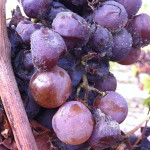
NOBEL ROT (Not sour rot): Photo by davitydave (Flickr: IMG_0556.JPG) [CC-BY-2.0 (http://creativecommons.org/licenses/by/2.0)], via Wikimedia Commons

NOBEL ROT (Not sour rot): Photo by davitydave (Flickr: IMG_0556.JPG) [CC-BY-2.0 (http://creativecommons.org/licenses/by/2.0)], via Wikimedia Commons

rotten Trincadeira grapes from an experimental vineyard in Portugal, the researchers determined the microbiological composition of the grapes as well as the wines created from these grapes. Wines were made with either 100% healthy grapes, or with 70% healthy grapes plus 30% sour rotten grapes.

Results showed that sour rotten grapes showed significant increases in their populations and species diversity of yeasts and acetic acid bacteria counts, while lactic acid bacteria populations were low for both sour rotten grapes and healthy grapes. The bacterial species Acetobacter orleaniensis and Acetobacter syzygii were present only in sour rotten grapes. The yeast species Dekkera bruxellensis and Oenococcus oeni were found only after primary fermentation in all wines, and after malolactic fermentation, racking, and SO2 addition, the only yeast species found were Trigonopsis cantarellii and Saccharomyces cerevisiae (in all wines). The concluding results were that there are significant microbiotic changes in grapes that are afflicted with sour rot, with potential implications for early detection in the field for treatment or sorting purposes prior to winemaking.

Source: Barata, A., Malfeito-Ferreira, M., and Loureiro, V. 2012. Changes in sour rotten grape berry microbiota during ripening and wine fermentation. International Journal of Food Microbiology 154: 152-161.

CONSUMER PREFERENCES

“What matters to consumers of organic wine?”. This article, published in 2012, aimed to determine how important the distinction of “organic” of a wine is to consumers, and what other attributes of the wine are important to those that consume organic wine. To examine this issue, surveys were sent out to around 400 Swiss wine drinkers, which asked questions related to the judgment of different wine labels, how the image and make-up of an organic wine label influences their purchase behavior, and questions related to demographics of each survey participant.

The results showed that the most important attribute for these Swiss wine drinkers was price and country of origin (they preferred French over Swiss wine). The “organic” attribute was less important than price and country of origin; however, it was more important than the color of the wine. Those participants that considered themselves healthy, as well as urban residents and female consumers were more likely to consume organic wine than their other fellow participants. From these results, the authors suggest the Swiss wine market should focus their advertising on the healthy image of wine, as well as direct the marketing toward urban women in order to maximize likelihood of purchase for organic (and other) wines.

Source: Mann, S., Ferjani, A., and Reissig, L. 2012. What matters to consumers of organic wine? British Food Journal 114(2): 272-284.

HEALTH

“The antimicrobial effect of wine on Bacillus cereus in simulated gastro-intestinal conditions”. This article, published in 2012, aimed to determine if wine could protect against Bacillus cereus infection (i.e. results in food poisoning) in the human digestive system, using a simulated experimental design. Survival of Bacillus cereus when exposed to wine was first testing in inoculated TSB media (i.e. not simulated human conditions). Next, survival of B. cereus when exposed to wine was tested in simulated human digestive system conditions, by creating an environment very similar in chemistry to the inside of the human digestive system.

Results from the first test showed that B. cereus spores were resistant to wine exposure, however, B. cereus cells in the vegetative state were highly sensitive to wine and were significantly reduced when exposed to wine. The authors broke down the components of the wine to determine which components were responsible for this decrease in vegetative B. cereus cells, and found that wine

Photo by Flickr user Evil Erin

Photo by Flickr user Evil Erin

organic acids reduced B. cereus vegetative cells, which wine phenolic compounds had no effect on B. cereus vegetative cells. Similar results were found in the human digestive system simulation experiment, with wine (total wine, not just wine parts) significantly reducing B. cereus vegetative cells and somewhat reducing B. cereus spores. The authors concluded that wine therefore may have a protective/antimicrobial effect against the food poisoning causing B. cereus, and that it is the organic acids in the wine (and not the polyphenols) that seem to be providing that protection.

Source: Vaz, M., Hogg, T., and Couto, J. 2012. The antimicrobial effect of wine on Bacillus cereus in simulated gastro-intestinal conditions. Food Control 28: 230-236.

Wine Science Forum: Lessons in Oxygen Management from Industry Leaders


—————————————————————————————————-

Welcome to The Academic Wino! If you are new here, please read the “About Me” page to find out more about myself and the blog. If you would like to receive free updates on articles like this by email, then sign up here or you can subscribe to the RSS feed. Also, check us out on Twitter, Facebook, Google+, and or Pinterest. Thanks for visiting!

—————————————————————————————————-

Earlier this week, I had the pleasure of attending the first ever Wine Science Forum hosted by Nomacorc, a world leader in alternative wine bottle closure systems. The goal of this forum was to bridge the gap between what research has found regarding oxygen management in wine and what is currently in practice at wineries all over the globe. Roughly 200 people attended this event, with an estimated 80-90% of those attendees being winemakers.

Photo source: http://www.winescienceforum.com/

Photo source: http://www.winescienceforum.com/

The forum kicked off with an introduction by Malcolm Thompson, Vice President of Marketing & Innovation at Nomacorc, which essentially stressed why oxygen management is important in winemaking and how it is very important to manage oxygen exposure every step of the way. Mr. Thompson showed several figures on how oxygen management is basically “out of control” when considered on a global scale, and that there is an extreme level of variability in the industry in regards to how careful wineries are in protecting their wine against overexposure to oxygen. Specifically, Mr. Thompson focused on the variability in oxygen exposure to wine during the bottling process, when it’s essentially too late to “fix”.

Mr. Thompson also shared some statistics with the audience in regards to how common wine faults are in wines (and not just the cheap stuff!) and how much of that is related to the type of closure that was used. Specifically, since 2007, out of all wines entered into the London International Wine Challenge, 6.5% of the wines had some sort of fault, with about 3% of those succumbing to cork taint and another 3% showing reductive character (often occurs with screw caps). Mr. Thompson stressed how these numbers are simply too high, and that we, as an industry, must do a better job at reducing the frequency of faults in wine, and that proper oxygen management will help get that done.

Some may question whether or not most consumers can even taste these faults, or if it is just wine experts that have the palate to notice these quality reducers. Mr. Thompson provided us with results from a couple of studies examining this very question, the first study with a focus on Australian consumers (presumably more adept at tasting wine) and the second study with a focus on Chinese consumers (presumably more novice at tasting wine). It was clear from the study that both Australian and Chinese consumers could taste faults in the wine, and strongly preferred those wines that did not possess any of these faulty characters. These results helped provide support for Mr. Thompsons’ call to wineries to do better in reducing wine faults, particularly when it comes to oxygen management.

The rest of the Wine Science Forum was broken down into highly technical discussion related to specific subtopics in oxygen management and were led by speakers who have dedicated their careers to studying various aspects of winemaking, all specific tie-ins to oxygen management in wine and how oxygen management (or lack thereof) can affect the chemistry and stability of a wine, as well as its shelf life and overall quality.

In later posts, I will go into specific details regarding each and every one of these talks, but for now, I will simply introduce the speaker and the discussion topic, and promise more detailed follow-ups in the coming days and weeks.

Specific topics included:

Speaker: Dr. Maurizio Ugliano; Enological Research Manager at Nomacorc

Talk: “Oxygen and its influence on wine aroma development in-bottle. Facts and fiction around reduction, oxidation, minerality, and delivering to consumers the best possible wine”

Speaker: Dr. Andrew Waterhouse; Professor of Enology in the Department of Viticulture and Enology at the University of California at Davis

Talk: “The oxidation cascade in wine: How far are we from understanding and predicting SO2 loss and wine oxidation based on compositional data?”

Speaker: Dr. James Kennedy; Professor & Chair of the Department of Viticulture and Enology and Director of the Viticulture and Enology Research Center at Fresno State University

Talk: “Red wine color management: The influence of oxygen on pigments development during maturation and post-bottling phases”.

Speaker: Dr. Stéphane Vidal; Global Director of Enology at Nomacorc

Talk: “Wine and oxygen: Fundamental knowledge and the application in wine quality management” (also included a NomasenseTM demonstration)

Overall, I thought this was a very interesting and highly educational event that was successfully delivered to its target audience. Each of the speakers did a great job explaining their specific topics and research, and made convincing arguments for wineries to reevaluate their oxygen management techniques and improve wherever they see they are lacking. At the end of the talks, there was ample opportunity for the audience to ask questions, which was certainly taken advantage of by the many winemakers in attendance.

The event was well received among the audience members, and in my opinion, I think could be successful as a recurring forum. I believe it’s important for wineries to stay informed in regards to current research related to wine, and this kind of event would be a great resource for winemakers to improve upon their craft.

Please stay tuned for future posts, as I will be elaborating on each of the talks listed above in separate posts in the near future.

Did you attend this event? What were your thoughts? What other topics would you like to see covered next time? Please feel free to comment!

Disclaimer: I want to thank Nomacorc for giving me the opportunity to attend this event, and was to stress to all my readers that any opinions expressed in this post are completely my own and not influenced by Nomacorc or any other organization.

Wine Literature Review Lightning Round: 1st Edition

—————————————————————————————————-

Welcome to The Academic Wino!  If you are new here, please read the “About Me” page to find out more about myself and the blog. If you would like to receive free updates on articles like this by email, then sign up here or you can subscribe to the RSS feed. Also, check us out on Twitter, Facebook, Google+, and or Pinterest. Thanks for visiting!

—————————————————————————————————-

There’s no way one single person (even if that person is The Academic Wino!) can possibly review every single piece of peer reviewed literature related to wine that is published every day.  This new series presents a few new papers (within the past year) in one post by briefly summarizing the research and linking to the source in order for you to pursue further if you’re interested.  If there is enough interest, be it through comments or emails, I can review any of the papers introduced to you in this post in a more critical assessment.  Enjoy!

HEALTH:

“Resveratrol metabolites have an antiproliferative effect on intestinal epithelial cancer cells”.  This article, published in Food Chemistry in 2012, examined three metabolites (i.e. metabolized version of) of resveratrol on the inhibition of cell growth and cell death using a human cancer cell line.  By introducing the resveratrol to petri dishes of human colon cancer cells, the authors found that all three metabolized forms of resveratrol inhibited cell growth in the cancer cells, and increased cell death in cancer cells.  The authors also confirmed that

By Unknown photographer [Public domain], via Wikimedia Commons

By Unknown photographer [Public domain], via Wikimedia Commons

the antioxidant capacity of the metabolized versions of the resveratrol was similar to unaltered resveratrol, indicating that even after the resveratrol has been metabolized by the body; it can still be effective against the spread and survival of human cancer cells.  The authors concluded that these results indicate resveratrol could be an effective treatment against colon cancer.

Source: Storniolo, C.E., and Moreno, J.J. 2012. Resveratrol metabolites have an antiproliferative effect on intestinal epithelial cancer cells. Food Chemistry 134: 1385-1391.

ENOLOGY / WINE MAKING:

“Effect of commercial mannoproteins on wine colour and tannins stability”.  This article, published in Food Chemistry (this journal has a ton of great wine articles, by the way) in 2012, examined the effects of commercial mannoproteins (used for preventing tartrate precipitation in wine) on the color and tannin stability of red wine.  Using two Touriga National wines, one

By CDC [Public domain], via Wikimedia Commons

By CDC [Public domain], via Wikimedia Commons

Alfrocheiro wine, and one Aragonês wine, the authors found that commercial mannoproteins had no influence on wine color stability.  On the other hand, they found that commercial mannoproteins may have a stabilizing effect on tannin evolution, specifically a delay in the polymerization of tannins in red wine.  The authors concluded that these results could help winemakers to utilize commercial mannoproteins for tannin stabilization, but perhaps not for color stabilization.

Source: Rodrigues, A., Ricardo-Da-Silva, J.M., Lucas, C., and Laureano, O. 2012. Effect of commercial mannoproteins on wine colour and tannins stability. Food Chemistry 131: 907-914.


WINE BUSINESS

“Let’s Talk About Wine: Does Twitter Have Value?”.  This article, published in the International Journal of Wine Business Research in 2012, examined exactly how wine was being discussed on the social media platform Twitter, and whether or not Twitter could be used to create economic value for wine investors.  This research was exploratory nature, and analyzed 1500 tweets about wine written in English.  The results of the study showed that Twitter had a positive influence on “soft value” for the wine business, but results for an influence of Twitter on “hard value” for the wine business was inconclusive.

In other words, Twitter appears to have a positive effect on the brand-building and brand-awareness for wine and wineries, by the simple mechanism of individuals tweeting about how they liked (or disliked) a particular wine or how they just finished visiting one of their favorite wineries, just to name a couple of examples (“soft value”).  “Hard value”, on the other hand, relates to actual wine sales as a direct result of someone tweeting about a particular wine, which

By EnoW (File:Twitter Logo.svg) [CC0], via Wikimedia Commons

By EnoW (File:Twitter Logo.svg) [CC0], via Wikimedia Commons

according to this study was found to be inconclusive.  The authors concluded that there is a lot of room for improvement in the Twitter realm, and the results show that wineries and the wine business in general would benefit (either directly or indirectly) through Twitter campaigns, be it through personal accounts, or even through the marketing campaigns on the company Twitter account.

Source: Wilson, D., and Quinton, S. 2012. Let’s Talk About Wine: Does Twitter Have Value?”.  International Journal of Wine Business Research 24(4): 271-286.