Tag Archives: grape pomace

Using Grape Pomace as a Additive to Rosé Wines to Improve Wine Quality and Stability


—————————————————————————————————-

Welcome to The Academic Wino!  If you are new here, please read the “About Me” page to find out more about myself and the blog. If you would like to receive free updates on articles like this by email, then sign up here or you can subscribe to the RSS feed. Also, check us out on TwitterFacebookGoogle+, and or Pinterest. Thanks for visiting!

—————————————————————————————————-

Recycling or reusing grape pomace (a.k.a. grape marc) is a topic that we’ve discussed many times on The Academic Wino. Back in September of last year, I introduced a paper which should that the addition of grape marc to wines prior to bottling may increase the quality of the finished wine by increasing total phenolic content as well as total anthocyanins. Today, I present to you research by the same authors examining the use of grape marc on the quality of Rosé wines (it’s Valentine’s Day, so think pink, right?).

As you’ve heard before if you’ve read any of my previous posts on the subject, grape pomace or grape marc is loaded with antioxidants, polyphenols, flavonoids and stilbenes (think: Resveratrol). Grape pomace has been applied already in many industries, including the health, clothing, construction, and

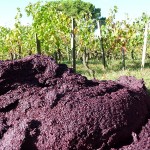
Photo by davity dave: http://upload.wikimedia.org/wikipedia/commons/thumb/3/33/Pomace_in_the_vineyard_after_pressing.jpg/800px-Pomace_in_the_vineyard_after_pressing.jpg

Photo by davity dave: http://upload.wikimedia.org/wikipedia/commons/thumb/3/33/Pomace_in_the_vineyard_after_pressing.jpg/800px-Pomace_in_the_vineyard_after_pressing.jpg

wine industries (to name just a few). It is important to note, that many of the applications studied have primarily been in research only, and the widespread use of grape pomace in the real world is still well below where it could be.

To examine the effect of grape pomace addition to rose wines, the authors collected grape marc from a local juice processing facility in Spain and further processed it by dehydrating it and then grinding it up into a fine powder. The dehydrated marc (50g/L) was then added to two different white wines: one young white of Airén and one oak barrel fermented white of Airén. Maceration took place over 3 days. In proper scientific methodology, these same wines were tested without the addition of the dehydrated grape marc to serve as controls. The finished rosé wines were then stored for either 1 or 3 months at 18oC, with the following then measured and analyzed: color, phenolic composition, and volatile composition.

Highlighted Results

• At time 0, the color intensity was the same for both grape marc treated and control rosé wines.
• Grape marc treatment wines had increased levels of anthocyanins, gallic acid, (+)-catechin, caffeic acid, (-)-epicatechin, coumaric acid, quercetin, and E-resveratrol.
• Dehydrated grape marc treatment resulted in increased concentrations of linalool (3x higher than its odor threshold), geranyl acetone, and β-ionone, all of which contribute to floral characteristics in rosé wines.
• Compared with control wines, rosé wines treated with dehydrated grape marc showed a reduction in E-nerolidol and isoamyl acetate.
• Compounds contributing to wood aromas, specifically whiskylactones, were not affected by the addition of dehydrated grape marc to rosé wines.
• Volatile compound composition remained stable in treated rosé wines after three months.
• Total polyphenols increased significantly in rosé wines treated with dehydrated grape marc compared with controls (5x greater, actually).
• Color in the rosé wines treated with dehydrated grape marc remained stable over the three month period.
o This preservation was attributed to the increase levels of antioxidants in the treated wines, thus resulting in the stabilization of anthocyanin content over time.

Conclusions

The results of this study showed, according to the authors, that dehydrated grape marc may have great potential for being used as an additive in wines. Particularly, adding dehydrated grape marc during the rosé winemaking process could help stabilize the color of rosé as it ages (at least through 3 months…) and also significantly increase the beneficial antioxidants and polyphenols present in the finished wine. According to the author, the increase in antioxidants as a result of the added dehydrated grape marc could lead to protection against early oxidation in rosé wines.

Overall, I think this study has very interesting and significant applications to winemaking. Using dehydrated grape marc in wine production (particularly rosé wine production) could improve color stability over time as well as improve the aromatic profile of the finished wine. Additionally, adding grape marc to wines

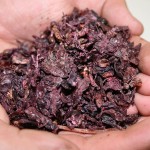
Photo by Designovum http://farm5.staticflickr.com/4031/4706139681_c9894d1b97.jpg

Photo by Designovum http://farm5.staticflickr.com/4031/4706139681_c9894d1b97.jpg

could significantly improve the overall “healthiness” of the wine by increasing the health-beneficial polyphenols and antioxidant compounds. However, one thing I would like to see is a sensory analysis of these wines that have been treated with dehydrated grape marc, to ensure that the compounds found in the wines are reflected in the aromatic and sensory characteristics of the finished wine.

I’d love to hear what you all think of this study and this topic. Please feel free to leave your comments!

Source: Pedroza, M.A., Carmona, M., Salinas, M.R., and Zalacain, A. 2011. Use of Dehydrated Waste Grape Skins as a Natural Additive for Producing Rose Wines: Study of Extraction Conditions and Evolution. Journal of Agricultural and Food Chemistry 59: 10976-10986.

Grape Stem Extracts: An Example of Utilizing Winery Waste for a More Sustainable Industry

In this age of changing climate, there is an ever present push to find more ways to be more environmentally friendly and sustainable in all industries and settings.  If you’re at all familiar with the content here on The Academic Wino, you’re probably already well aware of the fact that the wine industry is no different in regards to this quest for sustainability.  To be specific, there have been quite a large number of studies now at this point examining the utilization

Photo by heydrienne: http://farm1.staticflickr.com/107/259825037_fa80e1dd28.jpg

of wine industry waste into other functional products, instead of simply discarding the waste to wreak havoc on the environment.

Though there are certainly more studies than I have been able to present on this blog, here are some examples of what has been done so far in regards to utilizing wine industry waste:

As you can see from just the headlines of these posts, there have been many applications examined for wine industry waste in nearly every possible use imaginable.  Most research to date has focused primarily on the grape pomace (a.k.a grape marc), which is made up of the leftover skins and seeds of the grapes after pressing.  One major source of wine industry waste that has been examined very little is the grape stems.  Prior to pressing, during the sorting process, stems are separated from the grapes and discarded.  To date, very few studies have examined what, if any, nutritional value these stems have, and can they be utilized for other purposes instead of being discarded and adding to the significant environmental issues associated with industry waste.

The study present to you all today aimed to add to the small list of literature

Photo by quinn.anya: http://farm2.staticflickr.com/1201/1486163719_2113050d91.jpg

related to the utilization of grape stems by examining their antioxidant activity and the possible applications for their use as natural antioxidants for the betterment of human (or animal) health.


Methods

Grape stems were supplied by the Spanish winery, Antonio Nadal S.L., Mallorca.  Stems were collected from the Vitis vinifera grapes, Manto Negro (red) and Prensal Blanc (white).  Stems were collected during the destemming process and prior to grape pressing.

Stems were dried, ground, and stored at -20oC until ready for use.  Ground stems were prepared into extract using acetone and also ethanol (two separate extracts).  There were a total of 4 extracts tested: 1) red grape stems with acetone; 2) red grape stems with ethanol; 3) white grape stems with acetone; and 4) white grape stems with ethanol.

The following were measured and analyzed in stem extracts:  total polyphenols, flavanols, and antioxidant capacity.

Results

  • The author reports high polyphenolic concentrations in all grape stem extracts.
  • Total polyphenol concentrations were higher in red grape stem extracts than white grape stem extracts.
  • Grape stem extracts prepared with acetone had higher concentrations of total polyphenols than grape stem extracts prepared with ethanol.
  • Concentrations of flavanol were higher in red grape stem extracts than white grape stem extracts (same pattern as with total polyphenols).
  • Grape stem extracts prepared with acetone had higher concentrations of flavanols than grape stem extracts prepared with ethanol (same pattern as with total polyphenols).
  • Flavanols made up 70% of the total polyphenol content of the grape stem extracts.
  • The author reports high antioxidant capacities in all grape stem extracts, with the red grape stems extracts having higher antioxidant capacities than the white grape stem extracts.
  • Antioxidant activity was significantly correlated with total polyphenols and flavanols.

What does this all mean?

Overall, this study found that red grape stem extracts prepared in acetone have the higher levels of total polyphenols, flavanols, and antioxidant capacities than all other extracts.  The authors stated that all four extracts had high levels of these three things, though if one were to create a hierarchy of what is contains the highest to lowest levels (keeping in mind the low levels are still relatively high), it would be the following:  red grape stem extracts with acetone > red grape stem extracts with ethanol > white grape stem extracts with acetone > white grape stem extracts with ethanol.

This was a very simple study that showed straightforward results (i.e. none of their results contracted one another and were similar to those of other studies).  However, I would have liked to see them compare the grape stem extracts with

Photo by thisisbossi: http://farm4.staticflickr.com/3086/3203423692_30356dc38e.jpg

grape seed extracts, grape pomace extracts, grapes themselves, and finished wine.  The authors claim that the total polyphenol and flavanol levels as well as antioxidant capacities of all the grape stem extracts were high; however, they didn’t have any type of control to prove it.

I am guessing that they were comparing the levels they found in their grape stem extracts with the levels found in the literature, however, I know from experience that comparing your numbers directly with the numbers of another study may be problematic, as there are almost always differences in regards to methods or individual researcher techniques that may alter the results from study to study.  I would be more confident in the results had there been a control to which they were comparing.

Assuming the analysis is correct, it seems as though grape stems may be potentially useful as supplements benefitting human health, or potentially other applications that utilize products high in total polyphenols or antioxidant capacities.  By recycling the entire grape and not just the skins and seeds, the wine industry may come one step closer to being more sustainable and friendlier to the environment than ever before.

Source: Llobera, A. 2012. Study on the Antioxidant Activity of Grape Stems (Vitis vinifera). A Preliminary Assessment of Crude Extracts. Food and Nutrition Sciences 3: 500-504.