Tag Archives: grape vines

Climate Change-Induced Water Stress: How Leaf Position Affects Water Use Efficiency in the Grape Vine

—————————————————————————————————-

Welcome to The Academic Wino! If you are new here, please read the “About Me” page to find out more about myself and the blog. If you would like to receive free updates on articles like this by email, then sign up here or you can subscribe to the RSS feed. Also, check us out on Twitter, Facebook, Google+, and or Pinterest. Thanks for visiting!

—————————————————————————————————-

According to scientists, climate change will affect various parts of the world differently than one another. Specifically, in regards to the Mediterranean region (as well as many others), a decrease in annual precipitation is currently predicted, based on past data and future forecast models. As a result of this predicted change, there has been substantial interest in research related to water use efficiency in both viticulture and agriculture in general, as precipitation changes will likely bring changes to the sustainability and quality of crops, so determining how to adapt to these changes is absolutely necessary for the future of viticulture and agriculture as a whole.

This type of research is not exactly new, and has been going on for many years. Current strategies for combating decreased water availability due to climate change include (but are not limited to) controlled irrigation and partial root zone drying. The problem with using irrigation in a climate that has significantly

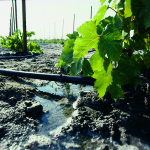
By Photo by Lynn Betts, USDA Natural Resources Conservation Service. (USDA NRCS Photo Gallery: NRCSCA00061.tif) [Public domain], via Wikimedia Commons

By Photo by Lynn Betts, USDA Natural Resources Conservation Service. (USDA NRCS Photo Gallery: NRCSCA00061.tif) [Public domain], via Wikimedia Commons

reduced precipitation is the issue of where the water used for irrigation would come from. To work around this issue, scientists are currently looking at plant water use efficiency, and how pruning or other viticulture strategies can optimize plant water use in such a way that the need for supplemental irrigation is reduced. Of course, there are some “issues” with looking only at water use efficiency, as higher water use efficiency has been linked to lower fruit yield in grapevines. Therefore, optimization, and not necessarily maximization of water use efficiency is key.

The goal of the study presented today was to examine variations in leaf water use efficiency in the grapevine (Tempranillo, to be specific) under water-stressed conditions as well as under different light conditions, as well as throughout different parts of the canopy.

Methods

This study took place at a commercial vineyard in Mallorca, Spain during 1997, 1998, and 2000. 20 year old Vitis vinifera grapevines of the Tempranillo variety were utilized for the study. The study consisted of two plots (located adjacent to one another) containing 350 plants each and underwent one of the two following treatments: 1) Irrigation: irrigation was applied via a drip system twice per week, and was set to drip enough to account for 30% of evapotranspiration; 2) No irrigation: soil progressively became more and more water stressed throughout the treatment period.

Climate conditions were determined by a local weather experimental station nearby. Pre-dawn and mid-day leaf water potential, as well as leaf gas exchange was measured in June, July, and early August. There were a total of 6 replicates per treatment.

Net photosynthesis, stomatal conductance, and transpiration were all measured 6 times a day for every 3 hours between the hours of 6am and 8pm.

All measurements were done on leafs located in 8 different locations within the plant canopy. For each measurement day, 6 replicates per leaf location were measured.

Daily-integrated intrinsic water use efficiency and instantaneous water use efficiency were both calculated.

After harvest, leaves from each canopy location were harvested from six plants per treatment. Fresh weight, leaf area, specific leaf weight, and total leaf area of each canopy location were measured or calculated.

Results

• Irrigation resulted in stable plant water status throughout the growing season.
• Pre-dawn water potential decreased throughout the growing season for those plants in the non-irrigation treatment.
• The ratio of photosynthesis to stomatal conductance was significantly higher in water-stressed plants compared with irrigated plants.
• Photosynthetic active radiation (PAR) interception varied depending upon where in the canopy the leaf was located, with a decrease in PAR noted from the upper part of the canopy to the lower part of the canopy.
o Those leaves in the innermost part of the canopy showed the lowest PAR values, which makes sense due to the fact that the leaves are in the shade do not experience as much radiation from the sun as leaves in full sunlight.
• Water stress did not affect PAR values for any leaf position.
• Midday leaf temperature and leaf-to-air vapor pressure deficit did not differ between any of the leaf positions.
• Water stress resulted in an increase in midday leaf temperatures.
• Water use efficiency was extremely variable between the different leaf positions in the canopy.
o The lowest water use efficiency was in shaded leaves, whereas the highest water use efficiency was in the leaves at the top of the canopy.
o Leaves in sunnier positions had 3x greater water use efficiency than leaves in the shade.
• Water use efficiency was increased in water-stressed plants.
o Those leaves near the top (but not all the way on the top) of the canopy (i.e. those leaves with 67.5% light interception compared with the top leaves) were found to have the highest water used efficiency.
• There was a significant relationship between water use efficiency and the daily intercepted PAR of the leaf.
• South-facing leaves at the top of the canopy had the highest water consumption levels per leaf area than all other leaves.
• Shaded leaves showed the lowest rates of transpiration, however, since there were so many of them (making up 37% of the total number of leaves on the plant), the water use efficiency actually decreased compared to leaves at the top of the canopy.
• Total water consumption decreased in water-stressed plants.
o Moderately-stressed plants showed a 47% decrease in water consumption compared to irrigated plants.
o Severely-stressed plants showed a 70% decrease in water consumption compared to irrigated plants.

Conclusions

The results of this study indicate that there were significant differences between the locations of the leaves in the canopy in regards to water use efficiency. The authors speculated that these differences could be due to the differences found in PAR and light exposure. In regards to the entire plant, it was found that water use efficiency increased when the plants were under water stress. This makes sense, as when the plant has less water to work with it needs to make sure it’s spending the appropriate amount of resources on water consumption while at the same time reducing the resources needed for evapotranspiration. In other words, it is in the plants’ best interest to become more efficient at using water when water is scarce, so it doesn’t prematurely shrivel and die due to poorly managed resources (though at some point, this will happen anyway if no water is ever seen again).

The results also indicated that the shadiest of areas on the plant had cumulatively the lowest water use efficiency (or highest daily water loss)

By Agne27 at en.wikipedia [Public domain], from Wikimedia Commons

By Agne27 at en.wikipedia [Public domain], from Wikimedia Commons

compared to all other locations. The authors suggested that by using selective thinning or pruning in this area could decrease the total water loss and increase the water use efficiency of the grape vine. Of course, one must be careful when undertaking a new pruning management plan, as water use efficiency will not be the only thing changed after the pruning occurs.

It is important to note that pruning has influence on many other factors, including the maturation of the grape and the overall quality of the fruit, so it is important to find some sort of middle ground if selective pruning is of interest to you. Selective pruning may be a good approach to adjusting to climate change-induced water stress, however, it is important to take all factors into consideration before just tearing apart your entire vineyard canopy. It is advised to experiment with a small number of vine first prior to partaking in a vineyard-wide pruning management regime.

One other side note to mention is that this study examined just one grape variety (Tempranillo). It’s possible other grape varieties may behave slightly differently in regards to their water use efficiency and their ability to adapt to changes in water availability, so certainly further studies using more grape varieties is warranted.

What do you all think of these results? What other vineyard management programs do you think could be applied after seeing the results of this study? Those of you with experience in vineyards under high water stress, or those that may be experiencing change in water availability at your vineyard: what sorts of vineyard management practices are you doing to adapt to the conditions? Please feel free to comment!

Source: Medrano, H., Pou, A., Tomás, M., Martorell, S., Gulias, J., Flexas, J., and Escalona, J.M. 2012. Average daily light interception determines leaf water use efficiency among different canopy locations in grapevine. Agricultural Water Management 114: 4-10.

Altering the Aromatic Profile of Tempranillo Wines Using Foliar Urea Fertilization


The use of soil nitrogen fertilization has been frequently studied in grapes for its ability to alter wine aroma, however, the results of these studies have been quite variable.  Some studies found that using organic and inorganic nitrogen fertilization improves wine aroma by increasing the concentrations of desirable aromatic volatile compounds, while many others found that this application damages wine aroma by increasing the levels of urea and ethyl carbamate, both of which are undesirable in wine.

One problem with using soil nitrogen fertilization is that the nitrate salts in the fertilizer are extremely soluble, thus increasing the risk of the salt leaching (i.e. leaking) into the soil and not contributing at all to fertilization or wine aroma.

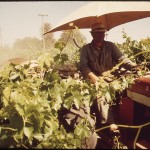
U.S. National Archives and Records Administration: Photo in Public Domain

Also, the more that this salt that leaks out into the soil, the greater the risk is of environmental harm and degradation.

In addition to soil fertilization, some vineyard managers opt to incorporate foliar fertilization (i.e. fertilization applied to the leaves), which functions as a more direct way to get nutrients to the vines instead of having much of it leach out into the soil unused.  Since foliar fertilization results in the direct absorbance into the grapes themselves, much less of it needs to be applied than soil fertilizer.

With the knowledge that fertilization of grape vines affects wine aroma by increase the levels of certain desirable volatile compounds, one study aimed to examine the effects of foliar fertilization of urea (a nitrogen-based compound) on Tempranillo grape vines and how this fertilization altered the volatile chemistry of the finished wine.  According to the authors, this type of study has never been done on Tempranillo vines.

Methods

Tempranillo vines (Vitis vinifera) from the 2008 vintage were used in this study.   Experimental vines were split into three plots in the same vineyard which was located in the Rioja region of northern Spain.  The vines were planted in 1990, and were about 9 ha total in vineyard size.  Vine density was 2.7m x 1.5m, and the pruning regime used was the Gobelet method.

Soil pH was 8.3 and nitrogen fertilizer was applied to the entire vineyard at 21kg N/ha.

Two of the experimental plots were foliar urea fertilizer treatment plots, with one plot receiving 2kg N/ha and the other receiving 4kg N/ha.  The third experimental plot was left untreated as a control.

Foliar fertilizer used was Nitrotecnia-20, 20% w/w of the total nitrogen in the fertilizer originating from urea.

Foliar urea fertilizer was applied at 7 day intervals between July 31st and October 9th, 2008.  Treatment was started close to veraison (i.e. when the grapes start to change color) in order for the urea to be absorbed directly by the grape instead of most of it going into the leaves of the plant.  As a side note for

By Véronique PAGNIER (Own work) [CC-BY-SA-3.0 (http://creativecommons.org/licenses/by-sa/3.0)], via Wikimedia Commons

those that aren’t very familiar with veraison, at this stage of a grape’s life, the skin becomes more permeable, allowing more “stuff” to be absorbed than prior to this stage when the skin was tougher and not letting as much inside.

At harvest, all grapes from all three plots were harvested, in order to create a homogenous must/wine from each plot.  Grapes were de-stemmed, crushed, and pressed.  The common wine yeast, Saccharomyces cerevisiae strain MV 92081 was used for the fermentation.  Fermentation was held in stainless steel tanks and wine was fermented until dry.  Wines were subsequently stabilized the filtered. Fermentation occurred in duplicate.  Wine samples for analysis were chosen from different parts of the tank then blended, in order to create representative samples of the entire batch.

Odor activity values (OAV’s) were calculated for each volatile compound.  Any OAV’s over a value of 1 meant that the flavor threshold has been reached meaning that the aroma of that compound can be detected in the wine.

In addition to measuring volatile compounds, amino acids, ammonium nitrogen, yeast assimilable nitrogen, and general enological parameters were measured.

For sensory analysis, 5 panelists (3 men and 2 women) were selected from 5 different wineries in Rioja.  Panelist judged body, acidity, sweetness, bitterness, astringency, and tannin, as well as red fruits, plums, currants, chocolate, honey, vanilla, and green.  Each characteristic was judged using a 5 point scale: 1 = very poor; 2 = poor; 3 = acceptable; 4 = good; and 5 = very good.  Six sets of 3 wines were used for forced-choice tests.

Results

  • Total acidity was higher in musts made from grapes treated with urea than musts made from control grapes.
  • pH increased in the musts and wines of grapes treated with urea.
  • Alcohol content (including higher alcohols) and total acidity decreased in wines made from grapes treated with urea compared with wines made from control grapes.
  • Volatile acidity was below threshold for all wines.
  • Amino nitrogen and YAN levels increased in wines made from grapes treated with urea.
  • Isoamyl alcohol, isobutanol, 2-phenylethanol, tyrosol, tryptophol, and 3-methylthio-1-propanol all decreased in wines made from grapes treated with urea compared to wines made from control grapes.
    • 1-hexanol and benzyl alcohol did not change due to treatment.
    • 1-butanol increased in wines made from grapes treated with the higher dose of urea.
    • OAV levels of isoamyl were greater than 1 in all three wines, thus corresponded to aroma.
    • OAV levels of 2-phenylethanol were greater than 1 in control wines and the lower dose of urea wines.  (This compound contributes to floral characteristics in wine).
    • OAV levels of 2-phenylethanol were lower than 1 in the higher dose of urea wines, thus it did not contribute to the aroma of those wines.
  • Precursor amino acids (with the exception of the precursor to tryptophan) all increased in wines made from grapes treated with urea compared with the control.
  • Total esters decreased in wines made from grapes treated with urea.
  • Ethyl hexanoate, ethyl octanoate, and ethyl decanoate all increased in wine made from grapes treated with the higher dose of urea.
    • Ethyl hexanoate and ethyl octanoate OAV levels were greater than 1 for all wines, thus they both contributed to the aromatic profile of the wines, though the levels were significantly higher in the wines made from grapes treated with the higher dose of urea.
  • Isoamyl acetate and ethyl acetate levels decreased in wines made from urea-treated grapes and contributed to wine aroma.
  • Diethyl succinate, diethyl malate, and ethyl-3-hydroxybutyrate decreased in wines made from urea-treated grapes.
  • 3-hydroxy-2-butanone and acevanillone increased in wines made from the grapes treated with the highest dose of urea.
  • Foliar urea fertilization did not have much of an effect on fatty acids in wines.
    • Butyric acids increased with grapes treated with the highest dose of urea.
    • C10, C12, C14, C16, and C18 fatty acids (i.e. fatty acids with 10, 12, 14, 16, and 18 carbons) decreased in wines made from grapes treated with urea.
  • Sensory Analysis:
    • Body, acidity, sweetness, bitterness, and tannin were similar for all three wines.
    • Wines treated with foliar urea fertilizer were lower in astringency than control wines.
    • Fruity notes were higher in wines made from urea-treated grapes.
    • Notes of chocolate, honey, and vanilla were the same for all three wines.
    • Herbaceous notes were higher in control wines than wines made from urea-treated grapes.
    • Wines made from urea-treated grapes were noted to have higher aromatic intensity, fruitier character, and bigger red fruit notes than control wines.
    • Isoamyl alcohol and 2-phenylethanol are compounds than tend to cover up wine aroma, and it was found that wines made from urea-treated grapes were lower in these compounds than control wines.

Conclusions

The results of this study showed that there are significant differences in the aromatic profile of wines made from grapes that were treated with foliar urea fertilization.  It is not known whether the panelists preferred one type of wine over another, just that the aromatic profiles were different.  For Tempranillo wines made from grapes treated with foliar urea fertilization during the growing season, the aromatic profile shows increased fruity notes, as well as greater aromatic intensity.  For control Tempranillo wines not treated with any foliar fertilizer, aromatic intensity was lower, and herbaceous notes were more pronounced.

It doesn’t appear that one wine was necessarily better than the other, but then again, there were no questions in the sensory analysis that addressed this question.  Depending on what style of wine you enjoy, you may like either the

By María Jesús Tomé (Flickr: Rioja Alavesa) [CC-BY-2.0 (http://creativecommons.org/licenses/by/2.0)], via Wikimedia Commons

control wines or the wines treated with foliar urea fertilization.  The authors of this study claimed that urea treatment did, in fact, improve the aromatic profile of Tempranillo wines.

If you want to create a Tempranillo wine that is fruitier and more aromatic, it may be beneficial to employ a foliar urea fertilization regime in your vineyard management practices.  It would be important to know how this fertilization treatment affects not only the grapevines and the resulting wine, but also the environment around it.  This may be something to consider prior to employing such a practice.

It’s not clear how this type of treatment would affect other grape varieties; however, one would likely expect to see a varied outcome.  Certainly, some grapes would have the ability to absorb more of the fertilizer than others, and some grapes would be able to utilize the excess nitrogen better than others.  The effect of foliar urea fertilization is likely a case-by-case situation and it would be interesting to see in a follow up study how other grapes and resulting wines were affected by the treatment.

I’d love to hear what you think about this study. What other questions would you have liked to see answered that the authors did not discuss?  Please leave your comments!

Source: Ancín-Azpilicueta, C., Nieto-Rojo, R., and Gómez-Cordón, J. 2012. Effect of foliar urea fertilization on volatile compounds in Tempranillo wines. Journal of the Science of Food and Agriculture. Released online prior to publication in print. DOI 10.1002/jsfa.5921.

Some Don’t Like It Hot: Using Heat to Reduce the Spread of Phylloxera into Non-Infested Vineyards in Australia

Phylloxera (Daktulosphaira vitifoliae Fitch) is one of the most destructive pests for grape vines.  Historically, it has wreaked havoc on vineyards around the globe, and nearly wiped out the entire grape and wine industry in Europe (and many other parts of the globe) starting in the 19th century.  (Side note: for a comprehensive historical account of the phylloxera crisis, check out this book that I reviewed earlier this year: Dying on the Vine: How Phylloxera Transformed Wine by George Gale).

There is no one method that is adopted globally to completely eradicate  phylloxera, however, there are two main approaches that are used to attempt to keep the pest at bay: 1) grafting Vitis vinifera vines on the phylloxera-resistant American rootstock; and 2) quarantine methods to reduce the spread of phylloxera into non-infested areas.  Most viticulture areas around the globe employ the rootstock method, however, in Australia; the quarantine method is the method of choice.  The remainder of this post will focus on phylloxera quarantine and eradication methods in the Australian wine industry.

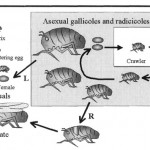
Photo from the Pests and Diseases Image Library:
http://old.padil.gov.au/pbt/files/uall/GP_lifecycle_from_Granett_et_al_2001_paper.jpg

Previous studies have found that phylloxera most often disperses to other vines and vineyards when it is in the first instar nymph life stage.  These are basically the creepy crawly baby phylloxera that has not yet matured into winged adults (in the image, see the white “crawler” highlighted critter).  Phylloxera at this stage is often in the vines and the leaves, and the risk for transferring these pests from one vineyard to another is highest during the spring and summer months when vineyard machinery is moving back and forth during their usual vineyard management programs.  These pests are tough little creatures, and are known to survive a lot of intense handling, including being squashed in between grape bins, and also the crushing, de-stemming, and pressing methods after harvest.

To minimize the transfer of phylloxera from infested to non-infested vineyards in Australia, strict quarantine methods are employed.  These methods include regulations for movement of machinery procedures, hygiene and cleaning procedures, and specific quarantine requirements.  Specifically, in Australia, there is a dry heat treatment requirement for all vineyard machinery which states that machinery needs to be kept in a temperature-controlled room at 45oC for at least 75 minutes or at 40oC for 120 minutes.

By Ji-Elle (Own work) [CC-BY-SA-3.0 (http://creativecommons.org/licenses/by-sa/3.0)], via Wikimedia Commons

Previous studies have shown that increased temperatures have an effect on phylloxera survival and development, though these studies more often focused on only one type of phylloxera (there are 83 known genotypes of the bug) or one geographical location.  Though there are 83 different genotypes, there are two that are particularly widespread and virulent throughout Australian vineyards:  “G1” is the phylloxera strain that is most widespread in Australia, and “G4” is the strain that is the most dangerous/harmful, and according to some are the two strains that provide the greatest threat to the Australian grape and wine industry.

The goals of the study presented today were to the minimum amount of time required for 100% mortality in phylloxera under different temperature and humidity conditions, to compare the impact of these conditions on the mortality of the G1 and G4 strains of phylloxera, and to confirm whether or not the current quarantine protocol for Australian vineyard machinery is effective in reducing the chance of further phylloxera infestations.

Methods

G1 and G4 strains of phylloxera were obtained from invested vineyards in the Yarra Valley and King Valley, Victoria, Australia.  Insects were confirmed to be one or the other strain by DNA microsatellite marker analysis.  Phylloxera were kept on Vitis vinifera roots until ready for use.  Eggs were incubated at a constant temperature for 5-7 days, and then newly hatched first instars of phylloxera were collected and used for the experiments.

Environmental chambers were created to maintain a constant temperature and humidity level.  Temperatures in chambers were kept between 30 and 45oC at 5oC increments with humidity levels at either 30% or 100%.  Separate chambers were used for each temperature and humidity combination.  20 newly hatched first instar phylloxera were placed in a vial with mesh on the ends to 1) prevent escape and 2) maintain air flow.  5 replicates of each vial were placed in each environmental chamber (100 instars per environmental chamber).

Instar survival was measured using a low-powered binocular microscope every 15 minutes for 30-120 minutes, depending upon the treatment.

Results

·         The highest temperature found to achieve 100% phylloxera mortality was 45oC regardless of humidity level.

o   The G1 strain exposed to 45oC achieved 100% mortality by 75 minutes at 30% humidity and by 90 minutes at 100% humidity.

o   The G4 strain exposed to 45oC achieved 100% mortality by 75 minutes at 30% humidity and by 60 minutes at 100% humidity.

·         At the 40oC temperature, 100% mortality was achieved at the 30% humidity level.

o   The G1 strain required 90 minutes to reach 100% mortality under these conditions.

o   The G4 strain required 105 minutes to reach 100% mortality under these conditions.

·         At 40oC and 100% relative humidity, 4% of the G1 strain survived and 7% of the G4 strain survived after an exposure time of 2 hours.

·         No other combination of temperature and humidity achieved 100% mortality for either phylloxera strain.

·         At 30oC and 30% relative humidity, survival was 60% for the G1 strain and 70% for the G4 strain.

·         At 35oC and 30% relative humidity, survival was 30% for both the G1 and G4 strains.

·         Temperature showed a significant effect on mortality of phylloxera.

·         Humidity did not have a significant effect on mortality of phylloxera.

o   The combined effect of temperature and humidity had a significant effect on mortality of phylloxera (though humidity alone had no effect).

·         There was no significant difference between the mortality rates of G1 and G4 strains of phylloxera at the different temperature and humidity combinations.

Conclusions

According to the authors, this is the first study that examined and showed the amount of time required to achieve complete mortality in first instars of

Photo attained from: http://upload.wikimedia.org/wikipedia/commons/thumb/a/a8/Phylloxera_cartoon.png/615px-Phylloxera_cartoon.png

phylloxera at different temperatures and humidity combinations (30oC, 35oC, 40oC, and 45oC; 30% and 100% relative humidity).  They were also able to confirm that the current quarantine protocol set forth by the National Vine Health Steering Committee in Australia of 45oC for 75 minutes exposure time or 40oC for 120 minutes exposure time are effective against the proliferation of phylloxera in non-infected areas.

The authors noted that with increased relatively humidity, the survival rate of the phylloxera instars went up.  They mentioned that this result shouldn’t be too worrisome, as the relative humidity in these designated “dry rooms” should not get much higher than 50%.  More work should be done to examine the survival rates of phylloxera at relative humidity between 30% and 50%, as these levels would be more likely to occur in one of these rooms than a relatively humidity of 100% as was tested in this study.  These results may determine if the regulations of in-room humidity control need to be strengthened or not.

It would also be interesting to see how other strains/genotypes of phylloxera survive under similar conditions.  Do the other 81 known strains have similar survival rates as G1 and G4?  Or are there some particularly tough strains that could take over once the competition was eradicated?  Even if those strains aren’t so common, they could be if they ever attained a competitive advantage.  Research into how to effectively quarantine these strains may be valuable for these reasons.

In general, the results of this study provide strong support for the procedures implemented currently for the quarantining of vineyard machinery in attempts to reduce or eliminate the spread of phylloxera into non-infested areas.  Further research could shed some light onto whether or not these methods may be effective in other locations around the world and may add an extra level of defense against the ever-present vineyard-destroying pest.

I’d love to hear what you all think about this research and the topic in general.  Please feel free to leave your comments!

Source: Korosi, G.A., Mee, P.T., and Powell, K.S. 2012. Influence of temperature and humidity on mortality of grapevine phylloxera Daktulosphaira vitifoliae clonal lineages: a scientific validation of a disinfection procedure for viticultural machinery.  Australian Journal of Grape and Wine Research 18: 43-47.

Selective Harvesting: Is It Right For Everyone?

“Like” The Academic Wino on Facebook by clicking here! 

Follow The Academic Wino on Twitter by clicking here! (@TheAcademicWino)

When it comes to selective harvesting methods in the vineyard, there is an assumption that these methods may not be economically feasible for large quantity-producing wineries, as selective harvesting almost always requires more time, effort, and man-hours in executing.  Past research has found that the yield and quality of grapes is highly variable in the vineyard, which gives opportunity for winegrowers to better manage their resources and harvest practices for the desired quality of wine produced.

What is “Selective Harvesting”?

http://www.boordy.com/files/2020-682×600.jpg

Selective harvesting is defined as the split picking of fruit according to their yield and quality, in order to monopolize on a specific quality level in the grapes, and ultimately, finished wine.  This is sometimes achieved by sorting the grapes in the field into different bins depending on quality criteria, or by harvesting different sections of the vineyard at different times, again depending on quality criteria.  Studies have shown that grapes harvested from different portions of a vineyard may have significant chemical or sensory characteristics, which are often due to variations in the land and soil underneath the vineyard.

Selective harvesting may be problematic at times, as sometimes a winery may only have access to a single crusher or a minimum tank size of 75 tons, which can make separating grapes into two bins at harvest an issue, as well as filling a single tank with enough juice from a smaller selective harvest.  One study demonstrated that a 3 hectare low-yielding vineyard could not produce enough grapes to fill a fermentation tank with juice, which may make selective harvesting of smaller areas difficult when only certain sized tanks are available for use.

Perceptions of Selective Harvesting in Australia

In general, Australian wineries have the view that selective harvesting is only appropriate for small boutique wineries, or very large wineries that have access to a wide variety of equipment.  Those wineries in Australia’s inland warm irrigated region, according to the authors of the study presented to you today, are under the assumption that selective harvesting is not within reach.  It is because of this assumption that Bramley et al, 2011 sought to examine this assumption more closely, and to either support or refute the idea using field experimentation and economic analysis.

How did they do it?

The vineyard for this study was a Cabernet Sauvignon vineyard, planted in 1994, and located at the Deakin Estate in the Murray Valley of northwest Victoria, Australia.  Plant vigor and grape yield was calculated using remotely sensed digital multispectral video imagery, as well by using mechanical harvesters with GPS and Farmscan equipment.  Zones within the vineyard were characterized by being either high-yielding or low-yielding based on information gathered by the aforementioned methods.  After determining the yield would be too low for the fermentation tanks at the low-yield site, another low-yield site (harboring grapes with very similar characteristics as the grapes from the original low-yield site) from a Cabernet Sauvignon vineyard at Deakin Estate was also included in order to obtain the minimum yield necessary to fill the fermentation tanks available.

http://c257.r57.cf3.rackcdn.com/6a98f6760fb19152dc75da79
118f657e1311415816-1301584591-4d949acf-620×348.jpg

Grapes were monitored throughout the growing season, and were harvested at 24 oBrix.  12 random bunches were collected from each zone in order to measure bunch weight, mean berry weight, juice Brix, pH, titratable acidity, anthocyanins (color), and phenolics.  Wines were created from bow low-yield zones and the high-yield zones in small-lot winemaking methods and also at the commercial scale.  For small-lot winemaking, 200kg of grapes were harvested then subsampled into three 50kg batches, and malolactic fermentation was not allowed to occur.  Commerical wines were made in 75 ton fermentation tanks which were filled for high-yield zone wines and filled only to 51 tons for the low-yield zone wines.  Malolactic fermentation was allowed to proceed for the commercial wines.  Standard winemaking procedures were used for all wines.

Experimental wines underwent a sensory analysis by 25 untrained panelists and Compusense Five (a sensory software tool).  For each comparison, the first sample presented was the reference sample, which was followed by two other samples, one of which was the same as the reference sample.  Panelists were asked to smell and taste the samples and to identify which sample was the same as the reference sample and were asked to provide the reason for their choice.

What did they find?

  • First and foremost, the authors noted a strong similarity between the remotely sensed data and the data collected from the GPS located on the harvesting machinery.  This provides evidence that the zones were actually separated properly into low-yield and high-yield zones. 
  • Wines created from the low-yield zone and wines created from a mix of low-yield zones were not significantly different, indicating that it was appropriate to mix the two low-yield sites without lowering the overall quality of the wine.
  • The wines from the high-yield zone tended to be more acidic and astringent than the wines from the low-yield zone.
  • When wines were made commercially, there was a significant different between wines made from high-yield zone grapes and wines made from low-yield zone grapes.  The low-yield zone grapes tended to be fuller bodied and less astringent, and with a fruitier aroma than the high-yield zone grapes.
  • Bunches from the high-yield zone were larger than those from the low-yield zone.  However, anthocyanin and phenolic concentrations were higher in wines made from low-yield zone grapes compared with high-yield zone grapes.  This result suggests greater wine quality in low-yield zone wines.

What do these results mean?

First, the results show that there are significant differences in yield and grape quality throughout different sections of a vineyard, which supports the need for purposeful zone delineation via posts, wires, or other means to separating sections of the vineyard.  Taking this one step further, another important result from the study is that if using remotely sensed data, it should be confirmed via ground-truthing (i.e. collecting information on the ground) to be certain the vineyard is being properly delineated.

The authors note that selective harvesting gives the winemaker greater control over the final blend of the wine, and ultimately the overall quality.  What many Australian winemakers are concerned about is the overall effect of cost when implementing such a strategy.  Even after taking in the harvest cost, the cost of small-lot winemaking, the harvest cost related to differing yield sizes, and total retail values (less expensive versus high-end prices), the researchers found that there was a total net benefit to a selective harvesting strategySee the table below (Table 2 from Bramley et al, 2011) for exact costs and benefits calculated.

Table 2 from Bramley et al, 2011

What about those vineyards that don’t make wine themselves?

There are many vineyards in Australia (and other places of the world, for that matter) that grow grapes to sell to other wineries, and not to make wine themselves.  Thereby, they do not have the added revenue of wine sold to add into the cost-benefit equation.  The authors were well aware of this fact, and performed a similar economic analysis to the one just mentioned, except leaving out the cost of winemaking and any potential wine revenue.  Even after taking these things into consideration, the researchers found that selective harvesting results in an increase in net financial benefit by more than 9% (in this particular example).  See the table below (Table 3 from Bramley et al, 2011) for exact costs and benefits calculated.

Table 3 from Bramley et al, 2011

Conclusions

The results of this study indicate that the notion that selective harvesting is only feasible for larger wineries with a variety of equipment sizes or small boutique wineries is incorrect, and that selecting harvesting may be financially feasible and beneficial for those wineries who undertake more large-scale production methods (at least in warm inland irrigated regions of Australia).  It is important to note that in order to maximize the benefit of selective harvesting, detailed analysis of the vineyard to delineate yield and quality zones must be confirmed using both remote sensing data and data collected directly from the ground.

Overall, I found this study interesting in that it showed that selective harvesting may be an option for all types of wineries, and is not limited to only those wineries with a greater variety of equipment or small boutique wineries.  One needs to remember, however, that this study occurred in a very specific wine region (warm inland irrigated region of Australia), the results of which may or may not be extrapolated to all wine regions around the world.  More research would need to be done to determine if this sort of harvest method is appropriate for wineries in any given wine region.

What do you all think of this topic?  If you’re curious to know more details about the methods or results of the study, please feel free to ask and I’ll see what I can find!

Please feel free to leave your comments below!

Reference:

Bramley, R.G.V., Ouzman, J., and Thornton, C. 2011. Selective harvesting is a feasible and profitable strategy even when grape and wine production is geared toward large fermentation volumes. Australian Journal of Grape and Wine Research 17: 298-305.

DOI: 10.1111/j.1755-0238.2011.00151.x


I am not a health professional, nor do I pretend to be. Please consult your doctor before altering your alcohol consumption habits. Do not consume alcohol if you are under the age of 21. Do not drink and drive. Enjoy responsibly!