Tag Archives: recycling

Wine Literature Review Lightning Round: 4th Edition


—————————————————————————————————-

Welcome to The Academic Wino! If you are new here, please read the “About Me” page to find out more about myself and the blog. If you would like to receive free updates on articles like this by email, then sign up here or you can subscribe to the RSS feed. Also, check us out on Twitter, Facebook, Google+, and or Pinterest. Thanks for visiting!

—————————————————————————————————-

Normally, I save this series for Fridays, however, I was surprised by a marriage proposal (of which I said yes!) by my now-fiancé this weekend and didn’t end up having time to write anything else :)   Enjoy this post a few days early!

There’s no way one single person (even if that person is The Academic Wino!) can possibly review every single piece of peer reviewed literature related to wine that is published every day. This series presents multiple new papers (within the past year or so) in one post by briefly summarizing the research and linking to the source in order for you to pursue further if you’re interested. If there is enough interest, be it through comments or emails, I can review any of the papers introduced to you in this post in a more critical assessment.

WINEMAKING

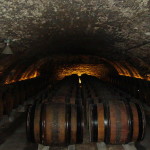
“An assessment of using ground thermal inertia as passive thermal technique in the wine industry around the world”. This article, published in 2012, aimed to use a mathematical modeling approach to confirm the benefits of using underground cellars for aging wine, and to promote the use of this type of cellar when constructing new wineries. Basically, the model employed during this analysis used thermal inertia (i.e. how temperature moves in a given medium or space) of the ground in order to provide protection to the wines during the aging process. The characteristics of these underground cellars allow for good ventilation as well as good temperature control for the wines during the aging process.

By Philip Larson (originally posted to Flickr as DSC02022) [CC-BY-SA-2.0 (http://creativecommons.org/licenses/by-sa/2.0)], via Wikimedia Commons

By Philip Larson (originally posted to Flickr as DSC02022) [CC-BY-SA-2.0 (http://creativecommons.org/licenses/by-sa/2.0)], via Wikimedia Commons

According to the model results, the inputs of which were based on real underground wine cellars in Spain, the ideal temperature for storing wine is easily reached inside these underground cellars without the need for supplemental air conditioning. Eliminating the need for air conditioning is beneficial for multiple reasons, one being the savings on one’s electric bill, while the other being a savings for the environment in regards to a reduced carbon footprint. Finally, according to the authors of this study, the model the used in this analysis could be helpful for those designing or constructing new wine cellars, which based on the specific measurements and layout planned, could estimate the indoor temperature of the cellar and possibly allow for infrastructure changes if need be prior to completion of the facility if the temperature based on current specs was not up to acceptable standards.

Source: Mazarrón, F.R., Cid-Falceto, J., and Cañas, I. 2012. An assessment of using ground thermal inertia as passive thermal technique in the wine industry around the world. Applied Thermal Engineering 33-34: 54-61.

VITICULTURE

“Floral, spicy and herbaceous active odorants in Gran Negro grapes from shoulders and tips into the cluster, and comparison with Brancellao and Mouratón varieties”. This paper, published in 2012, aimed to examine the aromatic characteristics of Gran Negro grapes, and to specifically test if grapes from different parts of the cluster (shoulders and tips) would yield different aromatic compounds that could be taken advantage of when trying to create a unique wine in a highly competitive market. GC-MS spectroscopy was used to determine the aromatic chemical profile of the grapes from both the shoulders and the tips of the clusters.

The results of the study showed significant variation in aromatic compounds of grapes, depending upon where in the cluster the grape was located. For those grapes located at the tip of the cluster, volatile phenols and aromatic alcohols were 2 and 15 times higher in the flesh of the grape than in the skins, respectively, whereas for those grapes located at the shoulder of the cluster, volatile phenols were 2 times higher in the skins of the grapes compared with the flesh. Also, aldehydes and C6 alcohols were 4 and 3 times higher in the skin than in the flesh for those grapes located at the tips of the clusters. C6 alcohols were found to be 40% lower in the tips than in the shoulders.

Overall, this study showed that there is significant variation in the volatile composition of grapes, depending upon where in the cluster the grape is located, which could allow winemakers to create even more unique wines which could give them a market advantage in this competitive industry.

Source: Noguerol-Pato, R., Gónzalez-Barreiro, C., Cancho-Grande, B., Martínez, M.C., Santiago, J.L., and Simal-Gándara, J. 2012. Floral, spicy and herbaceous active odorants in Gran Negro grapes from shoulders and tips into the cluster, and comparison with Brancellao and Mouratón varieties. Food Chemistry 135: 2771-2782.

“RECYCLING”/ENVIRONMENTAL SCIENCE

“Wine grape pomace as antioxidant dietary fiber for enhancing nutritional value and improving storability of yogurt and salad dressing”. Grape pomace has already been shown to improve the shelf life and/or nutritional quality of many food products, including chicken, hotdogs, and green tea. This study, published in 2013, aimed to examine if grape pomace added to yogurt and salad dressing could be beneficial in this same manner, and whether or not consumers would actually enjoy the taste of these products after the pomace was added. Dried grape pomace powder was added to yogurt, Italian salad dressing, and Thousand Island salad dressing and stored for 3 weeks at 4oC.

By Tricia (Flickr: saladdressing) [CC-BY-SA-2.0 (http://creativecommons.org/licenses/by-sa/2.0)], via Wikimedia Commons

By Tricia (Flickr: saladdressing) [CC-BY-SA-2.0 (http://creativecommons.org/licenses/by-sa/2.0)], via Wikimedia Commons

Results showed that adding grape pomace to all samples resulted in a 35-65% reduction in peroxide values, indicating the potential benefit of grape pomace as a preservative in all three products. The samples also showed dietary fiber levels of 0.94-3.6%; total phenolic content of 958-1340 mg gallic acid equivalent/kg product; and DPPH scavenging activity (i.e. antioxidant capacity) of 710-936 mg ascorbic acid equivalent/kg product. Sensory analysis revealed the products with grape pomace added were nearly universally accepted as “likable”. Overall, the study results indicated that grape pomace could be a good additive to yogurt and salad dressing in order to prolong shelf life and improve the nutritional content of the products.

Source: Tseng, A., and Zhao, Y. 2013. Wine grape pomace as antioxidant dietary fiber for enhancing nutritional value and improving storability of yogurt and salad dressing. Food Chemistry 138: 356-365.

I’d love to hear what you all think about any or all of these topics!  Please feel free to leave comments!

The Environmental Impact of Producing a Single Bottle of Wine in Nova Scotia, Canada


Climate change is a very real threat that has many industries concerned over how their businesses with be affected. More importantly, it’s this changing climate that has and continues to push many industries into developing better ways to function that has less environmental impact as well as developing ways to function under altered conditions. Prior to making any change, businesses and industries must step back and take a look at their current environmental footprint, and how their business practices and procedures impact the overall health of the environment.

When considering the wine industry, there has been a lot of work focus on the micro-scale of within the winery or vineyard, and what sort of a carbon footprint or environmental impact is left after all is said and done. However, outside influences that also heavily contribute to the overall carbon footprint or environmental impact have largely gone ignored; factors by which if one really wishes to improve their overall environmental impact, they need to take into consideration. These outside influences include, but are not limited to,

By James Ellison (Flickr: Gaspereau Vineyards, NS) [CC-BY-2.0 (http://creativecommons.org/licenses/by/2.0)], via Wikimedia Commons

By James Ellison (Flickr: Gaspereau Vineyards, NS) [CC-BY-2.0 (http://creativecommons.org/licenses/by/2.0)], via Wikimedia Commons

greenhouse gas emissions (think the emissions of machinery or transport vehicles), and total energy use (think all the gas, oil, or electricity that is used to create and distribute the product).

The Academic Wino reviewed one study in particular that examined the overall environmental impact of wine distribution in the United States, which is an important piece of literature examining the energy expenditure of the shipping and distributing side of the wine industry. However, a model incorporating both the distribution side of the industry as well as the grape growing and winemaking side of the industry is needed in order to get an accurate picture of the overall environmental impact of the wine industry as a whole. (See Part I and Part II here for the review of that piece of literature).

Life Cycle Assessment (LCA) is a tool that is used to determine the environment impact associated with a particular product “from cradle to grave”. In other words, using complex mathematically modeling, LCA takes into consideration the positive and negative energy inputs and outputs from the very beginning to when an individual product is first made, all the way through when that individual product is sold to the consumer. In terms of wine, the LCA starts from when the grapes are first grown (either starting from the planting of the vine or the start of the growing season the spring, depending upon the model), through harvest and winemaking, then finally through bottling, storing, shipping, and purchase by the consumer.

The study presented today used LCA to determine the energy inputs and environmental emission of one complete life cycle of one standard sized 750mL wine bottle, from grapes grown and wine made in Nova Scotia, Canada all the way through the recycling of the bottle, which could have potential implications for other vineyards and wineries trying to minimize their carbon footprint on the world.

Methods

The mathematical model created included the “material and energy flows associated with”: growing the grapes, making the wine, making of the bottle, transporting the wine to the store, the consumer transporting the wine home, refrigeration of the wine, and the recycling of the bottle. Also included was energy associated with the vineyard equipment, as well as the emissions related to pesticides. Energy related to the following was also included: corks, sugar, labels, and heat-shrink capsules. Only the energy related to transport of the following items were included: yeasts, filtering agents, clarifying agents, bacteria, enzymes, and antioxidants. Water consumption was not included in the model, as the data were not available. The authors note that irrigation is not needed in Nova Scotia due to ample rain during the growing season, so omitting the water component may not be as bad as it would be if a lot of water was required for irrigation.

For space considerations, I will omit some of the details on the breakdown of exactly what went into the model and under what conditions, but if there is a certain item you’d like me to elaborate on or you have questions as to whether it was in the model and what assumptions were outlined for the model, please feel free to comment and I’ll clarify that for you.

The following categories were examined during the analysis: “abiotic resource depletion potential, freshwater acidification potential, eutrophication potential, global warming potential, stratospheric ozone depletion potential, aquatic eco-toxicity potential, terrestrial eco-toxicity potential, photo-oxidant formation potential, and cumulative energy demand”.

Three different scenarios were tested to evaluate how each would alter the life cycle assessment of the bottle of wine, and if one scenario were superior over

By Patrick Heusser, www.x8ing.com (own work, www.x8ing.com) [GFDL (http://www.gnu.org/copyleft/fdl.html), CC-BY-SA-3.0 (http://creativecommons.org/licenses/by-sa/3.0/) or CC-BY-SA-2.5-2.0-1.0 (http://creativecommons.org/licenses/by-sa/2.5-2.0-1.0)], via Wikimedia Commons

By Patrick Heusser, www.x8ing.com (own work, www.x8ing.com) [GFDL (http://www.gnu.org/copyleft/fdl.html), CC-BY-SA-3.0 (http://creativecommons.org/licenses/by-sa/3.0/) or CC-BY-SA-2.5-2.0-1.0 (http://creativecommons.org/licenses/by-sa/2.5-2.0-1.0)], via Wikimedia Commons

any others in regards to improving the energy usage or carbon footprint of the bottle. The following scenarios were tested: 1) an organic viticulture scenario; 2) a lighter bottle scenario; and 3) an increased transport distance and new transport mode scenario. Again, due to space considerations I’m leaving out the specific changes made to create these scenarios, but once again, just ask if you have specific questions regarding any one of them.

Results

This paper is chock full of interesting results, though I will just highlight some of them.

• Taking into account the energy and emissions of all categories related to producing and distributing a bottle of wine, the two categories with the highest relative impact were vineyard activities and consumer shopping.
• Recycling of the glass bottle and refrigeration at home contributed very little to the life cycle impact of a single bottle of wine.
• In regards to the vineyard activity category, the majority of the impacts were associated with nutrient management activities and fuel usage.
o The trellis system itself was responsible for half of the vineyard activity impacts (related to toxicity) due to the energy and emissions required for making the steel posts and the use of chromium copper arsenate to preserve the wood.
• Most of the categories were impacted mostly by the manufacturing process related to that particular category.
• Consumer shopping represented between 8% and 58% of the total life cycle impacts of a single bottle of wine.
o Nearly all of this was a result of the use of the car to pick up the bottle at the store and bring it back home.
• The glass bottle impact (between 3% and 24% of the total life cycle impacts) resulted mostly from the electricity used to create the bottles.
• Winery impacts were mostly derived from the electricity needed to run all of the equipment (note: Nova Scotia electricity is primarily coal-fired) as well as the ethanol emitted during fermentation.

Scenarios

• Organic viticulture practices only improved the life cycle impacts of 3 of the categories by 0.14% and 3%.
o Organic viticulture practices resulted in an increase in the following categories: freshwater acidification potential, eutrophication potential, and global warming potential.
o Organic viticulture significantly decreased the aquatic eco-toxicity potential and the terrestrial eco-toxicity potential as the toxic wood preservatives were no longer used in this scenario.
• Creating bottles that are 30% lighter than the typical bottle results in an improvement in life cycle category impacts between 2% and 10%.
o These improvements were found mostly from the reduced energy and emissions needed to produce the lighter bottle, though some of it was found in the transportation of the bottle from winery to store as well.
• Using a larger shipping truck reduced the life cycle impacts of a single bottle of wine. Using a ship or a larger transport truck was more environmentally friendly than using a small “domestic” transport vehicle.
o It was more environmentally friendly on a per bottle basis to ship a bottle of wine from Nova Scotia to Australia on a container ship than it was to ship a bottle from Nova Scotia to Vancouver in a small transport truck.

Conclusions

According to the results of this study, in regards to the environmental impact of the life cycle of a single bottle of wine produced and sold in Nova Scotia, improvements on carbon footprint and emissions would be most felt in the vineyard practices (i.e. grape growing) and consumer shopping areas. While the electricity required to produce the wine and many of the materials needed for the production of the wine and the bottle itself, improving upon the vineyard practices and the consumer shopping experience will produce the most significant results.

In regards to vineyard management practices, the results indicated that most of the energy and emissions comes from nutrient usage. The authors of the study suggested that switching to or incorporating organic fertilizers or using methods to increase nutrient-uptake efficiencies by the plant could result in significant

By Huhu Uet (Own work) [GFDL (http://www.gnu.org/copyleft/fdl.html) or CC-BY-3.0 (http://creativecommons.org/licenses/by/3.0)], via Wikimedia Commons

By Huhu Uet (Own work) [GFDL (http://www.gnu.org/copyleft/fdl.html) or CC-BY-3.0 (http://creativecommons.org/licenses/by/3.0)], via Wikimedia Commons

improvements in emissions from this area. The authors noted that simply switching to manure would not be an appropriate solution, as they found that manure emits significantly more nitrous oxide, ammonia, and nitric oxide than synthetic fertilizers, and that the nitrogen in manure is not as easily taken up by the plants.

In regards to the consumer shopping experience, the authors noted that a consumer driving 5km to the store to buy a single bottle of wine had a greater negative environmental impact than the vineyard practices and winemaking practices combined. The authors suggest that trying to avoid these consumer car trips by implementing more direct-to-consumer shipping options (where a more efficient transport truck would be used) as well as car-pools or purchasing multiple bottles at a time could reduce the emissions produced from this category.

Finally, using lighter weight bottles would significantly reduce the environmental impact of a bottle of wine, thus incorporating these into a winery’s arsenal would likely be effective in reducing the negative environmental impact produced by that particular winery.

It is important to keep in mind that these results are based on the wine industry in Nova Scotia, which is a relatively small industry. Thus, some of the factors may be different when scaled up to a wine region with significantly greater production and output. It would be interesting to apply this same model using data from larger wine regions to see if the same trends hold, or if other categories or management practices were more or less efficient when scaled up.

I’m leaving out a lot of details in this study, so if there is any clarification that you need or you have additional questions, please feel free to ask. Do you think the authors missed any important potential emissions creators in this model? Please leave your comments!

Source: Point, E., Tyedmers, P., and Naugler, C. 2012. Life cycle environmental impacts of wine production and consumption in Nova Scotia, Canada. Journal of Cleaner Production 27: 11-20.

Using Grape Pomace as a Additive to Rosé Wines to Improve Wine Quality and Stability


—————————————————————————————————-

Welcome to The Academic Wino!  If you are new here, please read the “About Me” page to find out more about myself and the blog. If you would like to receive free updates on articles like this by email, then sign up here or you can subscribe to the RSS feed. Also, check us out on TwitterFacebookGoogle+, and or Pinterest. Thanks for visiting!

—————————————————————————————————-

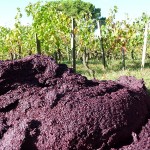
Recycling or reusing grape pomace (a.k.a. grape marc) is a topic that we’ve discussed many times on The Academic Wino. Back in September of last year, I introduced a paper which should that the addition of grape marc to wines prior to bottling may increase the quality of the finished wine by increasing total phenolic content as well as total anthocyanins. Today, I present to you research by the same authors examining the use of grape marc on the quality of Rosé wines (it’s Valentine’s Day, so think pink, right?).

As you’ve heard before if you’ve read any of my previous posts on the subject, grape pomace or grape marc is loaded with antioxidants, polyphenols, flavonoids and stilbenes (think: Resveratrol). Grape pomace has been applied already in many industries, including the health, clothing, construction, and

Photo by davity dave: http://upload.wikimedia.org/wikipedia/commons/thumb/3/33/Pomace_in_the_vineyard_after_pressing.jpg/800px-Pomace_in_the_vineyard_after_pressing.jpg

Photo by davity dave: http://upload.wikimedia.org/wikipedia/commons/thumb/3/33/Pomace_in_the_vineyard_after_pressing.jpg/800px-Pomace_in_the_vineyard_after_pressing.jpg

wine industries (to name just a few). It is important to note, that many of the applications studied have primarily been in research only, and the widespread use of grape pomace in the real world is still well below where it could be.

To examine the effect of grape pomace addition to rose wines, the authors collected grape marc from a local juice processing facility in Spain and further processed it by dehydrating it and then grinding it up into a fine powder. The dehydrated marc (50g/L) was then added to two different white wines: one young white of Airén and one oak barrel fermented white of Airén. Maceration took place over 3 days. In proper scientific methodology, these same wines were tested without the addition of the dehydrated grape marc to serve as controls. The finished rosé wines were then stored for either 1 or 3 months at 18oC, with the following then measured and analyzed: color, phenolic composition, and volatile composition.

Highlighted Results

• At time 0, the color intensity was the same for both grape marc treated and control rosé wines.
• Grape marc treatment wines had increased levels of anthocyanins, gallic acid, (+)-catechin, caffeic acid, (-)-epicatechin, coumaric acid, quercetin, and E-resveratrol.
• Dehydrated grape marc treatment resulted in increased concentrations of linalool (3x higher than its odor threshold), geranyl acetone, and β-ionone, all of which contribute to floral characteristics in rosé wines.
• Compared with control wines, rosé wines treated with dehydrated grape marc showed a reduction in E-nerolidol and isoamyl acetate.
• Compounds contributing to wood aromas, specifically whiskylactones, were not affected by the addition of dehydrated grape marc to rosé wines.
• Volatile compound composition remained stable in treated rosé wines after three months.
• Total polyphenols increased significantly in rosé wines treated with dehydrated grape marc compared with controls (5x greater, actually).
• Color in the rosé wines treated with dehydrated grape marc remained stable over the three month period.
o This preservation was attributed to the increase levels of antioxidants in the treated wines, thus resulting in the stabilization of anthocyanin content over time.

Conclusions

The results of this study showed, according to the authors, that dehydrated grape marc may have great potential for being used as an additive in wines. Particularly, adding dehydrated grape marc during the rosé winemaking process could help stabilize the color of rosé as it ages (at least through 3 months…) and also significantly increase the beneficial antioxidants and polyphenols present in the finished wine. According to the author, the increase in antioxidants as a result of the added dehydrated grape marc could lead to protection against early oxidation in rosé wines.

Overall, I think this study has very interesting and significant applications to winemaking. Using dehydrated grape marc in wine production (particularly rosé wine production) could improve color stability over time as well as improve the aromatic profile of the finished wine. Additionally, adding grape marc to wines

Photo by Designovum http://farm5.staticflickr.com/4031/4706139681_c9894d1b97.jpg

Photo by Designovum http://farm5.staticflickr.com/4031/4706139681_c9894d1b97.jpg

could significantly improve the overall “healthiness” of the wine by increasing the health-beneficial polyphenols and antioxidant compounds. However, one thing I would like to see is a sensory analysis of these wines that have been treated with dehydrated grape marc, to ensure that the compounds found in the wines are reflected in the aromatic and sensory characteristics of the finished wine.

I’d love to hear what you all think of this study and this topic. Please feel free to leave your comments!

Source: Pedroza, M.A., Carmona, M., Salinas, M.R., and Zalacain, A. 2011. Use of Dehydrated Waste Grape Skins as a Natural Additive for Producing Rose Wines: Study of Extraction Conditions and Evolution. Journal of Agricultural and Food Chemistry 59: 10976-10986.

Wine Literature Review Lightning Round: 2nd Edition


—————————————————————————————————-

Welcome to The Academic Wino!  If you are new here, please read the “About Me” page to find out more about myself and the blog. If you would like to receive free updates on articles like this by email, then sign up here or you can subscribe to the RSS feed. Also, check us out on TwitterFacebookGoogle+, and or Pinterest. Thanks for visiting!

—————————————————————————————————-

There’s no way one single person (even if that person is The Academic Wino!) can possibly review every single piece of peer reviewed literature related to wine that is published every day. This series presents multiple new papers (within the past year or so) in one post by briefly summarizing the research and linking to the source in order for you to pursue further if you’re interested. If there is enough interest, be it through comments or emails, I can review any of the papers introduced to you in this post in a more critical assessment.

VITICULTURE & ENOLOGY:

“Prediction of red wine colour and phenolic parameters from the analysis of its grape extract”. This article, published in 2011, sought to determine whether or not one could predict color and phenolic characteristics of a finished wine from the grapes before they are even processed. The researchers harvested 5 different varieties of red grapes at different stages during the growing season and measured their phenolic composition, tannin levels, and anthocyanin levels (i.e. color). Wines were subsequently made from these grapes at these same stages and again, phenolics, tannin, and anthocyanins were measured.

Using correlation and regression analysis, the results showed that the phenolics, tannins, and anthocyanins from the grape extracts were all highly correlated with the same compounds in the resulting wines. This knowledge could be a

Photo by quinn.anya: http://farm2.staticflickr.com/1201/1486163719_2113050d91.jpg

Photo by quinn.anya: http://farm2.staticflickr.com/1201/1486163719_2113050d91.jpg

significant benefit to vineyard managers and winemakers in order to better determine with greater accuracy when grapes should be harvested to create a particular style of wine.

Source: Fragoso, S., Guasch, J., Aceña, L., Mestres, M., and Busto, O. 2011. Prediction of red wine colour and phenolic parameters from the analysis of its grape extract. International Journal of Food Science and Technology 46: 2569-2575.

CONSUMER PREFERENCES:

“Consumer liking of white wines: segmentation using self-reported wine liking and wine knowledge”. This article, published in 2012, sought to determine how South Australians prefer their white wines and how this correlates to consumer wine knowledge and demographics. The sample size was relatively small (n=150), with wine habits reported via questionnaires. The results found were that younger females with less wine knowledge and who do not drink Chardonnay enjoy Sauvignon Blanc wines. Also, older respondents with greater wine knowledge and more interested in things such as region and vintage reported enjoying Riesling wines. Finally, those liking all white wines other than Riesling (which was the largest group) tended to have less wine knowledge and were more reliant on expert opinions than the rest of the group.

Photo by StateofIsrael: http://farm9.staticflickr.com/8465/8140902367_a8b170c2aa.jpg

Photo by StateofIsrael: http://farm9.staticflickr.com/8465/8140902367_a8b170c2aa.jpg

The authors stated that these results could shed some light on the behavior of Australian white wine consumers and how having wine knowledge may have a significant influence on what type of white wine the consumer purchases. I’m not completely sold this study means anything other than what 150 South Australians like to drink, but alas, I could be convinced with further research.

Source: King, E.S., Johnson, T.E., Bastian, S.E.P., Osidacz, P., and Francis, I.L. 2012. Consumer liking of white wines: segmentation using self-reported wine liking and wine knowledge. International Journal of Wine Business Research 24(1): 33-46.

CONSTRUCTION (What? Construction?):

“Controlling asphalt aging by inclusion of byproducts from red wine industry”. OK, this may take the prize for being the most random application of wine industry wastes that I have come across so far (and that’s saying a lot, since I’ve already presented research on using wine industry waste in leather production). According to this paper, nearly all (okay, 95%) of the world’s pavement is made with Asphalt Binder. Apparently, as the pavement sits there over time, the Asphalt Binder oxidizes, causing a hardening of the pavement and eventual increase in cracking.

Some wine lover in the construction business must have had his/her thinking cap on, as they thought to themselves, “Hey wait a minute! That wine industry waste stuff is loaded with antioxidants! How about we just shove a bunch of that stuff into the pavement mix to protect the Asphalt Binder from oxidizing and cracking so fast?”. So, some scientists took some pomace from Cabernet Sauvignon grapes were added to the Asphalt Binder and subjected it to the

By Frank Kovalchek from Anchorage, Alaska, USA (I love these curvy roads  Uploaded by russavia) [CC-BY-2.0 (http://creativecommons.org/licenses/by/2.0)], via Wikimedia Commons

By Frank Kovalchek from Anchorage, Alaska, USA (I love these curvy roads Uploaded by russavia) [CC-BY-2.0 (http://creativecommons.org/licenses/by/2.0)], via Wikimedia Commons

pavement aging process. With 10% grape pomace added to the pavement mixture, the fatigue factor (i.e. how easy it is to oxidize and crack) decreased by between 14% and 19%. Also, the amount of time it took to dry out and stiffen was lengthened by 23% when the pavement was treated with grape pomace. According to these results, the engineers had it right! Grape pomace, when added to pavement, appears to reduce the rate of oxidation and stiffness such that drying and cracking does not occur as quickly as it would without this treatment. Such a fascinating application of wine industry waste recycling right there!

Source: Calabi-Floody, A., and Thenoux, G. 2012. Controlling asphalt aging by inclusion of byproducts from red wine industry. Construction and Building Materials 28: 616-623.