Tag Archives: wine chemistry

The Influence of Water and Temperature on the Volatile Compounds of Oak Barrel Staves


—————————————————————————————————-

Welcome to The Academic Wino! If you are new here, please read the “About Me” page to find out more about myself and the blog. If you would like to receive free updates on articles like this by email, then sign up here or you can subscribe to the RSS feed. Also, check us out on TwitterFacebookGoogle+, and or Pinterest. Thanks for visiting!

—————————————————————————————————-

Many of you already know that using oak barrels during winemaking and aging increases the complexity of the finished wine, and often increases the overall quality of the wine. Using oak changes the aroma and color, as well as the stability of the finished wines. The type of aromas and flavors imparted into the wine depends upon a variety of factors, including the type of grape, the type of oak, and even where in the forest from which the oak tree was harvested. When making the oak barrels, heat treatments are frequently employed to help the wood become more pliable and thus able to be bent into the curved position of the barrel.

These heat treatments, referred to as “toasting”, alter the flavors and aromas imparted by the oak into the barrel, though the exact behavior of volatile compound concentration changes in wine is not known due to differing results in the literature. Traditionally, all of the research so far has focused on how toasting or heat treatments affect the aromatic and volatile compounds of wine

Photo By Olivier Colas (Own work) [CC-BY-SA-3.0 (http://creativecommons.org/licenses/by-sa/3.0)], via Wikimedia Commons

Photo By Olivier Colas (Own work) [CC-BY-SA-3.0 (http://creativecommons.org/licenses/by-sa/3.0)], via Wikimedia Commons

when dry wood is used during cooperage, though none have examined getting the wood wet first prior to toasting. Soaking the wood staves prior to heat treatment could have a significant impact on the aroma and flavor of the finished wine, though to date, no studies have examined this until now.

The goal of the study presented today was to examine 6 different aromatic compounds in wood samples that were either wet prior to heat treatment or not, to determine what effect, if any, soaking the wood has on the volatile composition of the wood (and thus potential volatile composition of the finished wine). This study examined several different temperatures and 2 different heat treatment exposure lengths.

Methods

Wood samples originated from one 400-year-old Quercus petreae tree from the “forêt des beaux Monts” in Oise, France. The staves were given by Tonnellerie Seguin Moreau and had been naturally seasoned for two years prior to the experiment. Staves were cut into samples of 70mm x 25mm x 3mm.

Heat treatments were performed in triplicate. Five temperatures were tested (90, 120, 160, 200, and 240 oC) and two treatment time periods were tested (10 and 25 minutes). For the soaked wood treatment, cut stave pieces were soaked in 90 oC hot water for 20 minutes. Unheated samples were used as controls.

After heat treatments, stave pieces were broken down and homogenized into sawdust in order to extract the volatile compounds from the wood. Volatile compounds were analyzed using HS-SPME GS-MS analysis.

Results

• Guaiacol:
o No significant differences in guaiacol levels were found between wet and dry woods for temperatures up to 200  oC.
o Guaiacol was 5x higher in dry woods than wet woods at the 240  oC treatment temperature (significant difference) and 10 minute treatment, and 2x higher for the 25 min treatment at this temperature.
o Guaiacol levels in dry wood at 240  oC for 10 minutes were not significantly different than the levels in wet wood at 240  oC for 25 minutes.
• Eugenol:
o Eugenol values were constant in woods for all temperatures, though were slightly higher at the 25 minute treatment compared with the 10 minute treatment.
o At the 240  oC temperature and the 25 minute duration, eugenol values in dry wood significantly decreased to levels found at the 240  oC temperature and 10 minute duration treatment.
• Furfural:
o Furfural levels in dry wood significantly increased at the 160  oC and 200  oC temperature treatments, and significantly increased further at the 240  oC temperature treatment.
o Furfural levels in wet wood significantly increased at the 200  oC temperature and peaked at the 240  oC temperature treatment.
• Vanillin:
o In all treatments at the 10 minute duration, vanillin levels were similar, with the exception of 240  oC temperature which showed increased vanillin levels in dry wood.
o For the 25 minute duration, there was a significant increase in vanillin in dry wood at 200  oC and a significant decrease in vanillin at 240  oC.
Cis-whiskey lactone:
o Cis-whiskey lactone levels remained constant in dry wood for all temperatures except for the 240  oC treatment which showed a significant decrease in cis-whiskey lactone levels.
o Cis-whiskey lactone levels were significantly lower in soaked wood compared with dry wood at the 160  oC treatment temperature, similar at 90, 120, and 200  oC, and significantly higher at the 240  oC treatment temperature.
Trans-whiskey lactone:
o Trans-whiskey lactone levels were significantly lower in wet wood at 90 and 160  oC, similar at 120 and 200  oC, and significantly higher than dry wood at 240  oC.
• General Trends:
o Lower temperatures were not correlated and in some cases negatively correlated with furfural, vanillin, guaiacol, and trans-whiskey lactone in woods.
o Higher temperatures were positively correlated with furfural, vanillin, guaiacol, and trans-whiskey lactone in woods.
o Higher temperatures were negatively correlated with cis-whiskey lactone and eugenol.
o Lower temperatures (particularly in the 25 minute duration treatments) were positively correlated with cis-whiskey lactone and eugenol.
o There was no significant influence of the temperatures 90, 120, and 160  oC on wood volatile compounds.
o Increased temperatures led to greater correlations with furfural, vanillin, and guaiacol and to weak correlations with cis-whiskey lactone, eugenol, and trans-whiskey lactone.

Conclusions

Overall, the results of this study indicated that the temperature of the heat treatment greatly influenced the concentrations of furfural and vanillin, though also had minor impacts on the concentrations of eugenol, cis-, and trans-whiskey lactone. According to the results, furfural was the volatile compound most influenced by the experimental treatments. Also, treating the wood with water prior to the heat treatment appeared to have a significant influence on the concentrations of all the oak volatile compounds studied with the exception of eugenol. The authors concluded that the formation of these volatile compounds may be a combination of the heat treatment influencing the production of the volatile precursors as well as the degradation of the volatile compounds.

After undergoing a wet treatment, it was found that the wood samples in general showed lower concentrations of volatile compounds than the dry wood samples. The authors concluded, and I tend to agree, that the absorption of water by the

Photo By Wmpearl (Own work) [CC0], via Wikimedia Commons

Photo By Wmpearl (Own work) [CC0], via Wikimedia Commons

wood may have some sort of protective effect against the degradation of the volatile compounds, therefore reducing the overall concentration of the compounds found in the homogenized samples. In a way, I would think the water is having some sort of cooling effect, thus delaying the extraction of volatile compounds from the wood.

I would have liked to have seen the authors take this a step further, and actually produce a wine made from barrels undergoing these temperature and water treatments. Do the increases and decreases in volatile compounds noted in the wood change the volatile composition of the wine in the same manner? Or are there other mechanisms involved that result in a different volatile composition of the finished wine? How do these treatments alter the aromatic and volatile composition of different kinds of wine? Do wines made from these types of treatment barrels taste quality and possess higher quality than untreated barrels? All of these questions would make for a great follow-up paper.

What about you all? How did you interpret these results? What experiments would you have liked to have seen done in addition to what was presented here? Any other comments or questions? Please feel free to comment!

Source: Duval, C.J., Sok, N., Laroche, J., Gourrat, K., Prida, A., Lequin, S., Chassagne, D., and Gougeon, R.D. 2013. Dry vs soaked wood: Modulating the volatile extractible fraction of oak wood by heat treatments. Food Chemistry 138: 270-277.

Using Two-Dimensional Correlation Spectroscopy To Screen For Smoke Taint in Wines: A Novel Approach


—————————————————————————————————-

Welcome to The Academic Wino! If you are new here, please read the “About Me” page to find out more about myself and the blog. If you would like to receive free updates on articles like this by email, then sign up here or you can subscribe to the RSS feed. Also, check us out on TwitterFacebookGoogle+, and or Pinterest. Thanks for visiting!

—————————————————————————————————-

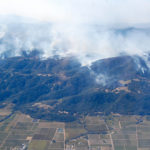
Smoke taint is a significant threat to wine quality, and is relatively common in places that are more prone to wildfires (specifically, Australia and parts of California). Smoke taint in wine is created when grapevines are exposed to a significant amount of smoke during the sensitive maturation process of the grapes, with certain stages in the process more vulnerable than others. This smoke exposure during this maturation period results in increases in particular chemicals which result in undesirable “smoky” and “ash” characteristics in the finished wine. Physiologically, the volatile compounds in the smoke are absorbed by the leaves of the grapevines and then bind to sugars within the

Photo source: By Andrea Booher (This image is from the FEMA Photo Library.) [Public domain], via Wikimedia Commons

Photo source: By Andrea Booher (This image is from the FEMA Photo Library.) [Public domain], via Wikimedia Commons

plant. Once bound with sugar, these glycolated volatiles move throughout the grapevine via the resource transport system (i.e. the xylem), which ultimately accumulates in the grape berries.

There are several techniques used to measure smoke taint in wines, with some of the first techniques being time and resource-intensive HPLC and other chromatography methods. The use of spectroscopy is becoming more popular in terms of developing new and faster techniques for assessing smoke taint in wine, which could not only save time for the winemaker, but also a lot of money in the long run. 2-dimensional correlation spectroscopy (2D-COS) is one of the newer techniques being analyzed for efficiency in assessing smoke taint in wines, and basically works by determining the structural make-up of the chemicals in the samples, with any changes from “normal” being represented in a 2D spectral contour map. So far, very few studies have looked at 2D-correlation spectroscopy in the analysis of wine.

The short study presented today aimed to determine if 2D-COS could be used as a quick tool for determining smoke taint in wines, by looking for the structural signatures of know smoke taint-derived compounds in the contour maps.

Methods

59 samples of wine were utilized from a previous study examining MIR spectroscopy analysis of smoke tainted wines. The different treatments included: 1) experimental wines made from grapes exposure to smoke in the field; 2) commercial wines that were exposed to smoke during the growing season; 3) red wines made in oak barrels with no smoke exposure; 4) white wines made in oak barrels with no smoke exposure; and 5) red and white wines make in oak barrels with an addition of 30mg/L of guaiacol (a compound found in oak-aged wines as well as significantly increased in wines that were exposed to smoke during the growing season).

Spectroscopy analysis included MIR spectroscopy of all samples, as well as correlation with the 2D-COS contour map spectra.

Results

• Analysis showed there are more differences between red and white wines than simply the guaiacol content (duh?).
o White wines showed the lowest levels of guaiacol.
• MIR spectroscopy showed two distinct groups of wine samples: white wines with low guaiacol levels, and red wines with higher guaiacol levels.
• 2D-COS analysis showed structural changes of the compounds in wines with smoke treatment, specifically guaiacol and other smoke-derived volatile compounds.
• Determining smoke taint in red wines was more complex than with white wines, since red wines in oak barrels have higher guaiacol levels already without smoke exposure compared with white wines, so comparing red wines exposed and not exposed to smoke may require further analytical method analysis.

Conclusions

The results of this study indicate that 2D-Correlation Spectroscopy may be a good quick and dirty way to separate possible smoke-tainted wines from definitely not smoke tainted wines when time and money is a factor. Rather than sending in every single sample to a commercial laboratory, using 2D-COS in the wine cellar to reduce the number of samples needed for further smoke taint

Photo By Jynto [CC0], via Wikimedia Commons

Photo By Jynto [CC0], via Wikimedia Commons

analysis will save time and money for all involved. Say you have 4 out of 10 wines that end up being tainted with smoke: rather than send all 10 wines for expensive HPLC or other time-consuming analysis, the winemaker can do a quick screening in the cellar to tease out those wines that may be tainted with smoke based on their 2D-COS spectral profile, then only send that small subset off for further analysis (in this made-up example, the winemaker would have found 4 to send instead of the entire 10).

According to the authors, 2D-COS does not all one to quantify the levels of smoke taint in wine, but acts more like a screening technique to quickly determine if the sample is potentially tainted or not. This c0uld provide a time and money-saving technique for winemakers, as the method will allow them to save money by not performing more complicated and expensive analyses on wines that aren’t even affected by the smoke taint. Of course, theoretically, if every single one of their wines in affected by the smoke taint, then I suppose in the long run more money would be spent overall by performing the 2D-COS analysis followed by a more throughout quantitative analysis at a commercial laboratory, however, on average, this technique could help reduce the number of samples needed to send out for analysis in the event not every single wine was affected by smoke exposure during the growing season.

How about you all? Have you tried this type of quick analysis for yours or something else’s wines? Would you use this technique as a quick screening method for smoke taint prior to sending samples off to be further analyzed? Please feel free to comment!

Source: Fudge, A.L., Wilkinson, K.L., Ristic, R., and Cozzolino, D. 2013. Synchronous two-dimensional MIR correlation spectroscopy (2D-COS) as a novel method for screening smoke tainted wine. Food Chemistry 139: 115-119.

Using Rare Earth Elements to Determine the Authenticity and Geographic Origins of Moscato d’Asti Wines


—————————————————————————————————-

Welcome to The Academic Wino! If you are new here, please read the “About Me” page to find out more about myself and the blog. If you would like to receive free updates on articles like this by email, then sign up here or you can subscribe to the RSS feed. Also, check us out on TwitterFacebookGoogle+, and or Pinterest. Thanks for visiting!

—————————————————————————————————-

Wine, unlike many other food and beverage products, is somewhat frequently more subject to fraudulent practices that result in significant financial losses for those unknowing victims purchasing what they thought was a high quality wine when in fact it is a fake. It is therefore important to develop ways to test the authenticity of the wine in order to be sure what you’re investing in is real. Similar to the authenticity of a wine is the traceability of wine: is the wine from the geographical location that is indicated on the bottle?

Previous studies have found that lanthanides, the “rare earth elements” on the periodic table between atomic numbers 57 and 71, may be good geochemical markers for determining authenticity and traceability of foods, and have been shown to determine origins of several foodstuffs, including hazelnuts. Many

By LeVanHan (Own work) [GFDL (http://www.gnu.org/copyleft/fdl.html) or CC-BY-SA-3.0-2.5-2.0-1.0 (http://creativecommons.org/licenses/by-sa/3.0)], via Wikimedia Commons

By LeVanHan (Own work) [GFDL (http://www.gnu.org/copyleft/fdl.html) or CC-BY-SA-3.0-2.5-2.0-1.0 (http://creativecommons.org/licenses/by-sa/3.0)], via Wikimedia Commons

studies have shown that there is good traceability using lanthanides up until the must stage, as the lanthanide profile remains fairly constant throughout the growing season and through harvest. However, since wine undergoes many chemical changes during the winemaking process, using lanthanides may actually be problematic for determining authenticity and traceability, as it’s been shown that using bentonite during the clarification process changes the lanthanide profile in wine, thereby making authenticity determinations a lot more difficult. To date, it has not been made clear how the winemaking process alters the lanthanide fraction of wine, and if this alteration results in problems with testing authenticity or traceability of those wines or not.

The study presented today aimed to add to the literature on using lanthanide signatures to determine authenticity and traceability using Moscato d’Asti wine, and to determine if the winemaking process results in the alteration of this lanthanide profile and whether or not this method is appropriate for catching fraudulent wines or determining authenticity and traceability in general for wine.

Methods

For determining the traceability from soil to must; soils, grapes, and musts were collected from the experimental vineyard of Centro Sperimentale Vitivinicolo Tenuta La Cannona in Carpeneto, AL, Italy. For determining authenticity of Moscato d’Asti musts and wines, samples were collected from various producers throughout the Piedmont region of Italy. All must samples were frozen prior to testing, and thawed 4 hours prior to analysis.

Elemental analysis was performed on soil, grape, and must samples, focusing primarily on the rare earth elements/lanthanides. These analyses were performed on a X5 Series inductively coupled plasma mass spectrometer.

Results

• The rare earth element profile including lanthanides was nearly identical from soil to grape to must for Moscato d’Asti.
• Cerium (140Ce) was found to be most abundant in all samples tested.
• Filtering the musts with amorphous silica diatomites (rectification step in winemaking) resulted in a marked change in the rare earth element profiles, as the profile in filtered samples were found to be drastically different than the profile of the original must samples.
o The most significant changes were noted for the elements 175Lu and 172Yb (Lutetium and Ytterbium, respectively).
• The clarification of the musts using Bentonite provided an even more drastic change in the rare earth element profile compared with the must sample after the filtering step and the original must.
o This may be attributed to the fact that Bentonite releases metal ions into the must during the clarification process, thus significantly altering the rare earth element profile of that must.
o Therefore, it is not possible to use the rare earth element profile of wine to determine the traceability of the wine, since this profile is so drastically altered during the bentonite treatment in the clarification step of winemaking. If an alternative to bentonite that did not release metal ions into the must was used, then perhaps this method of analyzing the rare earth element profile to measure traceability would be useful.
o Traceability is completely possible and very accurate from the soils to the musts, but not after the winemaking process using bentonite.
• Principal components analysis (PCA) showed a clear separation in rare earth elements of Italian wines between geographical locations, though some of the separations were narrow.
o This result indicates that it is possible to determine if a particular wine is from a particular geographic location or not.

Conclusions

I found it fascinating that one can trace a must back to the location where the grapes grew in the soil, simply by measuring the profile of rare earth elements in the must, grapes, and soil. Those rare earth elements that are in the soil of a particular area are taken up by the grapevine and transported via the xylem and phoelm into the grape berries without altering the profile from soil to grape. It makes me wonder if this is evidence of terroir—the rare earth element profile appears to be different for every geographical location, as evident in the PCA analysis during the authenticity portion of this study, so perhaps this is the sort of scientific evidence needed to “prove” the existence of terroir. That’s just a thought, but I think it’s a good starting point.

After the musts are chemically altered by the winemaking process, particularly after the clarification by bentonite stage, the rare earth element profile no longer represents the profile of the original must nor does it represent the profile of the grapes and soil from which the wine came. This makes sense to me,

By Nikilux (Own work) [CC-BY-SA-3.0-lu (http://creativecommons.org/licenses/by-sa/3.0/lu/deed.en)], via Wikimedia Commons

By Nikilux (Own work) [CC-BY-SA-3.0-lu (http://creativecommons.org/licenses/by-sa/3.0/lu/deed.en)], via Wikimedia Commons

as if you’re going to add any chemical you’re likely going to alter the chemical make-up of that wine due to chemical reactions that may take place. The authors suggested that wine that is not treated with bentonite may show similar rare earth element profiles to the original profiles, though I am not convinced. There are other chemicals added to wine during the winemaking process, and I’m not yet convinced that those chemicals might not interact and alter the rare earth element profile of the finished wine. I’d like to see a follow up study examining this issue.

Overall, I thought this was a really neat study, despite the fact that it was relatively short and was lacking some treatments that I would have liked to see (i.e. different stages during the winemaking process). I would love to see a follow up to this study perhaps taking it in the direction of scientifically showing the existence of terroir, and also perhaps a follow up looking at grapes in other parts of the world.

I’d love to hear what you all think of this topic! Please feel free to leave your comments!

Source: Aceto, M., Robotti, E., Oddone, M., Baldizzone, M., Bonifacino, G., Bezzo, G., Di Stefano, R., Gosetti, F., Mazzucco, E., Manfredi, M., Marengo, E. 2013. A traceability study on the Moscato wine chain. Food Chemistry 138: 1914-1922.

Polyphenol Levels and Antioxidant Activities in Aged Sherry Wines


—————————————————————————————————-

Welcome to The Academic Wino!  If you are new here, please read the “About Me” page to find out more about myself and the blog. If you would like to receive free updates on articles like this by email, then sign up here or you can subscribe to the RSS feed. Also, check us out on TwitterFacebookGoogle+, and or Pinterest. Thanks for visiting!

—————————————————————————————————-

The polyphenolic content and antioxidant capacity of wine has well been studied in the literature, and is a topic often discussed on this blog. It has been studied so much that we’re all aware of the fact that these characteristics vary significantly from wine to wine, depending upon many factors including but not limited to grape variety, aging time (as well as how the wine is aged), and environmental conditions. According to many studies, there is a trend of increasing concentrations of polyphenolic compounds in wine as the wine is aged for longer periods of time, though this can vary again based on the aforementioned outside forces.

The study presented today is a short one (phew, right?), examined the evolution

I, Hashashin [GFDL (http://www.gnu.org/copyleft/fdl.html), CC-BY-SA-3.0 (http://creativecommons.org/licenses/by-sa/3.0/) or CC-BY-SA-2.5-2.0-1.0 (http://creativecommons.org/licenses/by-sa/2.5-2.0-1.0)], via Wikimedia Commons

I, Hashashin [GFDL (http://www.gnu.org/copyleft/fdl.html), CC-BY-SA-3.0 (http://creativecommons.org/licenses/by-sa/3.0/) or CC-BY-SA-2.5-2.0-1.0 (http://creativecommons.org/licenses/by-sa/2.5-2.0-1.0)], via Wikimedia Commons

of polyphenol content, antioxidant content, and color in old Sherry wines. The authors also sought to determine if antioxidant activity is correlated with the age of the wine.

Methods

26 Sherry wines from vintages between 1935 and 1996 were analyzed. All wines were oloroso Sherries which were made in the oxidative method (i.e. no secondary fermentation with flor yeasts). All wines were made with the white Palomino Fino grape variety and were aged in American oak barrels. For each wine, the following were measured and analyzed: total polyphenol content, individual polyphenols, antioxidant activity, and color.

Results

• Concentrations of all parameters measured trended higher in those Sherry wines that were aged for longer in oak barrels than those aged for shorter periods of time.
• For those Sherry wines aged for longer periods of time in oak barrels, the following compounds were most prominent: hydroxymethylfurfural, furfural, protocatechuic acid, tyrosol, p-coumaric acid, and syringaldehyde.
• The highest levels of polyphenols were found in those wines aged for longer in oak barrels than those aged for shorter times.
• The oldest Sherry wines (as old as 1935) had extremely high levels of antioxidant activities.
o The authors attributed the high antioxidant levels to the aging in oak barrels, since the grapes used to create these Sherries were white grapes, and white grapes do not have very high levels of antioxidants to begin with.
• Based on the aforementioned results, the authors claim that the level of antioxidant activity is “clearly related” to the length of time the Sherry wine is aged in oak barrels.
• A strong influence of polyphenols on the antioxidant activity of the Sherry wines was found.
o Those polyphenols most highly correlated with the antioxidant activity in the Sherry wines were: protocatechuic acid, protocatechuic aldehyde, syringic acid, vanillin, and p-coumaric acid.
• SO2 levels for the Sherry wines tested were found to be between 8 and 17mg/L which correlated with the antioxidant activities of the wines, but was not statistically significant.
• Those Sherry wines that were aged in oak barrels for longer periods of time were darker in color than wines aged for not as long.
• The above relationships were all confirmed with principle components analysis and linear discriminating analysis.

Conclusions

This study was mostly “for the sake of science”, though could potentially have interesting applications in the real world. The study found that those Sherry wines aged in oak barrels for longer periods of time possessed greater levels of polyphenols and antioxidant activities (as well as darker colors). If you’re looking to maximize your polyphenol and antioxidant activity intake, then based on this study you know to go for wines aged for longer periods of time in oak barrels.

One thing I was wondering while reading this article was whether or not this type of analysis could be used for determining authenticity of wines suspected of possible fraud. I suppose the technique itself isn’t that sensitive, but it potentially be used in concert with other techniques. For example, if the aging treatment was known for the particular wine in question, then one might be able to measure the polyphenol levels and antioxidant activity to get a ballpark idea of whether or not the wine could be legit or if it could be a fraud.

If it was known that the wine was aged for a long period of time in oak barrels yet the polyphenol levels and antioxidant activities were extremely low, then red flags could be raised on the authenticity of the wine. I suspect this technique would not be very sensitive, and could thereby require other techniques to be

By Tomascastelazo (Own work) [CC-BY-SA-3.0 (http://creativecommons.org/licenses/by-sa/3.0)], via Wikimedia Commons

By Tomascastelazo (Own work) [CC-BY-SA-3.0 (http://creativecommons.org/licenses/by-sa/3.0)], via Wikimedia Commons

performed if the results were not clear, but I think it could be a quick a dirty test if no other options were immediately available. Of course, less invasive methods for determining the authenticity of wines are currently in development, so this technique may not be the best option for multiple reasons, but hey, I’m just thinking out loud here! :)

Can you think of other applications for this information about polyphenol levels and antioxidant activities in Sherry wines? Please feel free to leave your comments!

Source: Schwarz, M., Carmen Rodríguez, M., Guillén, D., and Barroso, C.G. 2012. Evolution of the colour, antioxidant activity and polyphenols in unusually aged Sherry wines. Food Chemistry 133: 271-276.