Tag Archives: wine experts

Wine Experts and Foodies: Are They Super Tasters? Or Are They Faking It?


I think it’s blatantly obvious that people have different taste preferences:  from food and wine to coffee and cake; if you grab someone off the street and ask them their taste preferences they will say something different than if you grabbed someone else and asked them the same question.

OK, but why is it that we have such variability in our taste preferences?  Is it a result of what our mothers or fathers shoved down our gullets when we were young and developing our tastes (or disdain) for certain things?  Or are we genetically predisposed to enjoying certain things over others?

Turns out, it’s probably a little bit of both, however, recent studies over the past 3 or 4 years have found that genetic variation in oral sensory abilities might very well have the greatest influence on food and beverage preferences.  From a

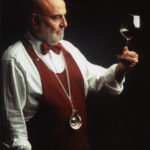
By William Lawrence (originally posted to Flickr as Geeks Love Wine) [CC-BY-SA-2.0 (http://creativecommons.org/licenses/by-sa/2.0)], via Wikimedia Commons

marketing standpoint, this finding is very important, as different strategies should be developed for the different genotypes/phenotypes of individuals, since focusing on only one or two strategies may only end up alienating a large subset of the population which would lead to a large underutilized market.

As an aside: Tim Hanni, MW, structured his work around similar concepts, creating the New Wine Fundamentals and Vinotypes, which “allow you to discover your true taste preferences and confidently explore a new world of wines” (quote from myVinotype.com).  I highly recommend you visit his site and explore this fascinating world of discovering your unique wine preferences!

Research on the genetic variation of taste preferences has often focused on how individuals respond to the bitter compound 6-n-propylthiouracil, also known as “PROP”.  This responsiveness places individuals in the different “PROP taster status” categories (a.k.a. phenotypes) of 1) PROP non-tasters; 2) PROP medium-tasters; and 3) PROP super-tasters.  Those in the non-tasters group notice very little to no bitterness; the medium-tasters notice a mild bitterness; and the super-tasters notice an intense bitterness.  Genetic research has found that this variation is due to variations in the TAS2R38 gene, though variations in this gene alone may not explain all variation in taste sensation and preferences.

Those that are PROP super-tasters are often characterized as having greater sensitivity to sour, salt, sweety, and creamy, and also display greater sensitivity to astringency, bitterness, and sourness in alcoholic beverages.  Some say that being a PROP super-taster also predisposes them to being more “acute tasters”, allowing them to pick up more subtle or less obvious tonal nuances in the food or beverage they are tasting.  Depending upon which PROP category / phenotype of which one expresses, the “liking” or preference of particular foods or beverages will change.  Interestingly, PROP categories / phenotypes have been linked in some research studies to diet-related diseases, including obesity and alcoholism.

Though it hasn’t been supported nor disproved in the research literature, it is believed that “foodies” (i.e. those that have “a high liking of food, significant time spent preparing food and choosing ingredients, and a high knowledge of

By Alpha from Melbourne, Australia [CC-BY-SA-2.0 (http://creativecommons.org/licenses/by-sa/2.0)], via Wikimedia Commons

and interest in new preparation methods, ingredients and flavours” Pickering et al, 2013) are more likely to be PROP super-tasters than “non-foodies”.  The theory is that those that seek out food as a hobby or as a career have more sensitive palates and abilities to distinguish subtle flavors from one another, ultimately resulting in the expression of the PROP super-taster phenotype.  To date, there has been no actual research to confirm this idea, and remains just a theory that is perpetuated throughout the food and beverage industry.

In regards to wine expertise, research has shown that PROP phenotype varies depending upon one’s level of wine expertise, with wine experts experiencing greater PROP sensitivity (i.e. super-tasters) and wine novices experiences less PROP sensitivity (non-tasters or medium-tasters).  In theory, one may expect that foodies and wine experts do not differ in their PROP sensitivity,

One very recent study aimed to address these questions regarding foodies and wine experts and their propensity towards exhibiting a particular PROP phenotype and examined whether or not foodies and wine experts differ from other people in regards to their PROP sensitivity, and whether the PROP sensitivity of the two are similar or unrelated.

Methods

A mail survey/questionnaire was utilized in this study.  5000 surveys were mailed out, 1,011 were returned, and 954 were complete enough for use in statistical analysis (100% complete).  To encourage completion of surveys, cash prizes were awarded (between $20 and $500 USD).

Surveys were mailed to random wine consumers that were on the mailing list of a large wine retailing group in the Northeast of the United States.

The surveys asked participants to rate their “liking” of 64 food items and 14 non-food items.  The food items selected represented a wide range of nutritional groups and values.  Non-food items were randomly placed throughout the food items on the surveys.

Participants were asked to rate their level of wine expertise as novice or beginner, intermediate, high, or expert/very high.  Demographic information was also collected.

PROP phenotypes were determined using filter paper disks that were previously treated with 50mmol/L of PROP.  These disks were included with the surveys that were mailed to participants.  After the surveys were completed, participants were asked to use the PROP disk and rate their experience.

The instructions for using the PROP disks were to “take a sip of water and swish it around your mouth to clean it.  Take the paper disc and place it on the tip of your tongue for 30 seconds or until it is fully wet.  Rate the intensity of the taste of the paper disc by drawing a mark on the scale for your answer”. (Pickering et al, 2013).  Participants were shown a scale with marked degrees of “likeness” and were asked to pick where on the scale their liking of the disk fell.  See Figure 1 for this scale.  Participants were also supplied a picture representation of the instructions for greater ease of use.

Figure 1 from Pickering et al, 2013

Participants were classified as non-tasters if their liking fell in the less than 9mm portion of the scale; medium-tasters if their liking fell between the 9 and 50mm portion of the scale; and super-tasters if their liking fell in the greater than 50mm portion of the scale.  Again, see Figure 1.

Results

  • Gender analysis found that women rated PROP bitterness as more intense than men, indicating women were more likely to be super-tasters than men.
    • Women ranked PROP bitterness 35% higher than men.
  • Age analysis found that there was a small decline in PROP bitterness intensity with age.
    • This may be due to the decline in olfactory function as one ages.
  • In regards to foodies, the authors assumed that foodies would give higher score to food items than non-food items compared to non-foodies; however, results found that there was no such association found between foodies and PROP bitterness intensity.
  • Foodies tended to be older than non-foodies:
    • 51% of foodies were over the age of 61.
    • 29% of non-foodies were over the age of 61.
      • Foodies were also found have more individuals retired, and more with larger incomes, both the researchers attributed to the age factor mentioned just previously.
  • Non-foodies were more likely to be female.
  • In regards to wine expertise, there were many significant findings.
    • Wine experts rated PROP bitterness higher than wine novices.
    • Women ranked PROP bitterness higher than men.
    • PROP bitterness intensity decreased with age.

Conclusions

Several important results can be pulled out of this study. First, it appears as though there is no evidence to support the theory that foodies have increased PROP bitterness intensity or exhibit super-tasting capabilities.  The authors mention several limitations to this study in regards to this result suggest that perhaps the criteria for labeling someone as a foodie in this study was too general, resulting in non-foodies being mistakenly identified as foodies in this analysis.

In the future, the authors suggest further increasing the criteria to be categorized as a foodie to include “time spent preparing food and choosing ingredients; knowledge of food, preparation methods and ingredients; and enjoyment at learning about new foods and food preparation methods.” (Pickering et al 2013).  Also, adding in more “refined” or “complex” foods to the food item list of the survey may help distinguish foodies from non-foodies.

The authors noted that there could have been difficulties distinguishing differences between foodies and non-foodies in regards to the PROP sensitivities, since the sample used to collect data from was bias.  If you recall, the sample was collected from a mailing list at a wine retailer, so customers were already more interested in wine than the average person, which could have biased the entire sample toward having somewhat more intense PROP scores in general than someone who rarely drinks wine.  The people on the wine retailer’s mailing list may have been already more likely to be foodies due to their status as wine lovers than someone else who didn’t voluntarily sign up for the mailing list.  The study should be repeated capturing a greater number and variety of individuals to determine if these results are repeatable, or if they are only applicable to this smaller group of relative bias.

Another result the authors made sure to note was the fact that wine experts tended to be super-tasters compared to less experienced wine drinkers that were either medium-tasters or non-tasters.  They hypothesized that because of this propensity and genetic predisposition to be super-tasters, individuals may be drawn to careers in the wine or food industry.  It would be interesting to see a long-term study where they measured the PROP bitterness intensity scores of

By Agne27 (Own work) [CC-BY-SA-3.0 (http://creativecommons.org/licenses/by-sa/3.0) or GFDL (http://www.gnu.org/copyleft/fdl.html)], via Wikimedia Commons

children as they grew up, and correlate those results with the career path they ended up choosing as adults.  How much do PROP scores change as one grows and develops? Do those children with perpetually high PROP scores end up in fields where they are able to utilize these abilities, such as the wine or food industries?

I would also like to see future research investigating the gender result further.  You may recall, this study found that women scored higher PROP intensity scores than men.  What does this mean?  Are women better tasters than men?  There has been some research to suggest this may be the case, but of course, this has been met with some controversy.  They authors didn’t mention much about this in the conclusions, though since it wasn’t their primary focus, I’m not surprised.  I would love to see this result studied further.  In the meantime, please read a guest post by Marlene Rossman on The Academic Wino regarding this very topic:  Women Smell Better!.

Finally, the authors brought up a very fascinating question regarding the use of wine experts’ recommendations to encourage the purchase of particular wines.  It has been shown that people do find expert opinions important when choosing a wine, as it takes some of the “guess work” out of figuring out if the bottle is “good” or not.  The problem with that, the authors raise, is that the differences in PROP bitterness intensity scores of experts versus novices is that experts are inherently going to like and enjoy a certain type of wine, while novices are more likely to enjoy a different type of wine.  This isn’t always going to be the case, but since PROP intensity scores dictate taste preferences, it is fair to assume that the wine the experts deem “quality” and “good tasting” will end up being less enjoyable to the wine novice who prefers a different tasting wine.  This calls into question the usefulness on solely relying on expert opinions to sell wine, and to encourage the use of other marketing strategies to capture those on all ends of the wine preference spectrum.

I’d love to hear what you all think about this topic!  Please feel free to leave your comments and join in the discussion!

Source: Pickering, G.J., Jain, A.K., Bezawada, R. 2013. Super-tasting gastronomes? Taste phenotype characterization of foodies and wine experts. Food Quality and Preference 28: 85-91.

Wine Expertise: Is there a development process? Or are some just born lucky?

http://www.cartoonstock.com/newscartoons/
cartoonists/cgo/lowres/cgon62l.jpg

To date, there have been countless studies examining the differences in performance and wine knowledge between so-called wine experts and wine novices.  However, very little work has been done exploring the development of wine expertise, related to training and explicit learning and the progression of learning for individuals.  Research has shown that there are two separate cognitive skills involved in mastering wine; acquiring the lingo associated with describing the odor components of wine, and the development of schemas relevant to wine that represent features of any given wine type.  Both of these skills should equally be involved in the development of wine expertise.

The study presented today aimed to examine this very question of the development of wine expertise.  They used a cross-sectional approach to examine this question, and used four different groups with varying levels of wine expertise (from non-expert to professional sommelier).  The authors argue that perceptual learning (passive exposure over time) is likely a function of the frequency and the variety of wine exposure, and that cognitive expertise (learning the lingo and schema of wine) is likely gained more slowly and gradually.

Hypotheses

Based on previous knowledge and their own professional insights, the authors of the study presented several hypotheses:

1.      Regular wine drinkers should have some perceptual expertise, and limited cognitive expertise.

2.      Sommeliers-in-training should have a well-developed perceptual expertise, with developing cognitive expertise.

3.      Professional sommeliers should have both well-developed perceptual and cognitive expertise.

Predictions

With hypotheses come predictions:

1.      The identification of wine-relevant odors would be better for professional sommeliers than regular wine drinkers, but there should be no difference between them in regards to non-relevant odors.

2.      The sommeliers-in-training should have less knowledge of wine labels/lingo than the professional sommeliers, since these particular individuals had not had the relevant course work yet.

3.      There should be no difference between any of the groups regarding the identification of non-wine-related odors.

4.      The professional sommeliers should do best in recognizing particular odors than other groups, and both sommeliers and sommeliers-in-training should outperform regular wine drinkers with this skill as well.

5.      Verbal fluency (knowing the lingo) should increase with more training.

Methods

The four groups participating in this experiment were 1) 12 untrained wine drinkers (33.1 +/- 9.1 years old); 2) 12 2nd year sommelier students (35.8+/-7.6 years old); 3) 12 3rd year sommelier students (41.1+-9.4 years old); and 4) 12 professional sommeliers (49.2+/-9.7 years old).  Both males and females were represented in each group, and smokers were excluded from the study.

50 olfactory stimuli of “medium and comparable subjective intensities” were used.  Stimuli ranged from common household items (shoe cream or coffee) to essential oils.  All stimuli were either presented alone (“neat”) or dissolved in mineral oil or distilled water.  Containers were small (15cm) glasses with rubber lids with a cotton swap attached to the end of a stick.  Containers were covered with white paper to avoid any visual cues.  Stimuli were replaced once a week, in order to keep concentrations fresh and controlled.  40 red and white wines were used, with 10 target and 30 nontarget wines.  Target red wines included Cannonau, Cabernet Sauvignon, Merlot, Refosco, and Sangiovese.  Target white wines included Arneys, Grey Pinot, Sauvignon, Verdicchio, and White Pinot.  All wines were Italian in origin.

10 out of the 50 olfactory stimuli were compounds that are commonly found in wine, and have established names in the wine lingo (i.e.; orange, lemon, banana, leather, tobacco, etc).  10 of the olfactory stimuli were common substances that are not found in wine.  The rest of the olfactory stimuli were designed to be “distractors”.

The experiment was designed to have six different olfactory tasks: 1) wine-relevant odor identification; 2) common odor identification; 3) multiple choice wine-relevant odor recognition; 4) multiple choice common odor recognition; 5) multiple choice wine recognition; and 6) verbal fluency.

Identification task:

            Each participant had to smell 4 seconds a randomly selected odor, while the tester read aloud four different labels.  The participant then had to identify the proper label for the odor.

Recognition task:

            Each participant smelled both the target odor and a set of 4 odors (including the target odor).  The participant smelled the target odor for 4 seconds, then was presented with the set of 4 odors to smell and was asked to identify which was the target odor.

Rest was required between trials, to avoid any odor crossover.

Wine Recognition Task:

            Wine was presented in standard tasting glasses (ISO) and was simply sniffed by participants.

Verbal Fluency Task:

            Participants smelled each of the 10 wine-relevant odors and were asked to describe them as precisely and in as much detail as possible.

During all tasks, participants were asked to close their eyes.  Odors were kept 2cm in front of both nostrils.  The different tasks were administered in 4 sessions and were held 1 week apart in order to avoid any learning effects.  The tasks were administered in the following order: 1) verbal fluency task; 2) wine-relevant and common odor recognition; 3) wine-relevant and common odor identification; and 4) wine recognition.

Results

  •        Age and gender were not included in the analysis because the authors determined they had no influence on test performance (results not shown).
  •       Untrained controls versus 2nd year sommeliers-in-training, versus 3rd year sommeliers-in-training versus professional sommeliers showed significant differences in the wine-relevant odor identification task only.

o   2nd and 3rd year sommeliers-in-training showed poorer wine-relevant odor identification than untrained controls and professional sommeliers.

§  The authors suggest this result for trainees is specific to wine-related odors, as they are in the process of learning about that particular information/knowledge in their coursework.

  •       There were no significant differences between groups for wine-relevant and common odor recognition.
  •       For the wine recognition task, professional sommeliers and the 2nd and 3rd year sommeliers-in-training performed equally on the wine recognition task, and all three groups performed better than the untrained controls.
  •       For the verbal fluency task, professional sommeliers and 3rd year sommeliers-in-training described wine-relevant odors with significantly more terms than 2nd year sommeliers-in-training and untrained controls (the latter two did not differ from one another).

o   Sommeliers performed better than the 3rd year sommeliers-in-training.

Discussion/Conclusions

The results of this study appear to provide support for the hypothesis that perceptual expertise is attained through frequent and variable exposure to wine.  Even though there were no significant differences between groups in regards to wine-relevant odor recognition, the fact that there were significant differences between groups in regards to wine-relevant identification provides support to the hypothesis.  Basically, the experts, after years of frequent exposure to many types of wine, are significantly better able to identify a particular odor in the nose of the wine than untrained and in-training individuals (they just might not be that great at recognizing the odor among a group of other odors).

The authors had several conclusions for this study, one of which being that wine expertise is domain-specific.  What this means is that wine experts are good at identifying characteristics of wine, but not necessarily good at picking out the characteristics of other unrelated items (common odors).  Some studies have shown that some wine experts are also better at identifying and odors of other items, but inconsistent results across studies indicate that these types of results are specific to certain individuals.

Why weren’t the experts better at the wine-relevant recognition task?  The exact answer to this is unknown, however, the authors of the study speculated possible reasons.  It is possible that the wine-relevant odors used in the study were too “easy” and were easily recognizable by all participants (I’d be willing to bet almost everyone can identify what an orange smells like).  Perhaps if more difficult odors were used, the authors would have found a significant difference between the pros and the novices.  How about you all—without me describing other possibilities laid out by the authors, what do you think could be the reason for the insignificance here?

Overall, this study provides an interesting look into the unexplored science of the development of wine expertise.  According to the authors, it appears that perceptual expertise (which is based on exposure to wine) was significantly better in sommeliers-in-training and professional sommeliers than untrained novices.  The authors also found that cognitive expertise was much more variable between the different groups, indicating the slower attainment of this type of skill.

I’ve purposely left out a lot of the authors’ opinions on what they think is creating the results found, so that you all may come up with your own thoughts on the subject.  Any opinions are speculative and almost all are plausible until proven otherwise!  Please feel free to leave your comments below!

Source: Zucco, G. M., Carassai, A., Baroni, M.R., 2011. Labeling, identification, and recognition of wine-relevant odorants in expert sommeliers, intermediates, and untrained wine drinkers. Perception 40: 598-607.

DOI: 10.1068/p6972

I am not a health professional, nor do I pretend to be. Please consult your doctor before altering your alcohol consumption habits. Do not consume alcohol if you are under the age of 21. Do not drink and drive. Enjoy responsibly!